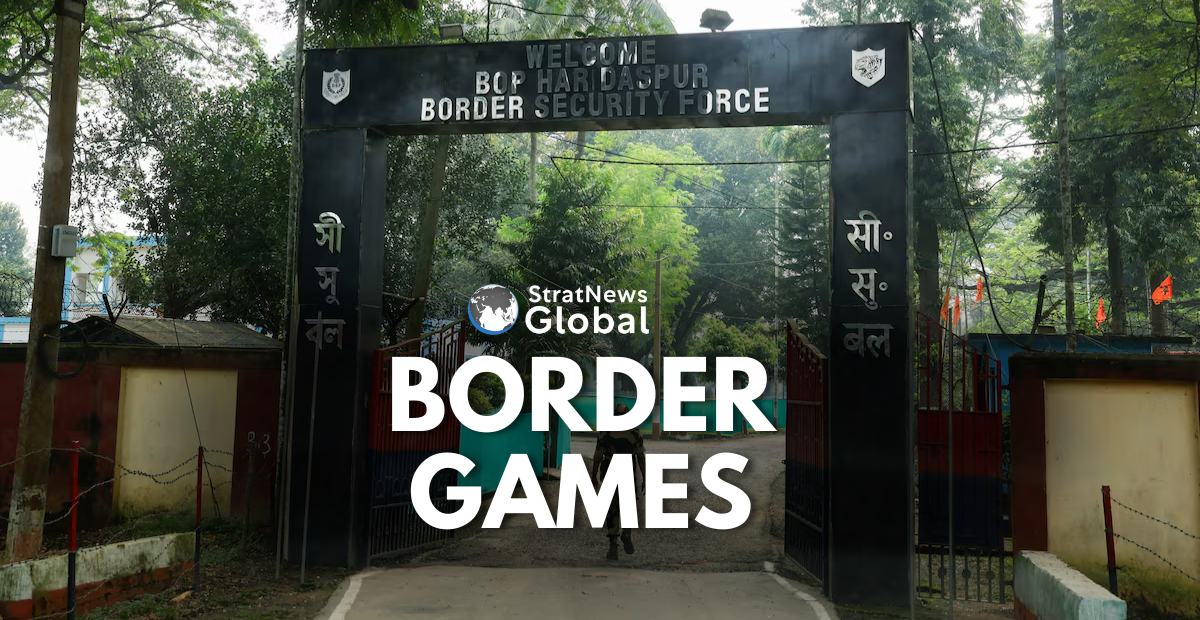
Bangladesh has intensified patrols and launched public awareness campaigns along its frontier with India over concerns that New Delhi is illegally pushing people into its territory, Bangladeshi border officials said.
India, however, maintains the pushbacks are a legitimate response to decades of undocumented migration from Bangladesh.
India’s ruling Bharatiya Janata Party (BJP), which governs the border states of Tripura, West Bengal and Assam, has made tackling undocumented migration a stated priority.
Earlier this month, India’s foreign ministry said it had asked Bangladesh to verify the nationality of more than 2,860 people suspected of living illegally in India.
New Delhi did not respond to a request for comment.
The 60th Battalion of Border Guard Bangladesh began loudspeaker campaigns on Sunday in Brahmanbaria district, urging residents to remain alert to crossing attempts. “Our patrols and surveillance have been strengthened across the border areas. Intelligence operations are also continuing to prevent illegal push-ins, human trafficking, and the smuggling of drugs and other goods,” Lieutenant Colonel S. M. Shariful Islam told reporters.
One Of The World’s Longest Land Borders
Bangladesh and India share a frontier stretching over 4,000 kilometres, one of the longest land borders in the world.
Three sub-districts in Brahmanbaria alone account for around 73 kilometres of the boundary with Tripura.
India’s northeastern state of Assam has, since May 2025, pushed back hundreds of people into Bangladesh from a pool of 30,000 individuals that state tribunals formally declared to be foreigners.
Several human rights groups have called the expulsions as arbitrary; a characterisation Indian authorities have consistently rejected.
Dhaka Demands Procedure, Not Unilateralism
Dhaka has repeatedly insisted that any repatriation must follow formal bilateral procedures and has warned against unilateral push-ins.
New Delhi’s position remains that the tribunals follow due legal process and that Bangladesh’s resistance to receiving its own nationals complicates a problem of Dhaka’s own making.
(with input from Reuters)