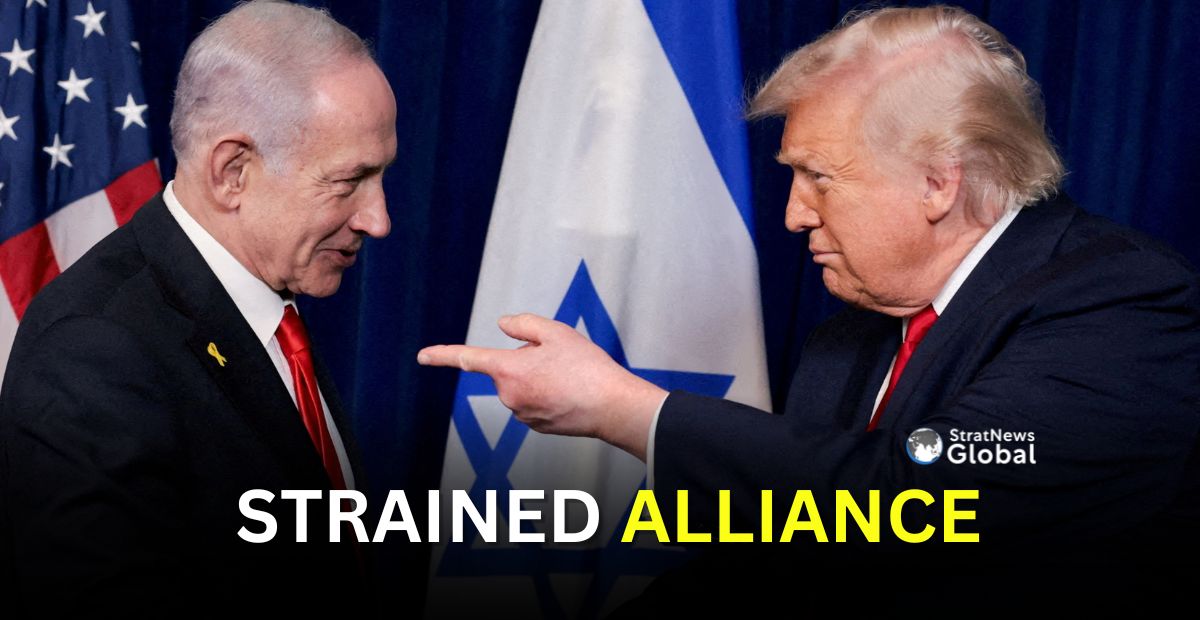
American allies of President Donald Trump this week defended him to an Israeli public anxious about a U.S. interim deal with Iran and White House criticism that together appeared to signal fissures in Israel’s decades-old alliance with Washington.
The U.S.-Israeli relationship has been on a roller coaster, from the early confidence shared after their joint attack on Iran to public disagreements between Trump and Prime Minister Benjamin Netanyahu over how to end the four-month-old war.
Netanyahu and many Israelis see a risk that Trump’s memorandum of understanding with Iran will empower their deadliest enemy and constrict their ability to respond to threats from Hezbollah in Lebanon. “The United States and Israel have an unbreakable bond,” said Mike Huckabee, the U.S. ambassador to Israel, after acknowledging an “enormous level of anxiety about the relationship” at the JNS International Policy Summit in Jerusalem.
Israelis Worry Over Republican Criticism
Israelis also worry about Trump’s insistence on a Hezbollah ceasefire and his language toward Netanyahu’s resistance. Trump has recently called Netanyahu “fucking crazy,” said Israel doesn’t need to “knock an apartment down every time you’re looking for somebody,” and floated asking Syria to replace Israeli troops in Lebanon. Vice President JD Vance struck a more critical tone too, saying Trump is “the only head of state in the entire world who is sympathetic to the nation of Israel,” while adding that not all criticism of Israel should be dismissed as antisemitism. Such views from within Trump’s own party are especially unsettling, given Democrats have grown far more vocally critical of Israel.
Radio host Sid Rosenberg told Israelis that despite their concerns, Trump remained their best option: “You could have JD Vance. Good luck with that.”
A Pew Research poll from late March found 57% of Republicans aged 18-49 hold an unfavourable view of Israel, up from 50% a year earlier, even as older Republicans remain largely positive.
Many Americans, including Democrats, were outraged by the scale of devastation in Gaza after Hamas’s October 7, 2023, attack, and Israel has also faced criticism over its joint decision with the U.S. to launch the war on Iran, a conflict deeply unpopular even among Trump’s base. Victoria Coates of the Heritage Foundation said the relationship was strained but expressed confidence it would get “back on track.”
Netanyahu Not Concerned, Officials Say
Until recently, Trump was seen as Israel’s strongest-ever White House ally, having recognised Jerusalem as its capital and Israeli sovereignty over the Golan Heights in his first term.
Two Israeli officials familiar with Netanyahu’s thinking said he was not concerned that Trump and Vance’s comments signalled meaningful policy shifts like slower arms deliveries, believing the remarks were partly aimed at reassuring voters ahead of the U.S. midterms.
The anxiety has nonetheless led some Israeli figures to argue for reduced reliance on Washington. Ohad Tal, chair of the U.S.-Israel caucus in the Knesset, said Israel must prepare for a future with a less supportive U.S. president: “We have to be much more independent, and we have to forge new alliances.”
(with input from Reuters)