

Support us by contributing to StratNewsGlobal on the following UPI ID
ultramodern@hdfcbank

Strategic affairs is our game, South Asia and beyond our playground. Put together by an experienced team led by Nitin A. Gokhale. Our focus is on strategic affairs, foreign policy and international relations, with higher quality reportage, analysis and commentary with new tie-ups across the South Asian region.
You can support our endeavours. Visit us at www.stratnewsglobal.com and follow us on YouTube, Twitter, Facebook and Instagram.
र 500 per month
र 1000 per month
र 5000 per year
र 10000 per year
Donate an amount of your choice
र 500 per month
Donate र 500 per month

र 1000 per month
Donate र 1000 per month
र 5000 per year
Donate र 5,000 per year
र 10000 per year
Donate र 10,000 per year
Donate an amount of your choice
Donate an amount of your choice
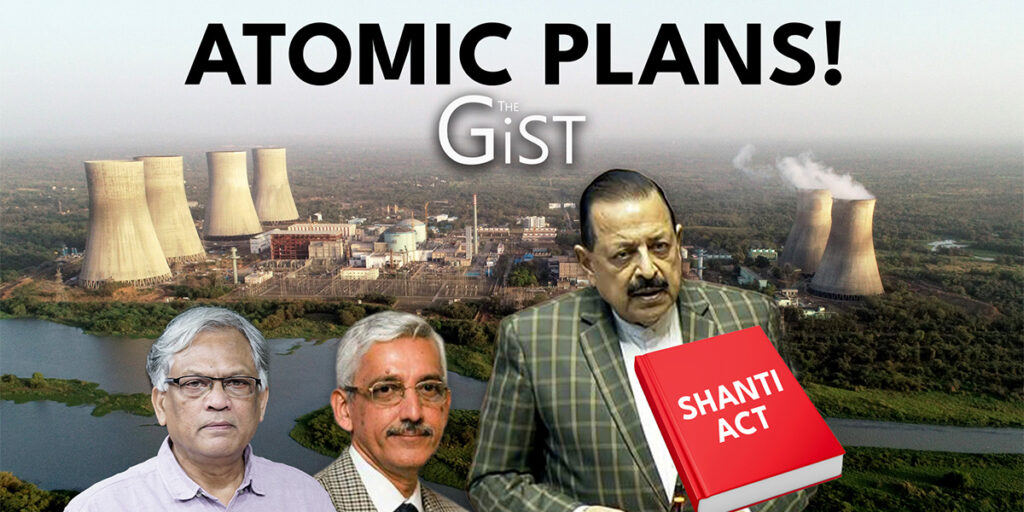




SHANTI Can Help India Reach 2070 Zero Emissions Goal: KN Vyas, Ex-AEC Chief
SHANTI or Sustainable Harnessing and Advancement of Nuclear Energy for Transforming India is now law, parliament having passed it as the winter session wound to an end. How does it change India’s nuclear landscape?
KN Vyas, former chairman of the Atomic Energy Commission, said in an interview on The Gist that major issues drove these decisions.
“India has given a commitment that by 2070, we will be having net zero emissions. Then if you see our average electricity consumption per capita consumption, it is very low, it is even significantly lower than the world average. So if we want to achieve net zero and good human development index or good industrialization, we will need electricity.”
SHANTI will give space to private operators of nuclear facilities, and in the event of equipment malfunction, he has the right of recourse, to go to the manufacturer and demand compensation. An insurance pool will be built up that will take care of some of the compensation issues that arise.
Does SHANTI open the doors to foreign nuclear power majors? Yes it does, he said, and “there is no, restriction as to which type of reactors to be constructed. They can decide who gives them the best deal, which system they find it to be most suitable from their perspective. And, it should it should happen.”
But he warned that importing foreign reactors wholesale may prove costly and would increase the price at which power is generated, making the whole venture uneconomical. It may work better if parts of the imported reactor are made in India.
Mr Vyas was of the opinion that while Small Modular Reactors (SMRs) do have their advantages, especially if it comes to powering small townships or the requirement of an industrial cluster, these may not be practical when it comes to reaching the government target of 100 MW of power.
Tune in for more in this conversation with Kamlesh Vyas, former Chairman of the Atomic Energy Commission.
CIA Wrecked India–China Ties, But Won Nothing
Part I: How the CIA Provoked The 1962 Sino-India War
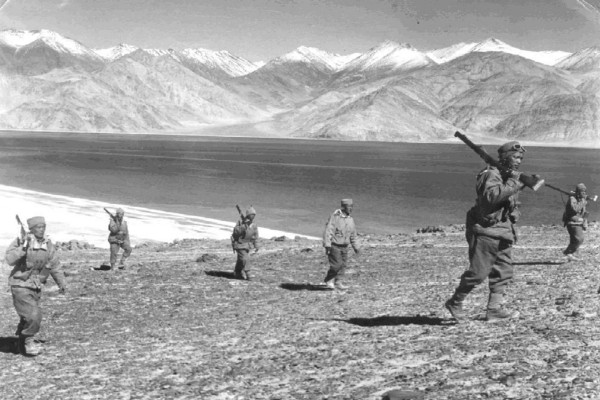
By the autumn of 1962, the India–China confrontation had already been decided long before the first shots were fired.
The Sino-India war that erupted across the Himalayas was not an impulsive reaction to a single provocation but the culmination of a decade in which Tibet became the lens through which Beijing interpreted every Indian action and every border movement. What followed on the battlefield, and what later vanished from public memory, cannot be understood without recognising that hidden prehistory.
The account of how the war was fought, interpreted, and later remembered is based on Indian Army war diaries, Chinese internal discussions released years later, and US diplomatic records declassified long after the conflict, as analysed in recent historical research by Lakshmana Kumar and colleagues and corroborated by US archival material cited in the Foreign Relations of the United States.
Chinese military action in October 1962 was framed internally not as a border correction but as a political signal. Chinese leaders repeatedly described the conflict as a necessary lesson—one aimed less at territory than at behaviour.
Declassified Chinese communications and later reconstructions show that Beijing believed India needed to be punished for what it saw as sustained interference in Tibet, regardless of India’s own understanding of its actions. The boundary dispute provided the legal and geographic justification, but Tibet supplied the motive.
This framing explains both the timing and the scale of the Chinese offensive. The attack came after years of border probes, diplomatic stalemate, and rising frustration in Beijing over the unresolved Tibetan question. It also came at a moment when Chinese leaders believed the international environment was permissive. The Soviet Union was openly split with China but unwilling to side decisively with India, while the United States—despite later expressions of sympathy—was not prepared to intervene militarily. The conditions for a sharp, limited war appeared favourable.
The conduct of the war reflected this logic. Chinese forces struck decisively, aiming to demonstrate overwhelming superiority rather than to occupy territory indefinitely. In several sectors, Indian troops fought stubbornly and inflicted significant casualties, facts later documented in Indian war diaries and military assessments. Yet these details mattered less to Beijing than the political outcome. The message, from China’s perspective, had been delivered.
The unilateral ceasefire announced by China in November 1962 reinforced this interpretation. Chinese forces withdrew from many forward positions despite having military momentum. This was not the behaviour of a state seeking territorial conquest. It was consistent with an operation designed to compel a change in behaviour and perception—to demonstrate costs rather than to redraw maps permanently.
For India, the consequences were devastating. Militarily, the shock exposed serious weaknesses in preparedness, logistics, and command. Politically, the war shattered confidence in leadership and accelerated a turn toward military modernisation and external security partnerships. Strategically, however, the deeper damage lay in the narrative that took hold almost immediately.
In the years that followed, the 1962 war was increasingly remembered as a straightforward humiliation—an ill-prepared India blundering into conflict with a superior China. This narrative, while containing elements of truth, stripped away context. Tibet receded into the background. The role of Cold War covert action vanished almost entirely from public discussion. Responsibility was localised, and history was simplified.
Several factors reinforced this erasure. First, the covert nature of the Tibetan operations ensured that critical information remained classified for decades. Second, personal memoirs and journalistic accounts written in the immediate aftermath focused on visible failures along the front, particularly in the eastern sector, where withdrawals were rapid and politically embarrassing. Third, international politics encouraged silence. As Washington sought rapprochement with Beijing in the late 1960s and early 1970s, there was little appetite to revisit actions that might complicate that process.
The result was a durable distortion. India’s defeat was explained largely in terms of its own errors, while the broader geopolitical pressures that shaped Chinese decision-making were marginalised. Tibet became a footnote. The Cold War disappeared. The war was nationalised, moralised, and simplified.
Yet the documentary record that has emerged over the past two decades challenges this version of events. Declassified American records, Chinese internal discussions released years later, and detailed Indian military reassessments all point to the same conclusion: the 1962 war cannot be separated from the covert struggle over Tibet. Chinese leaders did not view India in isolation. They viewed it through the prism of a perceived foreign-backed campaign against Chinese sovereignty.
This does not absolve Indian decision-makers of responsibility, nor does it deny genuine military and political failures. It does, however, explain why Chinese actions appeared disproportionate to Indian provocations, why diplomacy collapsed so completely, and why the war ended as abruptly as it began.
The conflict was never only about a line on a map. It was about signalling, punishment, and deterrence in a Cold War environment that treated regional actors as variables rather than partners.
The disappearance of this context had long-term consequences. It froze India–China relations into a cycle of mistrust that persists to this day. It shaped Indian strategic thinking in ways that often prioritised visible threats over hidden ones. And it allowed the architects of the covert war to escape scrutiny, even as the costs were borne locally.
Perhaps the most enduring irony is that the strategy that helped ignite the conflict ultimately failed in its larger objective. The attempt to permanently estrange India and China did not lock India into a dependent alliance, nor did it dismantle China’s control over Tibet. Instead, it produced a war that hardened borders, poisoned relations, and left behind a legacy of suspicion without delivering decisive strategic gains.
Polls Open In War-Torn Myanmar, First Since 2021 Coup
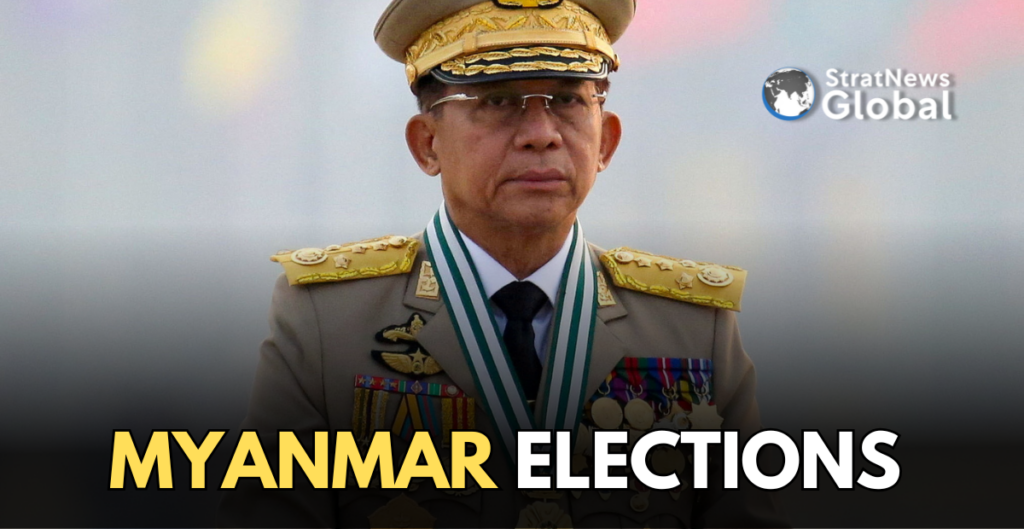
Overshadowed by civil war and doubts about the credibility of the polls, voters in Myanmar were casting their ballots in a general election starting on Sunday, the first since a military coup toppled the last civilian government in 2021.
The junta that has since ruled Myanmar says the vote is a chance for a fresh start politically and economically for the impoverished Southeast Asian nation.
But the election has been derided by critics – including the United Nations, some Western countries and human rights groups – as an exercise that is not free, fair or credible, with
anti-junta political parties not competing.
Nobel Peace Prize winner Aung San Suu Kyi, deposed by the military months after her National League for Democracy won the last general election by a landslide in 2020, remains in detention, and the political party she led to power has been dissolved.
Soon after polls opened at 6 a.m. (2330 GMT), voters began trickling into some polling booths in the country’s largest cities of Yangon and Mandalay, according to a witness
and local media.
Dressed in civilian clothes, junta chief Min Aung Hlaing voted in the heavily guarded capital city of Naypyitaw, then held up an ink-soaked little finger, smiling widely, photographs published by the pro-military Popular News Journal showed.
Voters must dip a finger into indelible ink after casting a ballot to ensure they don’t vote more than once.
Asked by reporters if he would like to become the country’s president, an office that analysts say he has ambitions for, the general said he wasn’t the leader of any political party.
“When the parliament convenes, there is a process for electing the president,” he said.
Mass protests followed the ouster of Suu Kyi’s party, only to be violently suppressed by the military. Many protesters then took up arms against the junta in what became a nationwide rebellion.
In this election, the military-aligned Union Solidarity and Development Party, led by retired generals and fielding one-fifth of all candidates against severely diminished
competition, is set to return to power, said Lalita Hanwong, a lecturer and Myanmar expert at Thailand’s Kasetsart University.
“The junta’s election is designed to prolong the military’s power of slavery over people,” she said. “And USDP and other allied parties with the military will join forces to form the
next government.”
Following the initial phase on Sunday, two rounds of voting will be held on January 11 and January 25, covering 265 of Myanmar’s 330 townships, although the junta does not have
complete control of all those areas as it fights in the war that has consumed the country since the coup.
Dates for counting votes and announcing election results have not been declared.
With fighting still raging in parts of the country, the elections are being held in an environment of violence and repression, UN human rights chief Volker Turk said last week.
There has been none of the energy and excitement of previous election campaigns, residents of Myanmar’s largest cities said, although they did not report any coercion by the military administration to push people to vote.
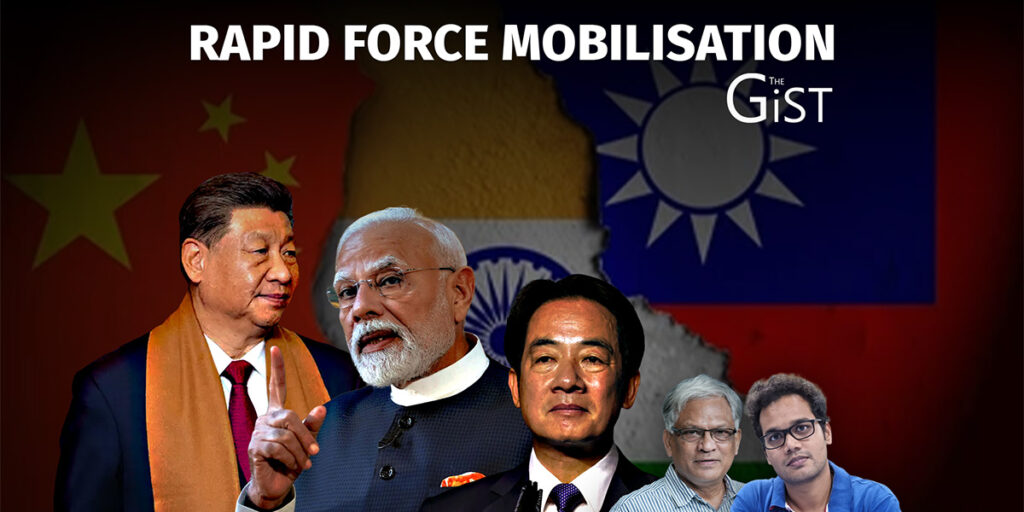
The PLA’s New Cold Start Doctrine ‘Has An India Message’
“China’s cold start is very similar to the Indian cold start or a cold start by any other armed forces in the world, which means the ability to conduct rapid, high intensity offensive operations before an adversary can mobilize or intervene.
“So you have to be fast, you have to be rapid and you have to get a quick, easy victory, at least in the initial stage,” says Suyash Desai, China scholar specialising on the People’s Liberation Army (PLA).
Desai was a guest on The Gist, analysing the implications of the PLA’s cold start doctrine, which means mobilising in 30 minutes. That means from the time the order to mobilise is issued to the time when troops are ready on station, it takes half an hour.
The Chinese military has been taken up with the idea of cold start for some years now. Desai recalls reading Mandarin language publications including those related to the PLA, that refer to the need for getting into action rapidly.
Although they style it as “defensive operation”, Desai argues that it is anything but defensive. This is something the PLA’s top leadership has been pushing hard for and the political brass has also got involved.
“But for various reasons including corruption, demand-supply mismatch between the personnel they want for the tools they are acquiring, those goals couldn’t be achieved,” Desai said. “But they worked on different exercises and be it east or west, north beach or South China Sea, every theater command is going to benefit from cold start.”
He pointed to another significant development. Normally, doctrines of this kind are first tested in the Eastern Theatre Command responsible for Taiwan, and the Southern Theatre Command that oversees the South China Sea.
But in this case, the testing ground was Tibet, meaning the front against India. This goes against the 1993 directive where Taiwan was referred to as the first primary strategic direction and India as the secondary strategic direction.
But since 2020, the Xinjiang and Tibet fronts against India have received some of the best and latest military hardware. It suggests that from secondary strategic direction, India is now got an upgrade where it is virtually on par with the Taiwan front.
Tune in for more in this conversation with Suyash Desai, China scholar specialising on the People’s Liberation Army.
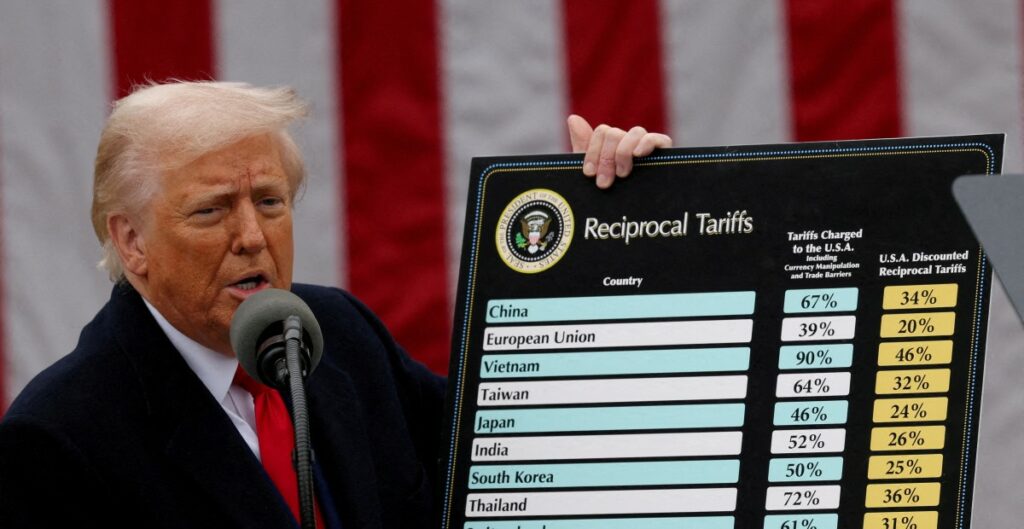
Trump’s Anti-India, Pro-Pakistan Stance Part Of Longtime U.S. Policy
President Donald Trump’s stand in supporting Pakistan and his administration’s hostility towards India, after Operation Sindoor, may have come as a surprise to many casual observers but Washington’s policies in the sub-continent have always been designed to contain India, historical documents show.
While this report, based on a recently published, peer-reviewed paper holds the Central Intelligence Agency (CIA) responsible for inciting the 1962 war between India and China, many other actions during pre- and post-1971 also demonstrate constant efforts by the US to undermine India.
When Kao Flagged U.S. Position
An official correspondence between RN Kao, the founder of India’s external intelligence agency, the Research and Analysis Wing (R&AW), and then Indian Army Chief Gen (later Field Marshal) Sam Manekshaw in June 1972, reveals how the U.S. was determined to help a defeated Pakistan to maintain an ‘equilibrium’ in Asia. The top secret note from Kao to Manekshaw gives a detailed assessment of the US intentions. Kao’s note was in response to a missive shared by Gen Manekshaw based on information sent by India’s Military Attache in Washington.
As Kao writes: “U.S.A. wants a strong Pakistan as a counterbalance against India to the extent possible and as a source of stability, particularly in the Persian Gulf area.” The American policy (Richard Nixon was the President) was based on the new reality in the sub-continent in 1972. “It is the official US position that even before the December 1971 war, the military balance shifted decisively toward India between 1966 and 1971…they concede that India has emerged from this crisis as the dominant power in South Asia.”
Distinct Pakistan Tilt Of U.S.
In this context, Kao writes to Manekshaw: “Both China and the U.S.A. support Pakistan’s stand on Kashmir. Both are interested in keeping the issue alive as a means of pressure on India and as a bone of contention between India and Pakistan which ensures that the two countries remain at loggerheads.”
The final paragraph of the note, available in the Prime Minister’s Museum and Library (PMML) in New Delhi, could have been written in 2025. It reads: “This is not to say that either the U.S.A. or China is reconciled to India’s success… this period would be full of dangers to us. The U.S.A. would now seek to create a new balance in the region.
The main lines of this policy insofar as these can be discerned are as follows: a) military and economic aid to Pakistan with a view to restoring political and economic stability and rebuilding Pakistan as a strong military power; b) large-scale economic aid to Bangladesh to reduce Indian and Soviet influence; c) efforts to strengthen US influence in the smaller countries—Nepal, Bhutan, Ceylon (Sri Lanka), Bangladesh and Pakistan—as an antidote to India; d) efforts to increase separatist moves in India and to encourage dissatisfied minorities with a view to weakening India and reduce Soviet influence and e) increased U.S. naval presence to maintain a balance of military power.”
CIA’s Bngladesh Mission
In October 1972, PN Banerjee, then Joint Director of R&AW based in Calcutta (and one of the closest friends of Sheikh Mujibur Rahman), in a note to Kao, confirmed the prevailing suspicion about the CIA. The top secret note read, in parts: “Sheikh Mujibur Rahman repeatedly mentioned about the growing CIA activities in Bangladesh. He said that he had already alerted his Special Branch as well as the Director of External Intelligence Mr Monen Khan alias Mihir, who keeps discreet vigilance on CIA operators in Bangladesh and reports to him from time to time. He also solicited our assistance in curbing CIA activities in Bangladesh.”
The CIA was not only infiltrating and financing anti-Mujib parties but were also ‘assiduously cultivating’ some of the high officials of the Bangladesh govt, Banerjee’s note added. The R&AW’s point person in Bangladesh, quoted the head of Bangladeshi External Intelligence, DIG Khan alias Mihir saying among the CIA contacts were Ruhul Kuddus, Principal Secretary to Prime Minister Mujib, Taslimuddin Ahmed, Home Secretary, Ibrahim, Director General, Security, Nurul Islam and Rahman Shobhan of the Planning Commission. Clearly, the Americans had managed to reach the inner circle of Shiekh Mujib within a year of the liberation of Bangladesh, during which the U.S. was supporting the Pakistan army openly.
The current anti-India sentiment currently sweeping among hotheads and radicals in Bangladesh should therefore not surprise anyone going by what happened even half a century ago. History is repeating itself in India’s neighbourhood, maybe in a more virulent form, thanks to the continuing hostility of the Americans.
How The CIA Provoked The 1962 Sino-India War
The 1962 India–China war was sparked not by a sudden border dispute but by Cold War covert operations, as sustained CIA efforts to destabilise Tibet reshaped Beijing’s threat perceptions and dragged India—often unknowingly—into the resulting confrontation.
Recently declassified US government documents show that the Central Intelligence Agency ran a sustained covert war in Tibet in the late 1950s and pursued it despite clear awareness that it could provoke China and destabilise India–China relations.
This reconstruction draws on recently declassified US State Department records, including Foreign Relations of the United States volumes released decades after the war, as well as declassified intelligence material relating to covert operations in Tibet. These documents have been synthesised and analysed in investigative reporting by Kit Klarenberg and in recent peer-reviewed scholarship by D. Lakshmana Kumar, which reassesses the origins of the 1962 conflict using Indian, American, and Chinese archival sources.
For decades, the origins of the 1962 war were explained narrowly, framed either as a cartographic quarrel or as a failure of Indian military preparedness. Tibet, when mentioned at all, appeared as a peripheral complication. The documentary record now tells a different story. Tibet was not incidental to the conflict; it was the arena in which the strategic logic of the Cold War first collided with the fragile politics of post-colonial Asia.
By the mid-1950s, Washington had concluded that direct confrontation with the People’s Republic of China was neither feasible nor desirable. Instead, US planners sought indirect pressure points along China’s vast periphery. Tibet, recently brought under Beijing’s control and geographically isolated, emerged as a prime candidate. Declassified US planning documents and later official acknowledgements make clear that American policymakers did not believe Tibet could be liberated. Its value lay in distraction, attrition, and propaganda.
Beginning in 1957, Tibetan fighters were secretly removed from the region, trained abroad in guerrilla warfare, communications, and sabotage, and then parachuted back into Tibet. Arms and supplies followed through covert air drops. These operations expanded significantly in 1958 and 1959, precisely when China was already under acute internal strain from the failures of the Great Leap Forward and growing unrest in Tibet.
From the American perspective, success was measured not by battlefield outcomes but by pressure exerted. Later admissions by US officials acknowledged that even a failed insurgency served strategic purposes if it forced Beijing to divert troops, harden internal controls, and expose itself internationally. Tibet, in this calculus, was not a people or a place but an instrument.
For China, however, Tibet was existential. Chinese leaders had long believed that unrest in border regions invited imperial intervention, a lesson drawn from their own modern history. As resistance intensified and its sophistication became evident, Beijing concluded that it could not be indigenous. Formal Chinese protests from the period accused “imperialist forces” of orchestrating subversion against Chinese sovereignty.
India entered this picture not by design, but by geography and circumstance. Tibetan refugees crossed into India. Political activity centred in places like Kalimpong. Communications passed through Indian territory. While New Delhi neither authorised nor controlled the covert war in Tibet, Chinese leaders increasingly viewed India as a permissive conduit for hostile activity.
Secrecy proved decisive. The CIA’s Tibetan programme was covert not only from the public but also from much of the Indian political leadership. India had no operational oversight of actions unfolding in its immediate neighbourhood. Yet from Beijing’s perspective, distinctions between American action and Indian responsibility blurred. Geography collapsed nuance, and suspicion filled the gaps.
The Tibetan uprising of March 1959 and the Dalai Lama’s flight to India marked a turning point. For India, granting asylum was a humanitarian act consistent with its values. For China, it confirmed the belief that India had abandoned neutrality. Chinese internal discussions and public messaging from this period increasingly framed Tibet—not the boundary line—as the central grievance shaping Sino-Indian relations.
State Department and policy documents show that American officials were aware that covert action in Tibet could push China toward confrontation with India. Yet the programme continued. In Cold War logic, a widening rift between China and a major non-aligned Asian state was not an unintended consequence; it was strategically useful.
By the end of the 1950s, the effects were cumulative. China hardened its posture along the frontier. Diplomatic talks stalled. Chinese patrols moved forward in disputed areas. India, interpreting these moves as territorial aggression, responded with forward deployments of its own. Each step reinforced the other side’s worst assumptions, all against the unresolved backdrop of Tibet.
The crucial point is that the 1962 war did not erupt suddenly. It emerged from years of escalating mistrust rooted in covert action, misperception, and Cold War strategy. Chinese leaders repeatedly linked the need to “teach India a lesson” to what they saw as Indian interference in Tibet. At the same time, continued American covert activity ensured that Chinese anxieties about encirclement never receded.
India found itself trapped by forces it did not control. Its policy of non-alignment limited its leverage over the superpowers. Its humanitarian actions were reinterpreted as hostility. And its lack of visibility into covert American operations meant it bore the consequences of decisions taken elsewhere.
By the time Chinese forces crossed the Himalayas in October 1962, the war had already been prepared—by secret training camps, arms drops, intelligence assessments, and Cold War strategies that treated Tibet not as a society, but as a lever.
As Donald Trump later complained, India never truly entered Washington’s camp; the vast covert effort once invested in driving a lasting rupture between India and China ultimately dissolved against geopolitical reality, leaving behind little more than strategic wreckage and a war whose costs were borne by others.
Next: CIA Wrecked India–China Ties, But Won Nothing
Khaleda Zia’s Son Tarique Returns After 17 Years, Political Venom In Store?
“I have a plan,” Tarique Rahman told the lakhs who had come from all over Bangladesh to see their self-exiled leader, home for the first time after 17 years.
Was he invoking the late American civil rights leader Martin Luther King whose “I have a Dream” address in 1963, is seen as among the high points of the struggle for civil rights by the Black minority?
But Rahman, the acting leader of the BNP, disclosed little about his plan other than urging that all bury their differences and cooperate in building the country.
“Together we will work, together we will build our Bangladesh,” he said, thanking all those who had made this moment possible. “By the boundless mercy of Rabbul Alamin, today I have been able to return to my beloved motherland—through your prayers, and back among you.”
He compared last year’s August uprising against Sheikh Hasina to the 1971 war of liberation that saw “the blood of hundreds of thousands of martyrs” and the emergence of Bangladesh.
“On 5 August 2024 the students and the masses of this country, along with people from all walks of life … regardless of party affiliation, across all classes and professions, together protected the independence and sovereignty of this country on that day.”
Without naming Sheikh Mujibur Rahman the founder of Bangladesh, he described his assassination in Nov 1975 as “the country … saved from the clutches of hegemony through the sepoy–people’s uprising to protect it from domination.”
He referred to the “conspiracies of the conspirators” but took no names. He also called for a “safe Bangladesh”, saying that Muslims, Buddhists, Christians, Hindus all live in this country.
Three times he called for peace in Bangladesh and urged the younger generation to build “a strong democratic nation with a strong economic base.”
After addressing the crowds, Tarique Rahman left for Evercare Hospital where his mother and BNP leader Khaleda Zia, lies in critical condition.
How 2025 Changed India’s Economic and Strategic Playbook
2025 was not just another year. It was a year of inflection, both for the world and India.
A volatile global order and fragmenting trade, India’s deep-tech push, the rise of women voters, and worsening climate risks morphing into economic shocks, were developments that were impossible to ignore.
Week after week we decoded these shifts on Capital Calculus, through conversations with policymakers, industry leaders, and thinkers.
In this special episode, StratNewsGlobal.Tech put together the most powerful ideas and standout insights from the interviews conducted in 2025.
It is not just about looking back. Instead it is to grasp their implications. Especially, how they will play out the world and India in 2026 and beyond.
Why Is Myanmar’s Junta Holding An Election During A Civil War?
Myanmar’s military-led administration will hold a multi-phased general election starting on Sunday, even as a civil war rages across large parts of the Southeast Asian country.
Why Is Myanmar Holding An Election?
The military ousted the elected government of Nobel laureate Aung San Suu Kyi in a February 2021 coup, just as it was preparing for its second term in office following a landslide election win months earlier.
The generals accused Suu Kyi and her National League for Democracy (NLD) party of electoral fraud, which she rejected. International election monitors reported no irregularities. Suu Kyi and much of the NLD were detained along with thousands of junta opponents.
The junta pledged to hold an election by August 2023 and restore a democratic system, but that was pushed back as the military lost control of swathes of the country in its battles with ethnic minority rebels and anti-junta militias.
The NLD was among dozens of parties dissolved for failing to register.
Most analysts see the election as a way for the military, which has governed Myanmar for much of the past six decades, to entrench its rule via proxies in the absence of a viable political opposition, and earn legitimacy at home and abroad.
How Will The Election Be Held?
Voting will be held in phases, on December 28 in 102 townships, and on January 11 in 100 townships. Authorities have said a third phase could be held later in January.
Myanmar has 330 townships altogether, and junta chief Min Aung Hlaing has acknowledged polls will not be nationwide.
Dates for counting and results have not been publicised. The military-backed election commission has said its more than 50,000 electronic voting machines will speed up counting.
Seats will be determined by a combination of first-past-the-post, proportional representation and mixed-member proportional systems, the commission has said. Previous elections used a plurality system where candidates with the most votes won seats.
In line with an army-drafted 2008 constitution, 25% of upper and lower house seats are reserved for serving military personnel selected by the armed forces chief.
Who Is Taking Part?
Only six parties are competing on a national level, with 51 contesting within a single region or state. Many parties that ran in the past two elections have been disbanded, and anti-junta rebels have refused to take part.
That has left in the fray only junta-approved parties, including the military’s proxy Union Solidarity and Development Party, which won the last election held by a junta in 2010. The USDP is fielding 1,018 candidates, a fifth of the total registered.
The USDP, led by former generals, was routed by the NLD in landslides in the 2015 and 2020 elections, the latter annulled after the coup.
As in 2010, with the armed forces controlling 25% of the legislature and its USDP allies expected to win a large number of seats, the military will have power to influence who becomes president, the formation of a government, plus judicial and civil service appointments.
How Will A President Be Chosen?
According to the constitution, parliament must convene within 90 days of the start of the election. Speakers will be elected, and at a later date, a president.
To choose a president, three electoral colleges are formed, comprising members of the upper and lower houses, who each nominate one candidate for president. Two of the colleges are elected lawmakers, while the third is exclusively comprised of military-appointed lawmakers.
A plenary vote of the bicameral legislature will be held, and the candidate with the most votes becomes president, with the runners-up as vice presidents. A cabinet will then be appointed by the president.
(with inputs from Reuters)
Russia Plans to Build Nuclear Power Plant on the Moon by 2036
Russia intends to construct a nuclear power plant on the moon within the next decade to support its expanding lunar exploration programme and a joint research base with China. The project marks Moscow’s most ambitious step yet in reviving its space credentials as major powers accelerate efforts to establish a permanent presence on the earth’s only natural satellite.
Roscosmos, Russia’s state space agency, announced that it had signed a contract with aerospace firm Lavochkin Association to build the plant, which it aims to complete by 2036. The facility will provide energy for lunar rovers, observatories and infrastructure forming part of the planned Russian-Chinese International Lunar Research Station.
From Setbacks to Renewed Ambition
Russia’s lunar ambitions have faced severe setbacks in recent years. The 2023 Luna-25 probe crashed into the moon’s surface during a landing attempt, dealing a blow to Moscow’s return to deep-space exploration. Once a pioneer in spaceflight, Russia has since struggled to match the United States and China, both of which have advanced their lunar and planetary programmes significantly.
Despite the failure, Roscosmos insists the latest project will mark a turning point. “This initiative is an important step toward the creation of a permanently functioning scientific lunar station and the transition from single missions to long-term lunar exploration,” the agency said in a statement.
Nuclear Collaboration and Technological Edge
Although Roscosmos stopped short of explicitly confirming the plant’s nuclear nature, the project involves Rosatom, Russia’s state nuclear corporation, and the Kurchatov Institute, the country’s top nuclear research body. Their participation strongly indicates that the facility will rely on nuclear technology to ensure a stable and long-lasting energy supply in the moon’s harsh environment.
Roscosmos head Dmitry Bakanov has previously outlined the goal of deploying a nuclear power source on the moon as part of broader plans that also include renewed exploration of Venus, often described as the earth’s “sister planet.”
Renewed Space Competition
The announcement highlights a growing global competition to secure technological and scientific leadership in lunar exploration. While the United States is preparing for future Artemis missions and China has advanced its Chang’e lunar programme, Russia’s collaboration with Beijing underscores a strategic partnership designed to maintain influence in space research.
The moon, located roughly 384,400 kilometres from earth, plays a crucial role in stabilising the planet’s rotation and influencing tides. For Russia, establishing a permanent scientific base there is as much a symbol of prestige as it is a step toward reasserting its position among the world’s space powers.
with inputs from Reuters