

Support us by contributing to StratNewsGlobal on the following UPI ID
ultramodern@hdfcbank

Strategic affairs is our game, South Asia and beyond our playground. Put together by an experienced team led by Nitin A. Gokhale. Our focus is on strategic affairs, foreign policy and international relations, with higher quality reportage, analysis and commentary with new tie-ups across the South Asian region.
You can support our endeavours. Visit us at www.stratnewsglobal.com and follow us on YouTube, Twitter, Facebook and Instagram.
र 500 per month
र 1000 per month
र 5000 per year
र 10000 per year
Donate an amount of your choice
र 500 per month
Donate र 500 per month

र 1000 per month
Donate र 1000 per month
र 5000 per year
Donate र 5,000 per year
र 10000 per year
Donate र 10,000 per year
Donate an amount of your choice
Donate an amount of your choice
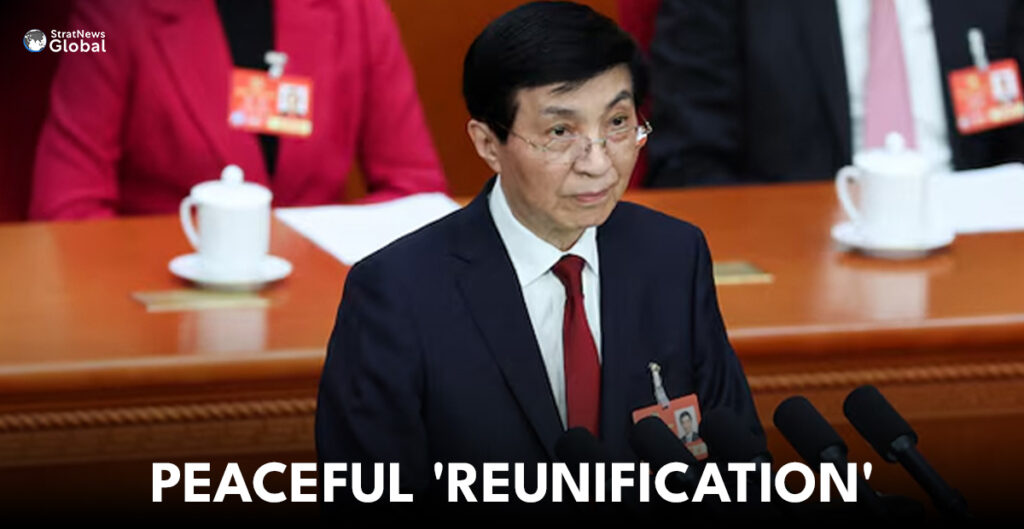

China’s Top Official Calls Peaceful Taiwan Reunification The Best Way Forward
Beijing’s fourth-highest-ranking leader said on Saturday that China and Taiwan should pursue “peaceful reunification,” according to the Chinese state-run news agency Xinhua.
Wang Huning, a Communist Party Politburo standing committee member in charge of dealing with Taiwan, said at an event in Beijing to mark the 80th anniversary of the island’s “restoration” to Chinese rule that China, however, would not tolerate any activities promoting Taiwanese independence.
At the event at Beijing’s Great Hall of the People, Wang also said China will take the lead in sharing the fruits of its development and progress with Taiwan’s people, Taiwan’s official Central News Agency said in a separate report datelined Beijing.
‘Same Old Message’
Taiwan’s Mainland Affairs Council said China was repeating the “same old message” and that China’s real aim was to “annexe” Taiwan.
“The experience of Hong Kong has also demonstrated that ‘one country, two systems’ ultimately amounts to authoritarian rule by the Chinese Communist Party,” the council said.
The so-called development prospects under “unification” hold no appeal whatsoever for the people of Taiwan, it added.
Taiwan’s government is not formally marking the event, instead celebrating the anniversary of the 1949 Battle of Guningtou, when communist forces tried and failed to invade Kinmen Island, held to this day by Taipei.
“We hope to further become a trusted security partner to our allies, and together build a strong line of defence to safeguard the values of freedom and democracy,” President Lai Ching-te wrote on his Facebook page on Saturday about that anniversary.
China and democratically-governed Taiwan, which Beijing views as its own territory, have repeatedly clashed this year over their differing interpretations of the 80th anniversary of the end of World War Two.
Taiwan was a Japanese colony from 1895 until 1945, when it was handed over to the Republic of China government, which in 1949 fled to the island after losing a civil war with Mao Zedong’s communists. That remains Taiwan’s formal name.
Taiwan’s government rejects Beijing’s territorial claims, saying only the island’s people can decide their future.
(With inputs from Reuters)
US Weighs More Russia Sanctions, Pushes Europe To Toughen Stance
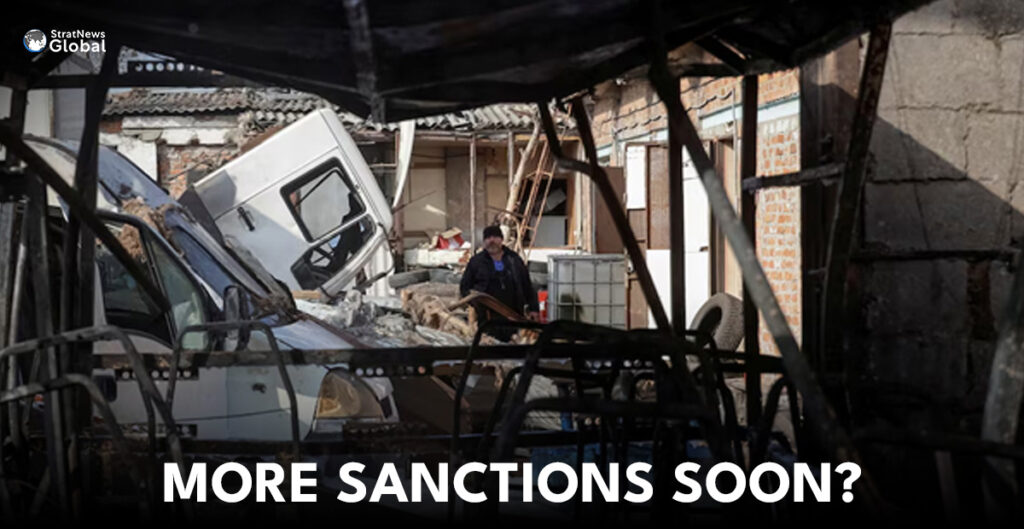
The Trump administration has readied additional sanctions aimed at key sectors of Russia’s economy if President Vladimir Putin continues to prolong the war in Ukraine, according to a U.S. official and another source familiar with the plans.
U.S. officials have also told European counterparts that they support the EU using frozen Russian assets to buy U.S. weapons for Kyiv, and Washington has held nascent internal conversations about leveraging Russian assets held in the U.S. to support Ukraine’s war effort, two U.S. officials said.
While it is not clear whether Washington will actually carry out any of those moves in the immediate term, it shows there is a well-developed toolkit within the administration to up the ante further after Trump imposed sanctions on Russia on Wednesday for the first time since returning to office in January.
Trump has positioned himself as a global peacemaker, but has admitted that trying to end Russia’s more-than-three-year war in neighbouring Ukraine has proven harder than he had anticipated.
European allies – buffeted by Trump’s swings between accommodation and anger toward Putin – hope he keeps upping the pressure on Moscow, and are also mulling major actions of their own.
One senior U.S. official told Reuters that he would like to see European allies make the next big Russia move, which could be additional sanctions or tariffs. A separate source with knowledge of internal administration dynamics said Trump was likely to hit pause for a few weeks and gauge Russia’s reaction to Wednesday’s sanctions announcement.
Those sanctions took aim at oil companies Lukoil and Rosneft. The moves spiked oil prices by more than $2 and sent major Chinese and Indian buyers of Russian crude looking for alternatives.
Banking Sector, Oil Infrastructure
Some of the additional sanctions the U.S. has prepared are geared toward Russia’s banking sector and the infrastructure used to get oil to market, said a U.S. official and another person familiar with the matter.
Last week, Ukrainian officials pitched the U.S. with new sanctions activity, said one source with knowledge of those conversations. Among the specific ideas put forward were measures to cut off all Russian banks from the dollar-based system with U.S. counterparts, two sources said. It is not clear, however, how seriously Ukraine’s specific requests are under consideration.
The U.S. Senate is also making moves, with some lawmakers renewing a push to get a long-stalled bipartisan sanctions bill over the line.
The person with knowledge of internal administration dynamics said Trump is open to endorsing the package. The source warned, though, that such an endorsement is unlikely this month.
The Treasury Department did not respond to a request for comment.
Kirill Dmitriev, Russian President Vladimir Putin’s special envoy for investment and economic cooperation, said on Friday he believes his country, the United States and Ukraine are close to a diplomatic solution to end Russia’s war in Ukraine.
Halyna Yusypiuk, Ukrainian Embassy spokesperson in Washington, said the recent sanctions decision was appreciated, but did not otherwise comment.
“Dismantling Russia’s war machine is the most humane way to bring this war to an end,” Yusypiuk wrote in an email.
A Week Of Whiplash
Trump’s decision to hit Russia with sanctions capped a tumultuous week with respect to the administration’s Ukraine policy.
Trump spoke with Putin last week and then announced the pair planned to meet in Budapest, catching Ukraine off guard.
A day later, Trump met with Ukrainian President Volodymyr Zelenskyy in Washington, where U.S. officials pressed Zelenskyy to give up territory in the Donbas region as part of a lopsided land swap to end the war.
Zelenskyy pushed back, and Trump left the meeting with the position that the conflict should be frozen at its frontlines.
Then last weekend, Russia sent a diplomatic note to Washington reiterating previous peace terms. A few days later, Trump told reporters the planned meeting with Putin was off because “it just didn’t feel right to me.”
Speaking to CNN on Friday after arriving in Washington for talks with U.S. officials, Dmitriev said a meeting between Trump and Putin had not been cancelled, as the U.S. president described it, and that the two leaders will likely meet at a later date.
Two U.S. officials argued privately that, in hindsight, Trump’s abortive plan to meet with Putin was likely the fruit of irrational exuberance. After sealing a ceasefire in Gaza, those officials said, Trump overestimated the degree he could use momentum from one diplomatic success to broker another one.
Trump ultimately decided to slap Russia with sanctions during a Wednesday meeting with Treasury Secretary Scott Bessent and Secretary of State Marco Rubio, a senior White House official said.
US Pressure On Europe
Behind the scenes, Ukraine got an apparent U.S. boost after the U.S. approval process for providing targeting data for long-range Ukrainian strikes in Russia was moved to U.S. European Command in Germany – viewed by U.S. and European officials as more hawkish on Russia – from the Pentagon in Washington, according to a U.S. and a European official.
However, Trump has said he was still not ready to provide Ukraine with long-range Tomahawk missiles, which Kyiv has requested.
The U.S. is also putting pressure on Europe to further tighten the financial screws on Moscow. In announcing the U.S. sanctions, Bessent pushed the EU to follow. Broadly speaking, U.S. officials have criticised EU and NATO countries for not taking more decisive steps to stand up to Russia.
It will be more difficult, though, for the EU to unleash full-blocking sanctions on Lukoil than it is for the U.S., one senior EU official argued, given how heavily entangled Lukoil is with Europe’s economy. The oil company owns refineries in Bulgaria and Romania and has a robust retail gas station network throughout the continent.
“I think we need to find a way to disengage…before we can fully sanction,” the EU official said.
(With inputs from Reuters)
Trump Confident Of Trade Deal After ‘Successful’ U.S.-China Talks In Malaysia
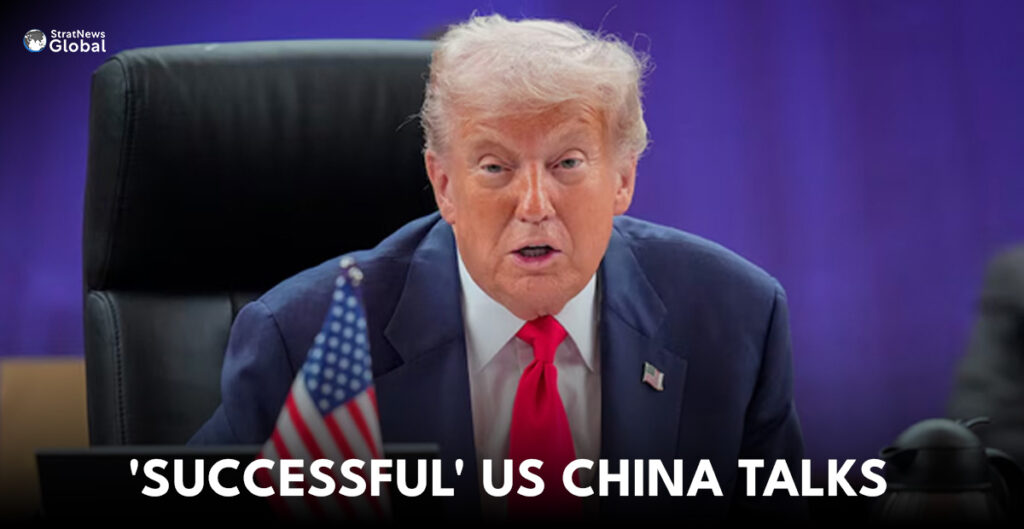
U.S.-China talks in Malaysia concluded on Sunday after two days of discussions aimed at easing trade tensions, with President Donald Trump expressing confidence about reaching a deal with Chinese President Xi Jinping next week.
U.S. Treasury Secretary Scott Bessent and Trade Representative Jamieson Greer met with Chinese Vice Premier He Lifeng and top trade negotiator Li Chenggang on the sidelines of the ASEAN summit in Kuala Lumpur for a fifth round of in-person discussions since May.
“I think we have a very successful framework for the leaders to discuss on Thursday,” Bessent told reporters.
Trump arrived in Malaysia on Sunday for a summit of the Association of Southeast Asian Nations, his first stop in a five-day Asia tour that is expected to culminate in a face-to-face with Xi in South Korea on October 30.
After the talks, he struck a positive tone, saying, “I think we’re going to have a deal with China.”
The U.S. president also hinted at possible meetings with Xi in China and the United States.
“We’ve agreed to meet. We’re going to meet them later in China, and we’re going to meet in the U.S., in either Washington or at Mar-a-Lago,” he said.
Trade Truce
Both sides are looking to avert an escalation of their trade war after Trump threatened new 100% tariffs on Chinese goods and other trade curbs starting on November 1, in retaliation for China’s vastly expanded export controls on rare earth magnets and minerals.
Beijing and Washington rolled back most of their triple-digit tariffs on each other’s goods under a trade truce, which is due to expire on November 10.
Bessent said the truce could be extended, pending the president’s decision, marking a second extension since it was first signed in May.
Bessent said they had “very substantial negotiations” and discussed trade, rare earths, fentanyl, TikTok and the overall relationship between the two countries.
Talking Points
While the White House has officially announced the highly anticipated Trump-Xi talks, Beijing has yet to confirm that the two leaders will meet.
Among Trump’s talking points with Xi are Chinese purchases of U.S. soybeans, concerns around democratically governed Taiwan, which Beijing views as its own territory, and the release of jailed Hong Kong media tycoon Jimmy Lai.
The detention of the founder of the now-defunct pro-democracy newspaper Apple Daily has become the most high-profile example of China’s crackdown on rights and freedoms in the Asian financial hub.
Trump also said that he would seek China’s help in Washington’s dealings with Russia, as Moscow’s war in Ukraine approaches its fourth year.
U.S. Secretary of State Marco Rubio said on Sunday that the U.S. will not walk away from Taiwan in return for trade benefits with China.
Fragile Truce
Tensions between the world’s two largest economies flared in the past few weeks as a delicate trade truce – reached after their first round of trade talks in Geneva in May and extended in August – failed to prevent the two sides from hitting each other with more sanctions, export curbs and threats of stronger retaliatory measures.
The latest round of talks is likely to centre around China’s expanded controls of rare earth exports that have caused a global shortage.
That has prompted the Trump administration to consider a block on software-powered exports to China, from laptops to jet engines, according to a Reuters report.
A day before the talks commenced, the U.S. launched a new tariff investigation into China’s “apparent failure” to comply with the “Phase One” trade deal signed in 2020.
The new unfair trade practices probe bolsters Trump’s toolkit against China.
Any agreement from Sunday’s talks is likely to be fragile as the world’s most important trade relationship, worth $660 billion a year, hangs in the balance.
(With inputs from Reuters)
Trump Claims Credit For India-Pakistan Ceasefire, Compares It To Russia-Ukraine Peace Efforts
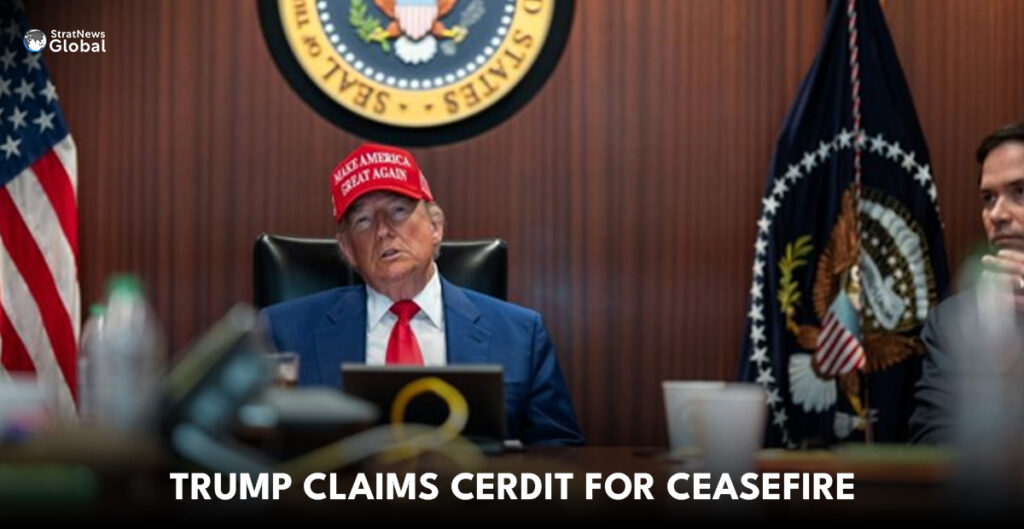
US President Donald Trump has once again claimed credit for helping resolve several global conflicts, including tensions between India and Pakistan, saying he thought brokering peace between the two countries would be harder than achieving a Russia-Ukraine ceasefire.
Speaking to reporters aboard Air Force One ahead of his Asia visit, Trump said, “I got it done (ceasefire). There are others. If you look at India and Pakistan, I could say almost any one of the deals that I’ve already done I thought would have been more difficult than Russia and Ukraine, but it didn’t work out that way. Russia-Ukraine is the most challenging conflict to solve.”
Trump has repeatedly claimed that Washington played a key role in securing a “full and immediate” ceasefire between the nuclear-armed neighbours earlier this year.
Earlier this month, he credited his tariff threats as a major factor in bringing peace between several nations, asserting that he “would not have been able to solve eight global conflicts otherwise”.
However, India has consistently rejected Trump’s assertions, maintaining that any de-escalation with Pakistan occurred through direct bilateral talks, without any third-party mediation.
Trump repeats claim on Russian oil imports
The US president also reiterated his earlier claim that India would stop importing oil from Russia by the end of the year, a move he linked to his ongoing tariff actions against New Delhi.
“India is cutting back completely. I might discuss China buying Russian oil with Xi Jinping,” Trump said, adding that Prime Minister Narendra Modi had assured him India would halt such purchases.
“He’s assured me there will be no oil purchases from Russia. He can’t do it immediately—it’s a bit of a process, but it’s going to be over soon,” Trump had said earlier.
New Delhi, however, has denied any such commitment, stressing that energy security and consumer interests remain its top priorities.
Trump on meeting Putin
Trump also said he had put on hold plans to meet Russian President Vladimir Putin on the sidelines of the ASEAN Summit unless there was progress toward a Ukraine ceasefire deal.
“I’m going to have to know that we’re going to have a deal (with Putin). I’m not going to be wasting my time,” Trump said.
He added that while Putin had praised his efforts in resolving other conflicts, including between Azerbaijan and Armenia, the ongoing situation in Ukraine had been “very disappointing”.
“Putin told me on the phone, ‘Boy, that was amazing,’ because everybody tried to get that done and couldn’t,” Trump claimed, referring to past peace efforts.
Trump is currently on a three-nation tour of Malaysia, Japan, and South Korea. He is expected to meet Chinese President Xi Jinping in Kuala Lumpur during the ASEAN Summit to discuss ways to prevent further escalation of the US-China trade war.
(With inputs from Reuters)
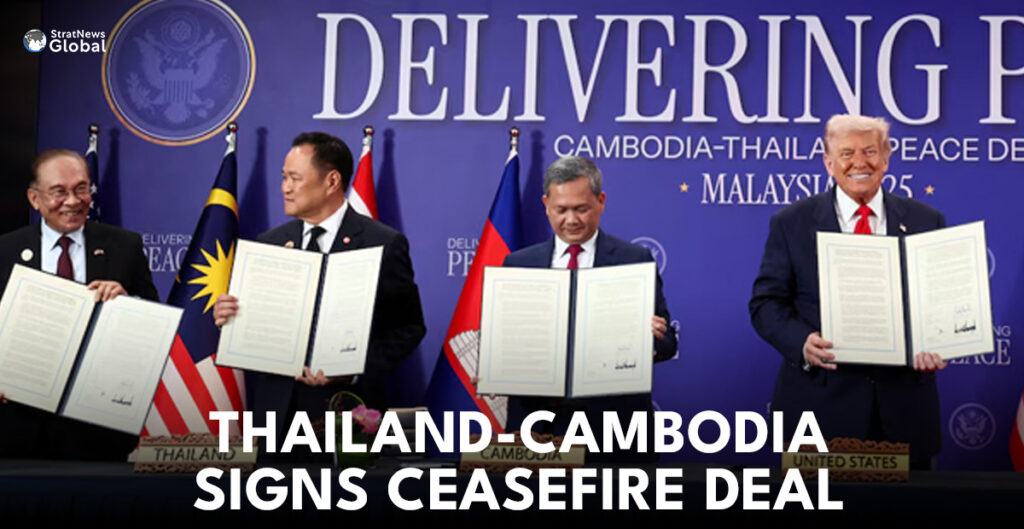
Trump Attends ASEAN Summit As Thailand And Cambodia Sign Ceasefire Deal
U.S. President Donald Trump attended the ASEAN Summit in Malaysia on Sunday, where the leaders of Thailand and Cambodia signed an expanded ceasefire agreement as part of efforts to stabilise border tensions.
Thai Prime Minister Anutin Charnvirakul and his Cambodian counterpart Hun Manet signed the agreement at a ceasefire ceremony in front of a sign that read “Delivering Peace”, building on a truce signed three months ago.
“This declaration, if fully implemented, will provide the building blocks for a lasting peace, but more importantly, it will begin the process of mending our ties,” Hun Manet said.
“Our border communities have been divided by conflict, and innocent civilians have suffered immense losses.”
Trump helped broker an end to the five-day conflict in July by calling the then-leaders of the two countries and urging them to end hostilities or risk their respective trade talks with Washington being put on hold.
“The United States will have robust commerce and cooperation, transactions, lots of them, with both nations, as long as they live in peace,” Trump said.
Both sides blame each other for escalating an exchange of rockets and heavy artillery, which killed at least 48 people and temporarily displaced an estimated 300,000 in their worst fighting in recent history.
Anutin nearly missed the signing after the death of the kingdom’s Queen Mother Sirikit on Friday but later decided to fly in for the ceremony.
He said both sides would remove “heavy weapons from the border areas to ensure the safety of our people” and that Thailand would release 18 detained Cambodian soldiers.
Trade Deals
On arriving in Malaysia, Trump was greeted by Prime Minister Anwar Ibrahim and a troupe of ceremonial dancers at Kuala Lumpur International Airport. He stopped on the red carpet to dance with the performers before taking a U.S. flag in one hand and a Malaysian flag in the other and jumping into his limousine to travel to the city with Anwar.
As Trump mingled with other leaders, U.S. and Chinese negotiators met on the sidelines to avert further escalations in a trade war between the world’s two largest economies.
Asked by a reporter if rare earths were discussed at the talks, which started on Saturday, top U.S. trade negotiator Jamieson Greer said a broad range of topics were discussed, including extending the truce on trade measures.
“I think that we’re getting to a spot where the leaders will have a very productive meeting,” Greer said.
China’s stranglehold over global supplies of rare earths is at the heart of the negotiations, and Washington has sought to diversify supply chains.
Trump said at the ceasefire ceremony that the U.S. would soon sign critical minerals deals with Thailand and Malaysia, while a wider trade deal with Cambodia was also in the works.
Later on Sunday, he is due to discuss sharp U.S. tariffs with Brazilian President Luiz Inácio Lula da Silva, who is among several world leaders attending the weekend summit.
Lula said he plans to argue that the 50% tariffs imposed by Washington on Brazilian goods were a “mistake”, citing a $410 billion U.S. trade surplus with Brazil over 15 years. Trump signalled on his way to Asia that he was open to lowering the tariffs.
A similar meeting with Canadian Prime Minister Mark Carney was not on the cards after talks between the neighbours came to an abrupt end. Trump said on Saturday he was increasing tariffs on Canada by an additional 10% “above what they’re paying now”.
East Timor Becomes Newest ASEAN Memnber
Asia’s youngest nation, East Timor, became the 11th member of the ASEAN bloc on Sunday, fulfilling a vision set out by its current president nearly a half-century ago while the country was a Portuguese colony.
Also known as Timor-Leste, the country of 1.4 million people is among Asia’s poorest and hopes to see gains from integrating its fledgling economy, which at about $2 billion represents only a tiny fraction of ASEAN’s collective $3.8 trillion gross domestic product.
East Timor’s accession follows a 14-year wait, and though its membership is not expected to be transformative, it represents a symbolic victory for its President Jose Ramos-Horta and Prime Minister Xanana Gusmao, the heroes of its struggle for independence.
“For the people of Timor-Leste, this is not only a dream realised but a powerful affirmation of our journey,” Gusmao said in a speech.
“Our accession is a testament to the spirit of our people, a young democracy, born from our struggle.”
(With inputs from Reuters)
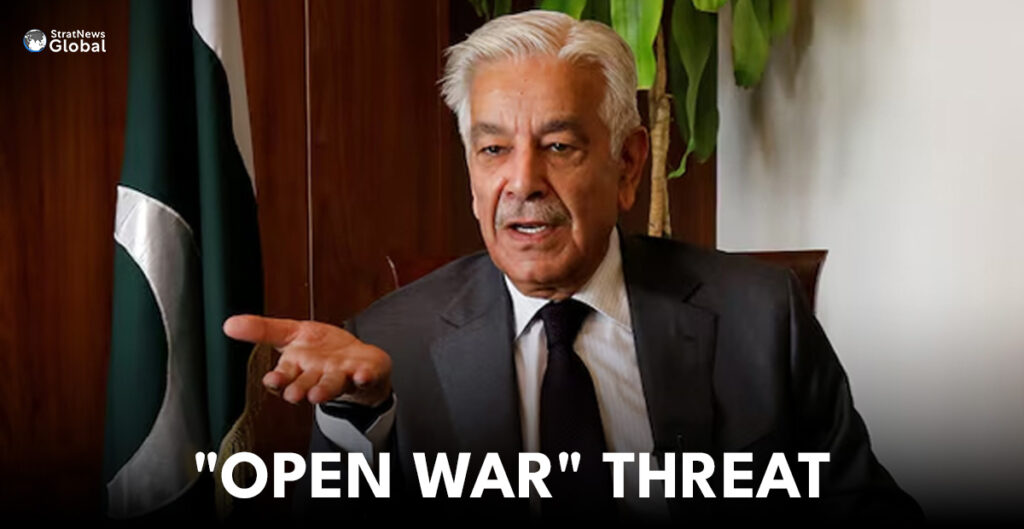
Pakistan Warns Of ‘Open War’ With Afghanistan If Peace Talks Collapse
Pakistan’s defence minister said on Saturday he believes Afghanistan seeks peace, but warned that failure to reach an agreement in the upcoming Istanbul talks could lead to “open war,” just days after both sides agreed to a ceasefire following deadly border clashes.
The talks in Istanbul, which began on Saturday, mark the latest attempt by Pakistan and Afghanistan to prevent a relapse into violence after the worst border fighting since the Taliban’s 2021 takeover of Kabul.
The talks are meant to devise a mechanism to enforce the Doha ceasefire longer term.
Khawaja Muhammad Asif said there had been no incidents in the four to five days since it was agreed, and both sides were complying with the truce.
“We have the option, if no agreement takes place, we have an open war with them,” he said in televised remarks from Pakistan. “But I saw that they want peace.”
The clashes erupted earlier this month after Islamabad demanded that the Taliban curb militants it says are attacking Pakistan from sanctuaries inside Afghanistan.
Pakistan launched airstrikes across the border and both sides exchanged heavy fire, killing dozens and prompting the closure of key crossings that remain shut.
Islamabad accuses Kabul of sheltering militants who target Pakistani forces. The Taliban rejects the charge and says Pakistan’s military operations violate Afghan sovereignty.
Ceasefire After Weeks Of Hostilities
The recent flare-up along the Pakistan-Afghanistan border has marked the most serious escalation between the two neighbours in years, underscoring the volatility that continues to define their relationship.
For weeks, heavy shelling and armed skirmishes unfolded near key border crossings, disrupting civilian life and forcing thousands to flee from frontline areas.
Both sides blamed each other for provoking the violence, which stemmed from long-standing disputes over fencing, border controls, and militant activity along the porous frontier.
Dozens of people, including security personnel and civilians, were killed in the clashes, while hundreds more were injured. Homes, markets, and essential infrastructure endured significant damage, heightening fears of a wider conflict if diplomacy failed to take hold.
The situation also threatened to derail broader regional stability, particularly as both nations struggle with economic challenges and rising security threats.
In an effort to halt the fighting, Qatar and Turkey stepped in to mediate, convening urgent discussions that ultimately resulted in a temporary ceasefire agreement.
The truce offers a crucial pause in hostilities, giving Islamabad and Kabul an opportunity to pursue diplomatic dialogue and reduce tensions.
However, analysts caution that without actionable commitments and trust-building measures, the fragile calm could quickly unravel.
(With inputs from Reuters)
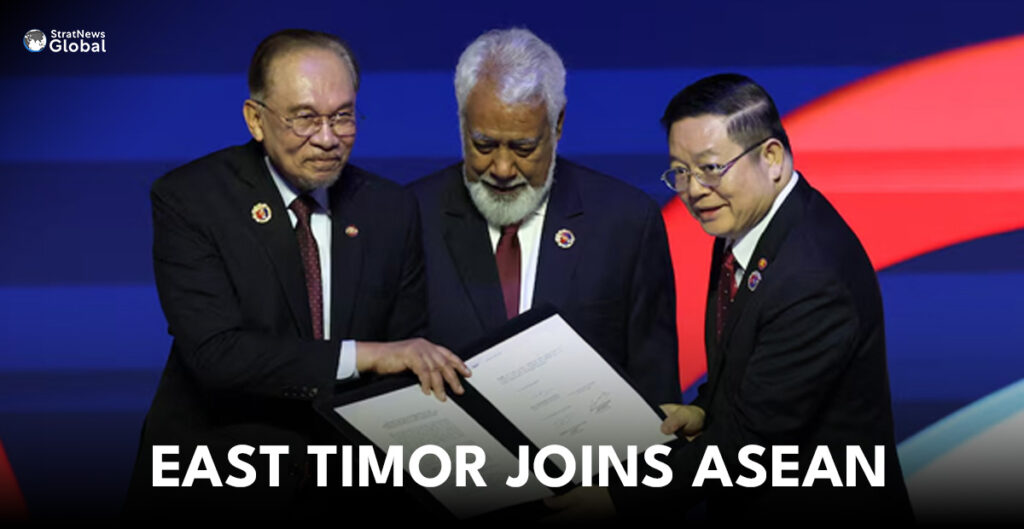
East Timor Joins ASEAN As 11th Member
Asia’s youngest nation, East Timor, officially became the 11th member of the Association of Southeast Asian Nations (ASEAN) on Sunday.
Also known as Timor-Leste, the country of 1.4 million people is among Asia’s poorest and hopes to see gains from integrating its fledgling economy, which at about $2 billion represents only a tiny fraction of ASEAN’s collective $3.8 trillion gross domestic product.
East Timor’s accession to the Association of Southeast Asian Nations follows a 14-year wait, and though its membership is not expected to be transformative, it represents a symbolic victory for its president, Jose Ramos-Horta, and prime minister, Xanana Gusmao, the heroes of its struggle for independence.
Its joining was formalised by ASEAN leaders at the opening of their annual summit in Kuala Lumpur on Sunday, where applause rang out as East Timor’s flag was placed on the stage.
New Beginning With ‘Immense Opportunities’
An emotional Gusmao said it was a historic moment for his country, with a new beginning that would bring “immense opportunities” for trade and investment.
“For the people of Timor-Leste, this is not only a dream realised but also a powerful affirmation of our journey,” Gusmao said in a speech.
“Our accession is a testament to the spirit of our people, a young democracy, born from our struggle,” he said, adding, “This is not the end of a journey.”
East Timor was ruled for three centuries by Portugal, which abruptly pulled out of its colony in 1975, paving the way for annexation and an at-times bloody occupation by giant neighbour Indonesia before it won full independence in 2002.
Ramos-Horta, 75, who was awarded the Nobel Peace Prize in 1996, had raised the idea of East Timor joining ASEAN back in the 1970s to secure his country’s future through regional integration.
In an interview with CNA in September, Ramos-Horta said East Timor must maintain stability and not burden ASEAN, adding it could contribute with its own experiences of conflict, including for disputes over borders and the South China Sea.
“If we can, in the future, contribute towards strengthening ASEAN mechanisms such as conflict mechanisms, that is key. In each country in ASEAN, we put emphasis on dialogue,” Ramos-Horta said.
(With inputs from Reuters)
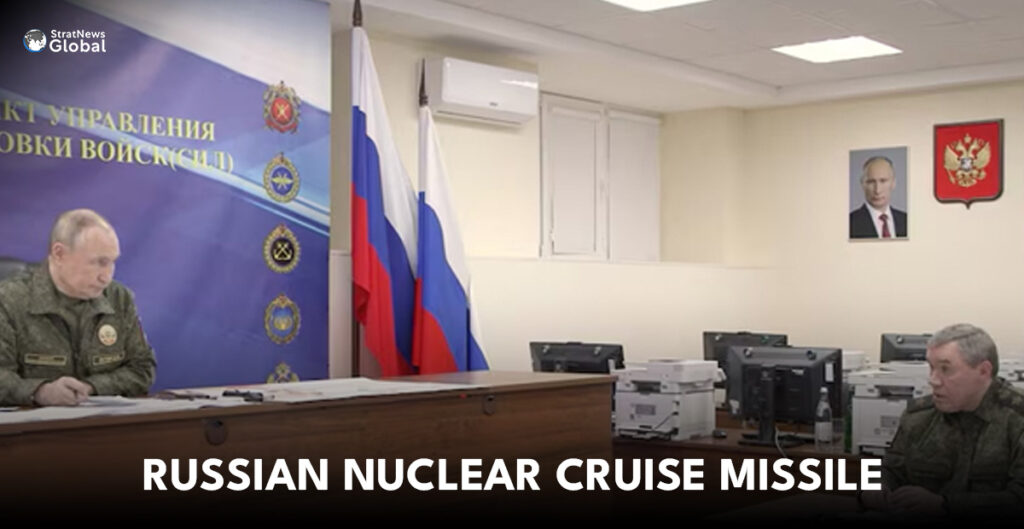
Russia Tests Nuclear-Powered Burevestnik Cruise Missile
Russia tested its nuclear-powered Burevestnik cruise missile, a nuclear-capable weapon President Vladimir Putin said can evade any defence system, marking a step toward future deployment.
Russia’s top general, Valery Gerasimov, chief of the general staff of Russia’s armed forces, told Putin that the missile travelled 14,000 km (8,700 miles) and was in the air for about 15 hours when it was tested on October 21.
‘Invincible’
Russia says the 9M730 Burevestnik (Storm Petrel)—dubbed the SSC-X-9 Skyfall by NATO—is “invincible” to current and future missile defences, with an almost unlimited range and unpredictable flight path.
“It is a unique ware that nobody else in the world has,” Putin, dressed in camouflage fatigues at a command point meeting with generals overseeing the war in Ukraine, said in remarks released by the Kremlin on Sunday.
Putin said that he had once been told by some Russian specialists that the weapon was unlikely to ever be possible, but now, he said, its “crucial testing” had been concluded.
He told Gerasimov that Russia needed to understand how to classify the weapon and prepare infrastructure for deploying the Burevestnik.
Gerasimov said that the missile had flown on nuclear power and that this test had been different because it flew for such a long distance, though the range was essentially unlimited. He said it could defeat any anti-missile defences.
Putin on Wednesday oversaw a test of Russia’s strategic nuclear forces on land, sea and air to rehearse their readiness and command structure.
“The so-called modernity of our nuclear deterrent forces is at the highest level,” Putin said, higher than any other nuclear power.
Russia and the United States together have about 87% of the global inventory of nuclear weapons—enough to destroy the world many times over. Russia has 5,459 nuclear warheads, while the United States has 5,177, according to the Federation of American Scientists (FAS).
“The strategic forces are capable of ensuring the national security of the Russian Federation and the Union State in full,” Putin said.
(With inputs from Reuters)
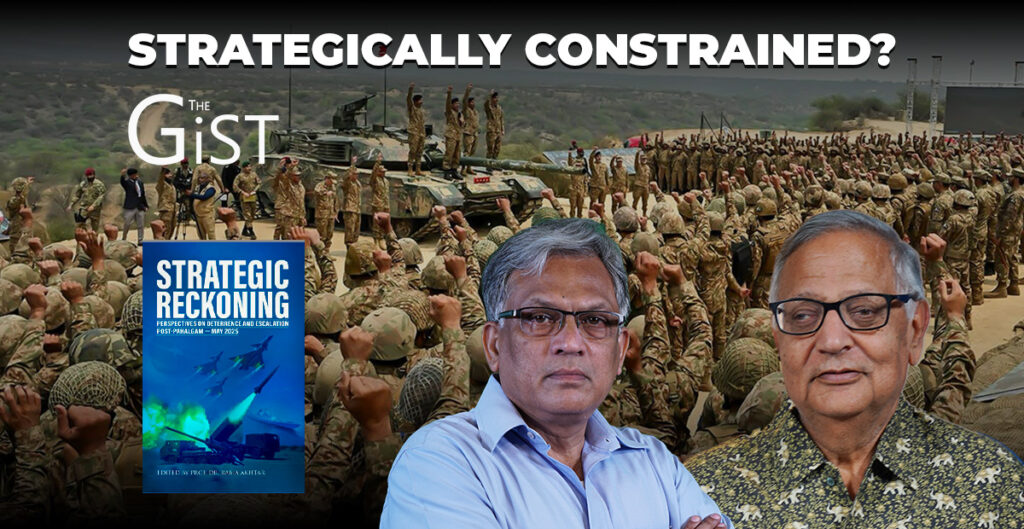
India “Strategically Constrained” Pakistan During Op. Sindoor: Arun Sahgal
In the months since Operation Sindoor, the Pakistani establishment has brought out a book titled Strategic Reckoning: Perspectives on Deterrence & Escalation Post-Pahaglam. Running over 20 chapters, it includes articles and analysis by a cross-section of scholars, senior military officers and diplomats.
It’s all part of what’s called “narrative building”, says Brig Arun Sahgal, head of the Forum for Security Initiatives. In an interview on The Gist, Sahgal says “This is a Pakistani narrative for two reasons. One is self-congratulatory, as you rightly pointed out. And second is it is aimed at the international audience.”
The critical points the book makes, he says, is that India’s aggressive posture is impacting the established norms of stability. Second, they’re trying to put across that it is Pakistan which is the responsible stakeholder. It’s response to the initial attacks by India was it claims “calibrated”, because it did not go down the full route, meaning threatening the use of nuclear weapons.
One of the articles is written by Khalid Kidwai, seen as providing the doctrinal thinking underpinning its nuclear arsenal. His argument is basically seen as seeking to reassure the Pakistani public that if pressed by India beyond a point, Islamabad will resort to “full spectrum deterrence”, meaning nuclear weapons.
Such deterrence comes in two forms: one is tactical deterrence that involve the use of non-strategic nuclear weapons and tactical nuclear weapons. The other is the long range strategic tools that they have to deter India.
The problem here is India has prised open that space by degrading their air defences followed up by massive strikes on May 9th and 10th, “that did not make any distinction incidentally between civilian infrastructure and military infrastructure and even civilian habitations.”
So what does Pakistan do now that its bluff has been called? The book gives the impression the generals will seek to escalate. But Pakistan is a “constrained player” here, argues Brig Sahgal. He is constrained by the “third umpire” (US) who will always prevent them from acting in a rash manner.
Tune in for more in this conversation with Brig Arun Sahgal of the Forum for Security Initiatives.
Disputed III: China Claims All Of Arunachal Pradesh But Has Its Eyes On Tawang
In the third and last in our series Disputed, we examine the case of Arunachal Pradesh in the east, which is claimed by China, underscoring the lack of any understanding on the alignment of the Line of Actual Control (LAC). But is the claim to Arunachal a smoke-screen for something else? The Chinese say Tawang belongs to them and must be handed over. For India that is an impossible demand.
Tawang is strategically located near the confluence of the Indian, Tibetan and Bhutanese borders. It is the birthplace of the 6th Dalai Lama Tsangyang Gyatso and houses the famous Tawang Monastery, considered the “daughter” of the Drepung monastery in Lhasa.
In the late 18th century, the Tibetan authorities exercised some control over Tawang through the Tawang monastery but a survey in 1874 indicated that it was functioning independently. Tibetans, however, continued to trade as far south as Udalguri in Assam.
The Shimla Conference of 1914 settled the Indo-Tibetan border north of Tawang. Lochen Shatra, the Tibetan official attending the conference had no objection to the alignment of the McMahon Line that placed Tawang in British administered India.
Historian and writer Alastair Lamb argues that Lochen Shatra’s stand on the proposed McMahon Line may have been in return for generous British support on the finalisation of the boundary between China and Outer Tibet, as proposed by the Tibetans. But this remains in the realm of speculation.
There is however no doubt, of the presence of a Tibetan administration in Tawang. In 1938, a military column sent to Tawang to assert British claims to the McMahon Line was resisted. In 1944 an Assam Rifles picket was established at Dirang, 130 km south of Tawang, extending administrative control up to Sela, but the Tibetan administration remained.
The issue was settled only in Feb 1951 when Major Bob Kathing, assistant political officer at Sela, was sent in to evict the Tibetan administration, which was successfully done.
Interesting to note that there were no objections raised either by the Tibetans or the Chinese. The latter objected only in 1959 when they claimed that Indian troops had breached the McMahon Line.
An article in the People’s Daily in October 1962, admitted that Indian actions were not challenged because ‘New China’ had no time to attend to the Sino-Indian border. Still later the Chinese during border talks acknowledged that Tibet, at best, only exercised ecclesiastical authority over Tawang.
Tawang has grown in strategic importance with successive Indian governments convinced that it could become a convenient corridor for the Chinese to enter the country. It is generally accepted that the Chinese will use it as a military pressure point, witness the developments post 1986 when they began demanding meaningful concessions in the eastern sector including that Tawang be handed over.
The question is if Tawang was so important why did the Chinese withdraw from the town after the end of hostilities in 1962? Was it because of the approaching winter and the difficulties of logistically sustaining troops?
That argument doesn’t hold since Tawang is connected by perennially open routes. It does suggest that China saw Tawang as part of India and the current claims are a bargaining strategy. India’s claim to Tawang got a boost when in 2008, the Dalai Lama, in a major departure from his earlier ambiguous stance, declared it a part of India.
Tawang will remain a subject of politico-diplomatic maneuvering during peace, and in any future conflict, due to its strategic importance, may become a major politico-military objective for the PLA.
For India, a threat to Tawang is unacceptable and the ramifications of its loss will be unimaginable. It will shake the trust of the people who practice Buddhism and inhabit the Himalayan region from Leh to Kibithu. In addition, the security of the entire northeast will be imperilled.