

Support us by contributing to StratNewsGlobal on the following UPI ID
ultramodern@hdfcbank

Strategic affairs is our game, South Asia and beyond our playground. Put together by an experienced team led by Nitin A. Gokhale. Our focus is on strategic affairs, foreign policy and international relations, with higher quality reportage, analysis and commentary with new tie-ups across the South Asian region.
You can support our endeavours. Visit us at www.stratnewsglobal.com and follow us on YouTube, Twitter, Facebook and Instagram.
र 500 per month
र 1000 per month
र 5000 per year
र 10000 per year
Donate an amount of your choice
र 500 per month
Donate र 500 per month

र 1000 per month
Donate र 1000 per month
र 5000 per year
Donate र 5,000 per year
र 10000 per year
Donate र 10,000 per year
Donate an amount of your choice
Donate an amount of your choice
US Judge Blocks Trump’s ICC Sanctions Order
In a noteworthy development, a federal judge on Friday halted the enforcement of US President Donald Trump’s executive order that sought to penalise individuals and entities engaging with the International Criminal Court (ICC), marking a legal setback for the administration’s stance against the tribunal.
The ruling comes in response to a lawsuit filed in April by two prominent human rights advocates, who had challenged President Donald Trump’s executive order issued on February 6. The controversial order had authorised the imposition of sweeping economic and travel sanctions on individuals involved in International Criminal Court (ICC) investigations concerning US citizens or its close allies, including Israel.
Unconstitutional Infringement On Free Speech
In her ruling, US District Judge Nancy Torresen called the executive order an unconstitutional infringement on free speech.
“The executive order appears to restrict substantially more speech than necessary to further that end,” she wrote.
“The executive order broadly prohibits any speech-based services that benefit the prosecutor, regardless of whether those beneficial services relate to an ICC investigation of the United States, Israel, or another US ally.”
The White House and the ICC did not immediately respond to requests for comment.
British Prosecutor Targeted
The executive order had imposed direct sanctions on ICC Prosecutor Karim Khan, a British national. In addition, the US Treasury Department’s Office of Foreign Assets Control (OFAC) officially listed him on its registry of sanctioned individuals and entities, effectively subjecting him to financial restrictions and a travel ban under US jurisdiction.
As per the executive order, US citizens who offer any form of support or services benefiting Karim Khan or other individuals placed under sanctions could be subjected to both civil and criminal penalties.
The order has drawn widespread condemnation from the International Criminal Court (ICC) as well as from dozens of countries, who view it as an attempt to undermine international justice and intimidate those pursuing accountability for war crimes and other serious offences.
(With inputs from Reuters)
Congo, M23 Agree On Peace Framework After Qatar-Led Talks
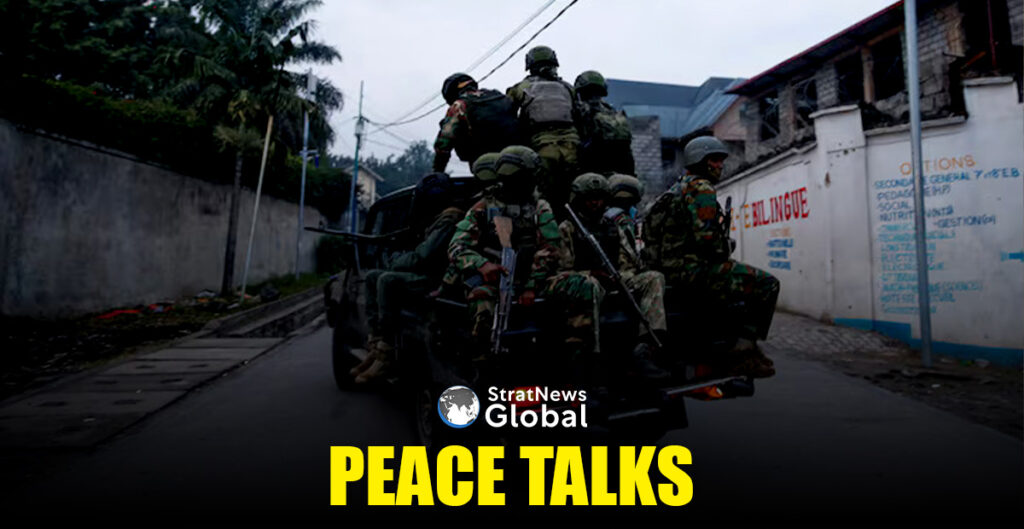
In a significant step forward, Congo and the M23 rebel group have agreed on a declaration of principles to end hostilities in eastern Congo, following months of mediation efforts led by Qatar, though key details remain under negotiation, according to four sources on Friday.
The declaration, expected to be signed on Saturday in Doha, comes amid heavy US pressure to finalise deals that would bring peace to eastern Congo. This could potentially attract billions of dollars of Western investment to a region rich in tantalum, gold, cobalt, copper, lithium and other minerals.
Mass Casualties, Displacements
M23, in the latest of a string of uprisings supported by Rwanda, seized Goma, eastern Congo’s largest city, in January and went on to make gains across North Kivu and South Kivu provinces.
The fighting has killed thousands and displaced hundreds of thousands more this year while escalating the risk of a full-blown regional war. Several of Congo’s neighbours already have troops deployed in the volatile region.
In March Qatar brokered a surprise meeting between Congolese President Felix Tshisekedi and his Rwandan counterpart Paul Kagame during which they called for an “immediate and unconditional” ceasefire.
That led to direct talks, also in Doha, between Congo and M23. Congo had previously rejected the idea of holding talks with M23, branding it a terrorist group.
In April, both sides pledged to work towards a ceasefire. But sources in both delegations have expressed frustration with the pace of negotiations and the lack of progress on confidence-building measures including the release of M23 members held by Congo and the re-opening of banks in rebel-held territory.
It was unclear on Friday how many of those issues have been resolved. There are also bigger questions on possible Rwandan and M23 withdrawals from eastern Congo.
Strong American Pressure
An official familiar with the discussions said the declaration of principles, reached after face-to-face meetings as well as shuttle diplomacy by the Qataris, would include an immediate ceasefire and outline “a commitment to begin formal negotiations on a comprehensive peace agreement in the near future.”
The official said there was also consensus on a mechanism for a permanent ceasefire and a roadmap for restoring state authority in eastern Congo once a peace agreement is signed.
An M23 source said the document does not mention any kind of troop withdrawal.
“The American pressure is very strong,” a Congolese source said on Friday, noting the presence in Doha of Massad Boulos, Trump’s senior adviser for Africa.
“But there are still many points unresolved. This is only one step in the discussions.”
Talks In Washington
Washington has also hosted talks between Congo and Rwanda. On June 27 the two countries’ foreign ministers signed a peace deal and met with US President Donald Trump at the White House. Trump warned of “very severe penalties, financial and otherwise” if the deal is violated.
Trump also invited Tshisekedi and Kagame to Washington to sign a package of deals that Boulos dubbed the “Washington Accord”.
Speaking to reporters on July 2, Boulos said the Trump administration would “love” to hold that meeting at the end of July. But he also said US officials hope to have a deal in Doha finalised by then.
Congo, the United Nations and Western powers say Rwanda is supporting M23 by sending troops and arms. A report by a group of United Nations experts obtained by Reuters this month said Kigali exercised command and control over the rebels during their advance.
Rwanda has long denied helping M23 and says its forces are acting in self-defence against Congo’s army and ethnic Hutu militiamen linked to the 1994 Rwandan genocide, including the Democratic Forces for the Liberation of Rwanda (FDLR).
(With inputs from Reuters)
Trump Files $10B Lawsuit Against Wall Street Journal Over Epstein Link
In a dramatic turn of events, US President Donald Trump on Friday filed a $10 billion lawsuit against the Wall Street Journal and its owners, including media tycoon Rupert Murdoch, over a report linking him to a 2003 birthday greeting for Jeffrey Epstein that allegedly featured a sexually suggestive sketch and references to shared secrets.
The lawsuit filed in Miami federal court names Murdoch, Dow Jones, News Corp and its Chief Executive Robert Thomson, and two Wall Street Journal reporters as defendants, saying they defamed Trump and caused him to suffer “overwhelming” financial and reputational harm.
Epstein, the disgraced financier and sex offender, died by suicide in a New York jail cell in 2019.
His case has generated conspiracy theories that became popular among Trump’s base of supporters who believed the government was covering up Epstein’s ties to the rich and powerful.
Trump has said he parted ways with Epstein before the financier’s legal troubles became public in 2006.
Powerhouse Lawsuit
The president has vehemently denied the Journal report, which Reuters has not verified, and had warned Murdoch that he planned to sue. Dow Jones, the parent of the newspaper, is a division of News Corp.
“We have just filed a POWERHOUSE Lawsuit against everyone involved in publishing the false, malicious, defamatory, FAKE NEWS ‘article’ in the useless ‘rag’ that is, The Wall Street Journal,” Trump wrote on his Truth Social platform.
“I hope Rupert and his ‘friends’ are looking forward to the many hours of depositions and testimonies they will have to provide in this case,” Trump added.
Vigorous Defence
A spokesperson for Dow Jones said in a statement: “We have full confidence in the rigor and accuracy of our reporting, and will vigorously defend against any lawsuit.”
The lawsuit called Trump’s alleged birthday greeting “fake,” and said the Journal published its article to harm Trump’s reputation.
“Tellingly, the Article does not explain whether Defendants have obtained a copy of the letter, have seen it, have had it described to them, or any other circumstances that would otherwise lend credibility to the Article,” the lawsuit said.
To prevail on his defamation claims, Trump must show the defendants acted with “actual malice,” meaning they knew the article was false or acted with reckless disregard for its truth.
‘Ridiculously High Number’
A $10 billion award would far exceed the largest defamation judgments and settlements in recent history.
These include a $1.5 billion judgment against conspiracy theorist Alex Jones, and Fox News’ settlement with Dominion Voting Systems for $787.5 million.
“Ten billion dollars is a ridiculously high number,” said Jesse Gessin, a lawyer with experience in defamation and First Amendment litigation. “It would be the largest defamation verdict in US history.”
White House Roiled
The Epstein affair has increasingly disquieted the White House, after the Justice Department this month concluded that there was no evidence to support long-held conspiracy theories about his clients and death.
Some of Trump’s most loyal followers became furious after his administration reversed course on its promise to release files on Epstein.
A Justice Department memo released on July 7 concluded that Epstein killed himself and said there was “no incriminating client list” or evidence that Epstein blackmailed prominent people.
Trump Asks Testimony To Be Released
With pressure to release the Epstein files building, Trump on Thursday said he directed Attorney General Pam Bondi to ask a court to release grand jury testimony about Epstein.
The US government on Friday filed a motion in Manhattan federal court to unseal grand jury transcripts in the cases of Epstein and former associate Ghislaine Maxwell.
She was convicted in 2021 of five federal charges related to her role in Epstein’s sexual abuse of underage girls. Maxwell is appealing her conviction and 20-year prison sentence to the US Supreme Court.
“Public officials, lawmakers, pundits, and ordinary citizens remain deeply interested and concerned about the Epstein matter,” Deputy Attorney General Todd Blanche said in the filing. “After all, Jeffrey Epstein is the most infamous pedophile in American history.”
Blanche said prosecutors would work to redact all victim-identifying information before making anything public.
The release of the grand jury documents may fall short of what many of Trump’s supporters have sought, including case files held by the administration, and a judge may reject the administration’s request to make the transcripts public.
Bawdy Letter
The Journal said the letter bearing Trump’s name was part of a leather-bound birthday book for Epstein that included messages from other high-profile people.
It also said the letter contained several lines of typewritten text framed by the outline of a naked woman, which appeared to be hand-drawn with a heavy marker.
The newspaper said the letter concluded “Happy Birthday – and may every day be another wonderful secret,” and featured the signature “Donald.”
Allegations that Epstein sexually abused girls became public in 2006, after the birthday book was allegedly produced, and he was arrested that year before accepting a plea deal.
Epstein died just over a month after he was arrested for a second time and charged with sex-trafficking conspiracy.
‘Terrific Guy’
Trump was photographed with Epstein multiple times in social situations in the 1990s and early 2000s, and had been a neighbour of Epstein’s in Florida.
He was quoted in 2002 in New York magazine as saying, “I’ve known Jeff for 15 years. Terrific guy. He’s a lot of fun to be with. It is even said that he likes beautiful women as much as I do, and many of them are on the younger side.”
In 2019, Trump told reporters that he and Epstein had a “falling out” before the financier was first arrested.
Trump said he “knew him like everybody in Palm Beach knew him” but that “I had a falling out with him. I haven’t spoken to him in 15 years. I was not a fan of his, that I can tell you”.
(With inputs from Reuters)
China’s Quiet Conquest of South Asia: Soft Power, Sharp Tools, Fake Friendship
Beijing’s playbook in South Asia is equal parts persuasion and penetration. A new report unveils the anatomy of influence—but stops just short of calling it what it is.
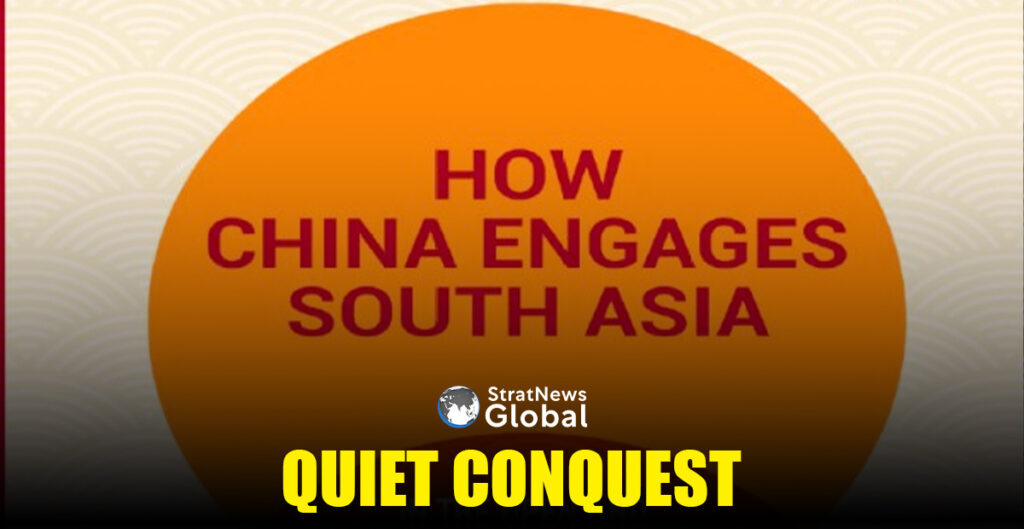
China isn’t just building infrastructure in South Asia—it’s building influence, embedding ideology, and exporting authoritarian resilience. That is the unambiguous message of ‘How China Engages South Asia: In The Open And Behind The Scenes.’
Published by the Centre for Social and Economic Progress (CSEP), this meticulously researched study surveys Beijing’s footprint from Afghanistan to Myanmar. Its core argument: The real story lies not in what China builds, but in how it quietly binds the region—through policy capture, social infiltration, and narrative control.
Yet for all its academic rigour, the report sometimes stops short of confronting the uncomfortable political truths it uncovers.
The editors rightly highlight that China is no longer just building roads—it’s building narratives, reshaping regulatory norms, and whispering in the ears of political elites.
Whether it’s party-to-party linkages in Nepal, Buddhist diplomacy in Sri Lanka, or ‘awards diplomacy’ in Pakistan, Beijing is not playing the traditional great power game. It is playing the long game. And unlike the West, which often parachutes in with aid and exits with platitudes, China embeds, adapts, and waits.
The report is an intellectual scalpel, dissecting China’s methods across five sectors: civil society and culture, economy and governance, conflict mediation, defence and security, and influence operations. Each chapter offers empirical insight into China’s multilayered strategy. But what is most striking—and troubling—is the report’s reluctance to call this out for what it is: strategic coercion through calibrated subversion.
Take China’s “awards diplomacy” in Pakistan, as explored by Eram Ashraf. This isn’t simply cultural exchange. It’s soft power weaponised, where journalists, academics and public figures are cultivated as amplifiers of Beijing’s preferred narratives. The aim, Ashraf notes, is to “generate a positive narrative of Chinese presence in Pakistan”—a country where public criticism of China is already dangerously rare, given its deep entanglement in Pakistan’s economy and politics.
In Nepal, China’s tourism diplomacy has not only rebuilt Buddhist temples but also reshaped the very identity of sacred spaces like Lumbini, the Buddha’s birthplace. As Kalyan Bhandari observes, the surge in Chinese tourists and heritage investments creates new dependencies. “The increasing visibility of Chinese actors,” he writes, “makes Nepal more susceptible to Beijing’s preferences.” In other words, heritage becomes leverage.
Hazrat Bahar’s chapter on Afghanistan shows how Chinese media is quietly filling the vacuum left by Western disengagement post-2021. With training programmes for Afghan journalists and PR campaigns embedded within newsrooms, China is not just shaping perception—it’s scripting the post-American narrative. In a country starved of international legitimacy, China’s influence has a multiplier effect: economic assistance is matched by information dominance.
The economic chapters reveal something more insidious: China’s ability to reshape domestic law. In Sri Lanka, Dilini Pathirana documents how Chinese-funded infrastructure projects have led to legal reforms that favour Chinese interests—especially in land acquisition and regulatory exemptions. These aren’t one-off accommodations; they are institutional rewrites to fit Beijing’s blueprint. “…Legal lacunae have been exposed and, in some cases, exploited,” Pathirana warns.
Anand P. Krishnan’s chapter on India’s electronics industry shows how even in a country hostile to China post-Galwan, Chinese companies like Xiaomi and Vivo continue to thrive by insulating themselves from geopolitics. Their brand strategies are hyper-local, culturally savvy, and commercially irresistible. The report notes that these firms have “adapted to the preferences of Indian smartphone consumers” to the point of being indispensable—even as Chinese apps are banned and border tensions simmer.
The most damning revelations come from the sections on defence and information operations. Rubiat Saimum’s analysis of China-Bangladesh military relations reveals a long-term plan of dual engagement: civilian diplomacy paired with arms transfers, training exchanges, and industrial cooperation. This isn’t just about selling weapons—it’s about entrenching military dependence and ensuring policy alignment.
Similarly, Ajaya Bhadra Khanal’s study of Chinese interventions in Nepal’s northern borderlands exposes para-diplomatic activity that circumvents Kathmandu entirely. From local aid to sub-national linkages with Tibet, Beijing is cultivating alternative centres of loyalty within Nepal. “The flow of aid and materials between municipalities in the northern districts and Tibetan counties… reveal the depth as well as the dangers of Chinese influence,” Khanal warns.
Devendra Kumar’s chapter on Chinese digital operations targeting the Tibetan diaspora in India and Nepal should raise alarm bells in Delhi. These are not soft power efforts—they are active measures. Using anti-Dalai Lama propaganda, surveillance, and cyber operations via the United Front Work Department (UFWD), Beijing seeks to fracture and neutralise Tibetan political identity across borders. “The cross-border movement of Tibetans is being monitored and regulated,” Kumar notes, “through coordinated digital influence and covert operations.”
Sanjana Hattotuwa’s forensic analysis of China’s social media strategy in Sri Lanka shows how disinformation is no longer outsourced—it’s institutionalised. The Chinese embassy, along with a network of proxy accounts, runs coordinated campaigns to praise China, attack critics, and amplify nationalist voices. This is not engagement. It is engineered influence with plausible deniability.
The report lauds China’s “range and creativity” and its “calibration.” But let’s call it what it really is: hybrid warfare—an ideological expansion cloaked in development. The CPC isn’t just exporting railways and 5G towers; it’s exporting its model of governance, its surveillance ethics, and its narrative control.
And while the report stops short of a moral judgment, its implications are chilling. Smaller South Asian states, eager for infrastructure and trade, often fail to see—or choose to ignore—the long-term costs. China’s offerings may seem benign, but their outcomes are far from neutral. Laws change, loyalties shift, and alternative voices are systematically drowned.
Constantino Xavier and Jabin T. Jacob, the editors of this extremely timely and relevant report, recommend a region-wide investment in China expertise, urging governments to understand how Beijing embeds itself “in the political, social, and informational fabric of the region.” That is essential. But so is recognising that these aren’t just policy tools—they are political weapons.
This report should be read as a warning. South Asia is not being lost to China through tanks or treaties, but through textbooks, training modules, and X handles.
EU Relaxes Schengen Visa Rules For Turks, Envoy Calls For More Steps
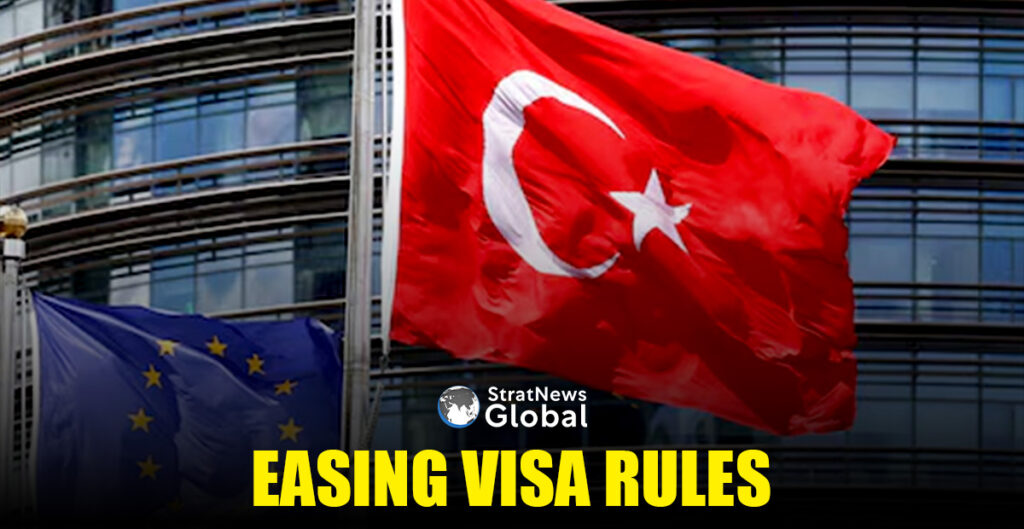
The European Union (EU) has relaxed rules for Turkish citizens entering the Schengen area, the bloc’s ambassador to Ankara said on Friday, urging the swift revival of talks on visa-free travel for Turks.
For years, Turks have complained about the EU’s visa system. The EU has said the processes – managed by accredited visa agencies – have been slow due to the high number of applications and that it is discussing possible workarounds with Ankara.
Ambassador Thomas Hans Ossowski said the new rules would help address Turks’ complaints over long bureaucratic processes, but warned it was not enough to permanently solve the problems.
“It will be much easier and much faster for Turkish citizens,” Ossowski told reporters in Ankara, referring to the European Commission’s new decision, in effect since July 15, simplifying the path to multiple-entry visas for Turks.
Turks who previously used visas correctly will be eligible for a six-month visa as early as their second application, followed by one-year, three-year and five-year multiple-entry visas.
Turkiye’s foreign ministry welcomed the move and said Turkish institutions and the EU Commission would keep seeking further visa easing.
Trade Minister Omer Bolat said the measure was a “facilitation that our citizens have been awaiting for a long time”.
Bolat also told the state-owned Anadolu news agency that Turkiye wanted to start talks on modernising a customs union with the EU and for the scope of the accord to expand into the service and e-commerce sectors.
Signs Of A Thaw
Turkiye has been an EU membership candidate since 1999, but its accession process has been frozen for years over issues ranging from human rights to democratic backsliding. There have recently been signs of increased engagement and economic cooperation.
Ossowski said the EU had for more than a decade offered Turkiye the prospect of visa-free travel and stressed the need to return to the liberalisation process.
“Every other candidate country has visa-free travel except Turkiye,” he said. “It is urgent to re-engage in this process of visa-free travel in the Schengen space and the EU,” he added.
The Commission is ready to restart formal negotiations after the summer and work with Ankara on fulfilling the six remaining benchmarks required by the visa liberalisation roadmap, he said.
“We are ready, the Commission is ready to work closely with Turkish authorities,” he said.
(With inputs from Reuters)
Germany, EU Allies Urge Tougher Asylum Rules, Increased Deportations
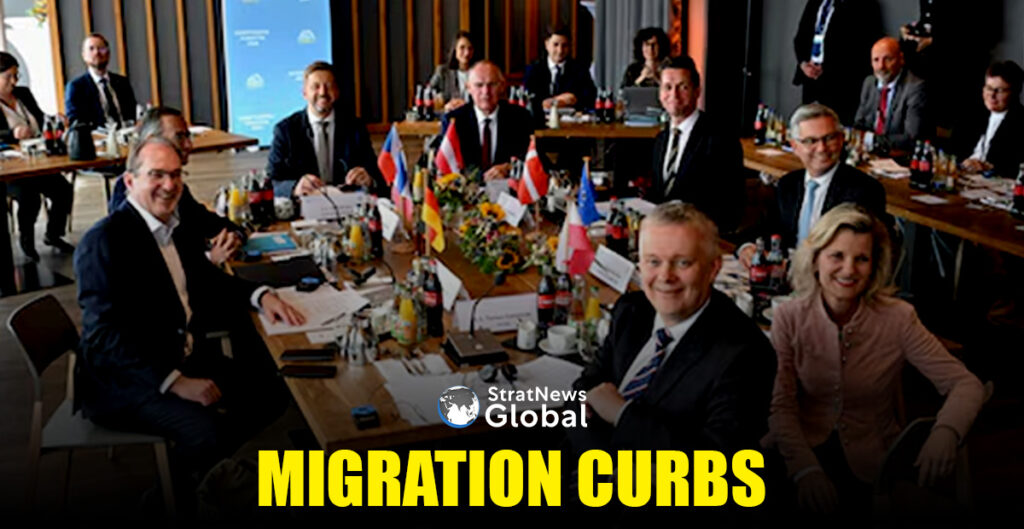
Germany’s Interior Minister Alexander Dobrindt and five European counterparts agreed on Friday on goals to tighten EU asylum rules, including permitting deportations to Afghanistan and Syria.
The meeting at Germany’s highest peak, the Zugspitze, follows Berlin’s decision in May to reject asylum seekers at the border, a policy it said was coordinated with neighbouring countries but drew significant criticism.
It comes almost exactly a decade after former German Chancellor Angela Merkel opened the country’s borders to nearly a million refugees fleeing war and persecution, a landmark decision that reshaped European politics.
Dobrindt met counterparts from France, Poland, Austria, the Czech Republic and Denmark, as well as EU Home Affairs Commissioner Magnus Brunner.
The agreed asylum policy goals, which require approval from Brussels, include removing legislative obstacles to transferring rejected asylum seekers to secure centres outside the EU and enabling asylum procedures in third countries.
German Migration Curbs
Germany’s new government has already placed curbs on migration, including suspending family reunification and resettlement programmes, as it seeks to regain support from voters drawn to the far-right Alternative for Germany, which made historic gains in February’s federal election. On Friday, Germany deported 81 Afghan men to Afghanistan.
“We are all concerned that the overburdening of our countries by illegal migration is also contributing massively to the polarisation of society. We want to push back this polarisation,” Dobrindt said.
Deportations to countries such as Afghanistan and Syria should be reinstated as standard practice, with citizens from countries failing to cooperate on deportations to face visa restrictions, a joint declaration said.
Trade and development aid will also be used as leverage to boost returns and strengthen migration cooperation, the document said, pressing for increasing deployment of drones and more EU funding for border infrastructure and personnel.
The countries agreed to combat smugglers and work to dismantle human trafficking networks.
Asylum seekers who have already been granted protection in another EU country will be quickly rejected if they claim asylum elsewhere in the bloc.
“Once we seal the external border, there will be no need for internal border controls,” Polish Interior Minister Tomasz Siemoniak said.
Siemoniak said he discussed the border controls Germany introduced unilaterally at its border with Dobrindt, adding that Poland is ready to waive the controls at its border once Germany does the same.
(With inputs from Reuters)
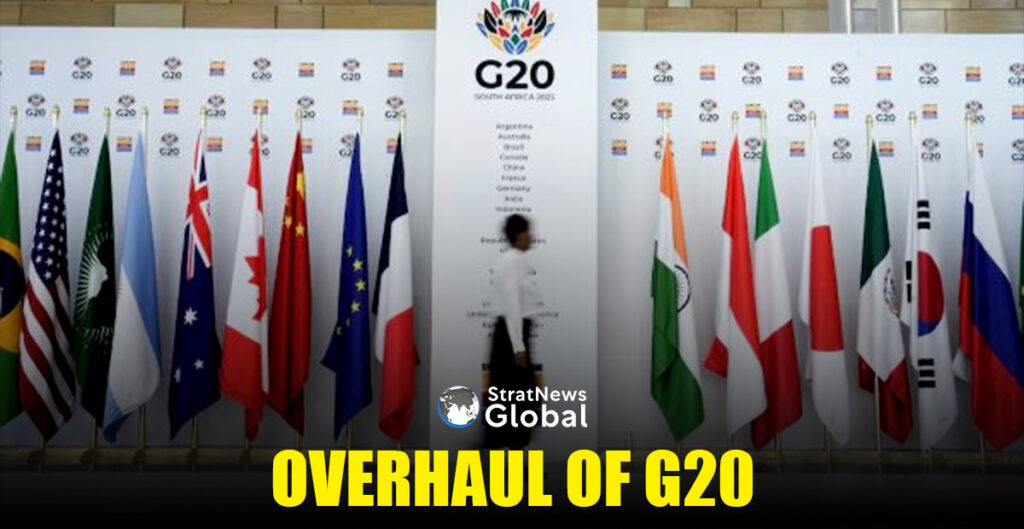
US Plans ‘Back To Basics’ Overhaul Of G20 As It Prepares To Assume Presidency Next Year
The United States intends to steer the Group of 20 major economies back to its core financial focus next year when it takes over the rotating presidency from South Africa, according to sources familiar with the Trump administration’s plans.
Washington has scaled back its participation this year, with Treasury Secretary Scott Bessent skipping a G20 finance chiefs’ meeting that started in Durban, South Africa, on Thursday, his second absence from an event this year.
Experts and administration sources say the absence of top U.S. officials reflects the Trump administration’s skepticism about multilateral institutions such as the G20, which the U.S. helped found in 1999.
U.S. President Donald Trump has upended the global economy with a wide-ranging trade war that has targeted many developing countries, including G20 members, while slashing foreign development funds to pursue an “America First” agenda.
Three U.S. sources familiar with the matter say Washington still plans to assume the G20 presidency at the end of the year, which coincides with the 250th anniversary of the United States.
But it will focus on two “tracks” – the leaders’ summit and the financial track – eliminating other working groups and ministerial-level meetings, including those on energy, health, commerce and the environment, two of the sources said.
A more streamlined G20 process would be in line with Bessent’s call in April for the International Monetary Fund and World Bank to focus on their core missions of financial stability and development instead of climate finance and gender issues. The White House and Treasury had no immediate comment.
Second-Round Reset
Josh Lipsky, chair of international economics at the Atlantic Council in Washington, said Bessent and other senior U.S. officials want to get “back to basics,” an approach being embraced by other G20 members.
The U.S. has already withdrawn from co-chairing a working group on sustainable finance with China and it remains unclear whether Trump will join this year’s leaders’ summit in South Africa.
Many members agreed the G20’s portfolio had grown too large, triggering a review, said two sources familiar with the issue.
In 2024, G20 host Brazil sought the group’s endorsement of a global minimum tax on the ultra wealthy, a step that the Biden administration rejected as an overreach.
“There seems to be consensus at the G20 that it has expanded a lot. G20 South Africa is conducting a review of the G20 process and will provide recommendations to streamline it. That is in line with what the U.S. is looking at,” one of the sources said.
Dutch Finance Minister Eelco Heinen said on the sidelines of the G20 meeting in Durban that collaboration under the G20 was more important than ever.
“But I do understand the agenda of the United States administration to keep it more lean and mean,” he said.
Activists and developing countries say they will watch U.S. actions, but that paring back could help the G20 survive.
“Our hope is that development continues to be linked,” said Eric LeCompte, executive director of the non-profit Jubilee USA Network. “Financial stability, debt issues and economic issues cannot be separated from development and global growth.”
Crisis Origins
The G20 was founded after the Asian financial crisis of 1997-1998, before expanding to include state leaders during the global financial crisis in 2008. It has been tested by U.S.-China tensions, Russia’s invasion of Ukraine, and divergent views on the Middle East conflicts.
Brad Setser, a former U.S. official now at the Council on Foreign Relations, said the G20 still offered a platform for high-level bilateral meetings.
He said Trump could welcome to the U.S. next year foreign leaders such as Chinese President Xi Jinping and even Russian President Vladimir Putin if the Ukraine war ended, without the fanfare of a bilateral summit or state visit.
Ben Harris, a former senior Treasury official now at the Brookings Institution, said Washington’s decision to pull back offered China and others a chance to show leadership, which might not serve U.S. interests.
“It obviously creates a vacuum, and that vacuum will be filled.”
(With inputs from Reuters)
Japan’s Minority Government Braces For Election Setback Amid Growing Economic Concerns
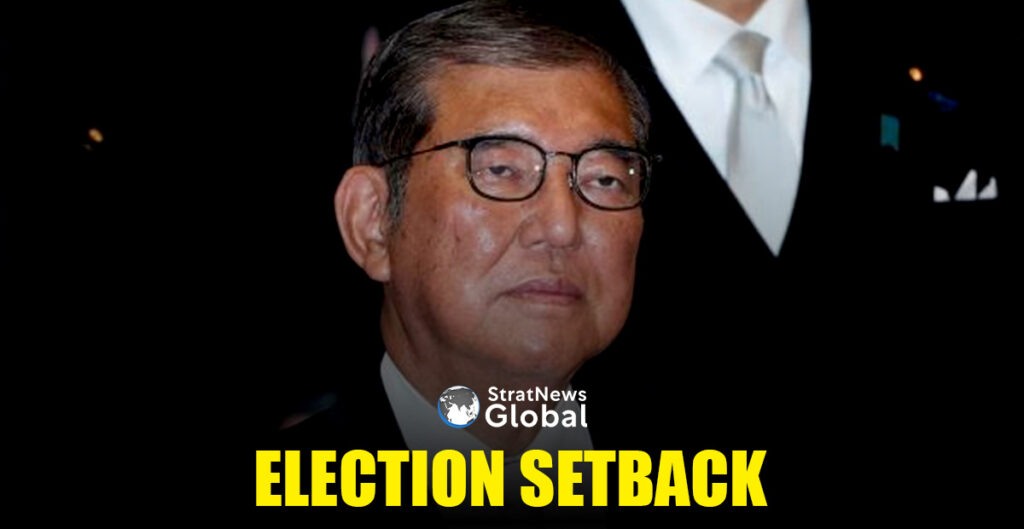
Japan’s fragile minority government is expected to suffer another blow in Sunday’s upper house vote, a result that could shake investor confidence in the world’s fourth-largest economy and add complexity to ongoing tariff negotiations with the United States.
Prime Minister Shigeru Ishiba’s Liberal Democratic Party (LDP), which has ruled for most of the post-war period, and its partner Komeito, are forecast to lose their majority in a repeat of last year’s election for the more-powerful lower house.
The ruling coalition needs to win 50 seats of the 125 up for grabs in order to retain its majority.
While the vote will not directly determine whether Ishiba’s government falls, investors are nervous it will leave him beholden to opposition parties advocating fiscal largesse that could exacerbate mass selling of Japan’s government bonds.
In a worst case scenario, some analysts say Ishiba may have to resign, unleashing political drama as Tokyo heads for an August 1 deadline to win reprieve from punishing import levies set by its largest trading partner, the United States.
“If he had an overwhelming loss, I think he would have to resign,” said David Boling, director for Japan and Asian Trade at political risk consultancy Eurasia Group.
“That then creates a lot of questions about who replaces him and what impact that has on the US-Japan trade negotiations.”
Other financial and political analysts, such as Joseph Kraft of Rorschach Advisory in Tokyo, say the LDP is unlikely to opt for a leadership change at a pivotal moment in talks on tariffs hammering key industries such as automakers.
In a sign of that urgency, Ishiba will take a break from campaigning on Friday to hold talks with Washington’s chief tariff negotiator and Treasury Secretary Scott Bessent, who is visiting Japan for the World Expo in Osaka.
‘Balancing Act’
More likely is that Ishiba will seek to either broaden his coalition or strike informal deals with opposition parties to keep his government functioning after the election, Kraft said.
That prospect has made investors nervous.
Inflation has been a killer issue for Ishiba, as it recently has been for incumbents elsewhere. The price of rice, which has doubled since last year, has become a lightning rod for voter discontent.
In response, opposition parties have promised tax cuts and welfare spending to soften the blow, while the LDP, with one eye on a very jittery government bond market, has been calling for fiscal restraint.
Any opposition deals to weaken that restraint will only heighten investor nervousness about Japan’s ability to refinance the world’s largest debt pile and hamper the Bank of Japan’s long-held goal of normalising monetary policy.
But not only parties advocating for more spending have chipped away at LDP support. The far-right Sanseito, espousing anti-foreigner rhetoric once confined to the political fringe, has been the surprise performer of the campaign.
Birthed on YouTube spreading anti-vax conspiracy theories five years ago, the party may win 10 to 15 seats, polls show.
That would herald the arrival of a new force of populist politics that has yet to take root in Japan as it has in the United States and Europe.
One reason the LDP has stayed so long in power, analysts say, is because it has served as a “broad church” for political views. But bringing into the fold the likes of Sanseito may trigger a deeper crisis of faith.
“If the party (LDP) goes too far right, it loses the centrists,” said Tsuneo Watanabe, a senior fellow at the Sasakawa Peace Foundation think tank in Tokyo.
“But without the right wing, it has other problems. It’s a balancing act and a tough one.”
(With inputs from Reuters)
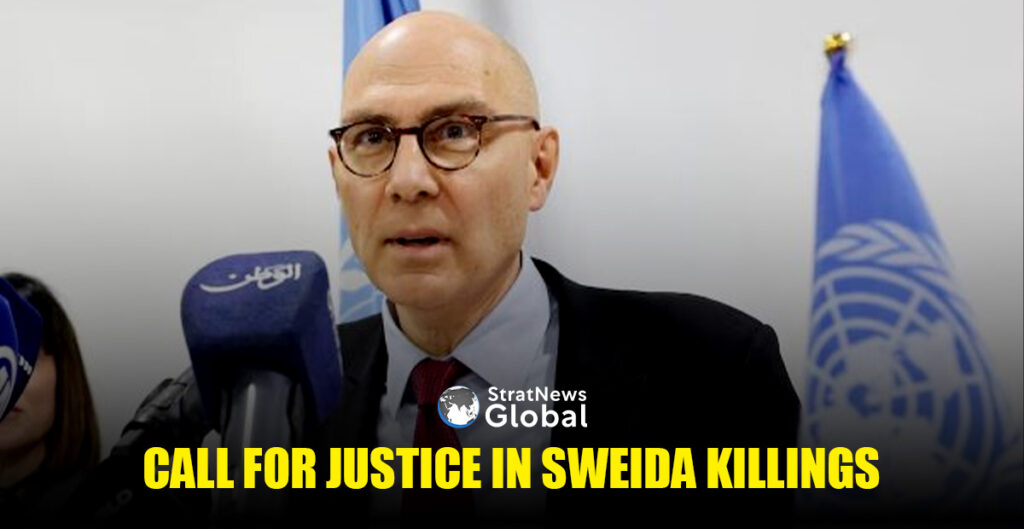
UN Rights Chief Calls For Accountability Over Killings In Syria’s Sweida
The head of the United Nations human rights office on Friday urged Syria’s interim authorities to guarantee justice and accountability for the killings and human rights abuses reported in the southern city of Sweida.
Syria’s government sent troops this week to the predominantly Druze city to quell fighting between Bedouins and Druze, but the violence grew until a ceasefire was declared.
The Office of the High Commissioner for Human Rights (OHCHR) said it had received credible reports of widespread rights violations during the fighting.
These included reports of summary executions, kidnappings and destruction of private property by security forces and individuals linked to Syria’s interim authorities, as well as other armed elements including Druze and Bedouins.
“This bloodshed and the violence must stop, and the protection of all people must be the utmost priority, in line with international human rights law,” OHCHR High Commissioner Volker Turk said in a statement.
At least 13 people were unlawfully killed in one recorded incident on July 15 when affiliates of the interim authorities opened fire at a family gathering, the OHCHR said. Six men were summarily executed near their homes the same day.
“My Office has received accounts of distressed Syrians who are living in fear for their lives and those of their loved ones,” Turk said.
Over 300 People Dead
Israel carried out airstrikes on Damascus on Wednesday and also hit government forces in the south, demanding they withdraw and saying it aimed to protect Syrian Druze – part of a small but influential minority with followers in Lebanon and Israel.
Turk shared his concern following reports of civilian casualties following Israeli airstrikes on Sweida, Daraa in the southwest, and on the centre of Damascus.
Bloodshed in Sweida left at least 321 people dead, the Syrian Network for Human Rights said on Friday, in a new toll.
A Syrian minister said that the government has recovered 87 bodies, but he did not indicate if it was the entire toll from recent violence between Bedouin tribes and the Druze minority in and around the city in the south of the country.
Hostilities In Sweida
The United Nations refugee agency expressed concern on Friday about the impact of hostilities in Syria’s southern city of Sweida on its aid operations, and urged all sides to allow more humanitarian access.
The UNHCR said its operations had been impacted by road closures and that it had had to move all 15 staff members in its office in rural Sweida out of the area because of safety concerns.
“The situation in Sweida is very concerning. It is very difficult for us to operate there … at the moment our capacity to deliver aid is very limited,” William Spindler, spokesperson for the United Nations High Commissioner for Refugees, told reporters in Geneva.
“We are calling on all parties to allow humanitarian access,” he said.
(With inputs from Reuters)
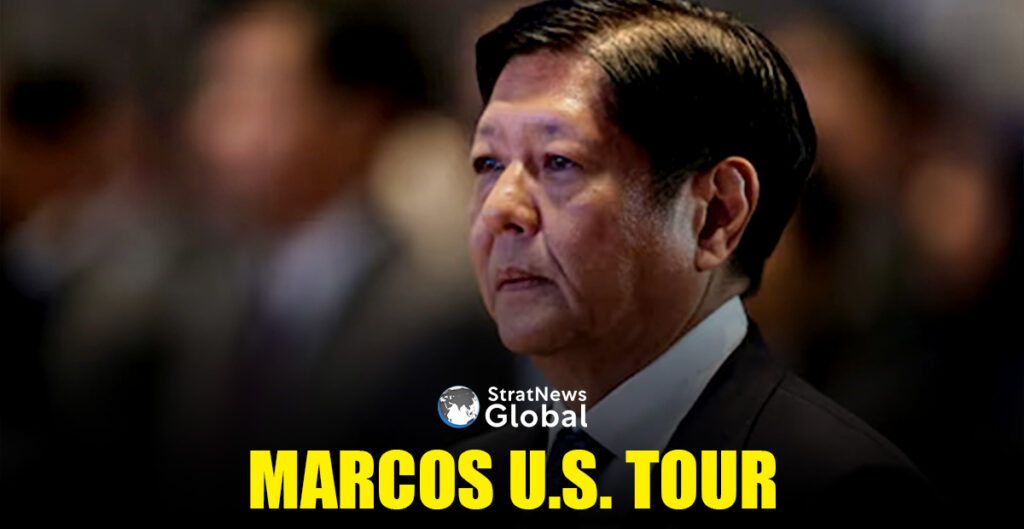
Philippines’ President Marcos To Address Trade, Security In US Visit Amid Tariff Concerns
Philippine President Ferdinand Marcos Jr. will visit the United States next week, carrying a clear message to President Donald Trump that the Philippines needs to strengthen its economy to be a truly robust and reliable partner, an official said on Friday.
The visit, the first by an ASEAN head of state since Trump took office in January, will focus on economic cooperation, with Marcos expected to discuss concerns over proposed U.S. tariffs on Philippine exports.
“The President’s official visit also aims to address the U.S. tariff proposed to be levied on Philippine exports,” Department of Foreign Affairs Assistant Secretary Raquel Solano told a media briefing.
Trump raised reciprocal tariffs on Philippine exports to 20% this month from the 17% threatened in April.
‘Mutually Beneficial’
Talks between Philippine trade officials and their U.S. counterparts are ongoing in Washington to hopefully seal a reciprocal deal that is “mutually acceptable and mutually beneficial” for both countries, Solano said.
During the visit, the two leaders will also discuss closer cooperation in defence and security matters, including issues in the South China Sea where Manila and Beijing have had a series of maritime confrontations.
Relations between Manila and Beijing have soured under Marcos, who has pivoted closer to the United States, granting it expanded access to Philippine military bases as both countries aim to counter what they have described as China’s assertiveness in the South China Sea and towards Taiwan.
“The purpose of this visit is to further strengthen the Philippines-United States Alliance, to proactively engage the U.S. in all aspects of the relations and seize opportunities for greater security and economic cooperation,” Solano said.
The United States and the Philippines have a seven-decade-old mutual defence treaty and hold dozens of annual exercises, which have included training with the U.S. Typhon missile system, and more recently with the NMESIS anti-ship missile system, angering China.
Marcos will also meet separately with Secretary of State Marco Rubio and Defence Secretary Pete Hegseth, as well as U.S. business leaders who are investing in the Philippines.
(With inputs from Reuters)