

Support us by contributing to StratNewsGlobal on the following UPI ID
ultramodern@hdfcbank

Strategic affairs is our game, South Asia and beyond our playground. Put together by an experienced team led by Nitin A. Gokhale. Our focus is on strategic affairs, foreign policy and international relations, with higher quality reportage, analysis and commentary with new tie-ups across the South Asian region.
You can support our endeavours. Visit us at www.stratnewsglobal.com and follow us on YouTube, Twitter, Facebook and Instagram.
र 500 per month
र 1000 per month
र 5000 per year
र 10000 per year
Donate an amount of your choice
र 500 per month
Donate र 500 per month

र 1000 per month
Donate र 1000 per month
र 5000 per year
Donate र 5,000 per year
र 10000 per year
Donate र 10,000 per year
Donate an amount of your choice
Donate an amount of your choice



China–Japan Trade Row Deepens With Chemical Probe
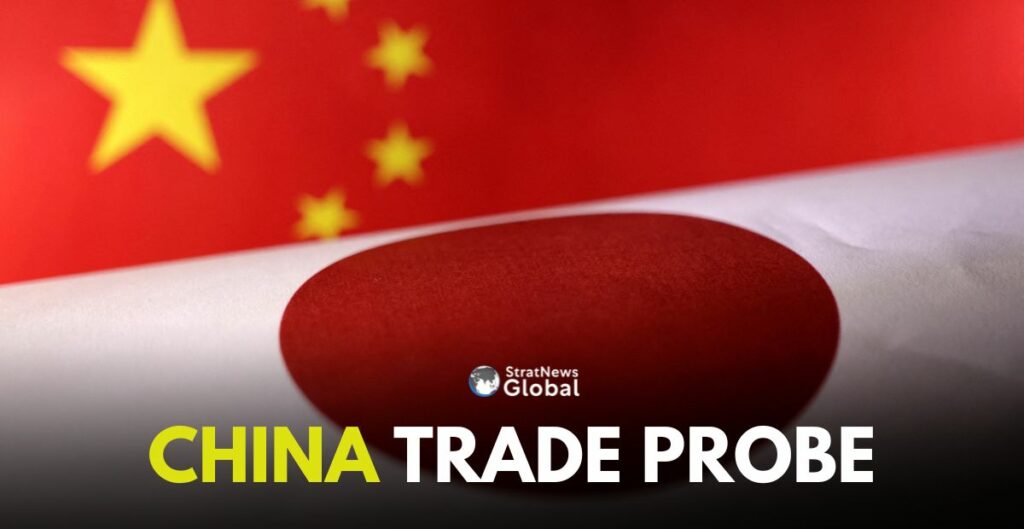
China’s Ministry of Commerce announced on Wednesday that it has initiated an anti-dumping investigation into dichlorosilane imports from Japan, according to a statement posted on its official website.
Dichlorosilane is a precursor chemical mainly used in thin-film deposition processes in chip manufacturing and is of significant importance to integrated circuit manufacturing.
The investigation comes a day after China announced a ban on exports of dual-use items to Japan amid strained bilateral ties.
Scope and Industry Concerns
China said the probe was initiated at the request of its domestic dichlorosilane producers, which claimed volumes imported from Japan showed an overall upward trend from 2022 to 2024 while prices fell by a cumulative 31%, causing damage to the production and operation of the local industry.
The probe covers alleged dumping between July 1, 2024 and June 30, 2025 and assessing potential injury to domestic producers from January 1, 2022 to June 30, 2025, according to the statement.
In a separate document published by the ministry, a firm representing the industry provided a list of producers, exporters and importers of the compound including three Japanese companies, namely Shin-Etsu Chemical, Air Liquide Japan G.K. and Mitsubishi Chemical Group Corporation.
Geopolitical Context
The investigation will generally conclude before January 7, 2027, with a possible extension of six months, the ministry said, adding that authorities will conduct the investigation in accordance with the law and make an objective and fair ruling.
Ties between the Asian neighbours have deteriorated since Prime Minister Sanae Takaichi said in early November that a Chinese attack on the democratically governed island of Taiwan could be deemed an existential threat to Japan, a remark that Beijing said was “provocative.”
(With inputs from Reuters)
China Expands Trade And Diplomatic Ties In Africa
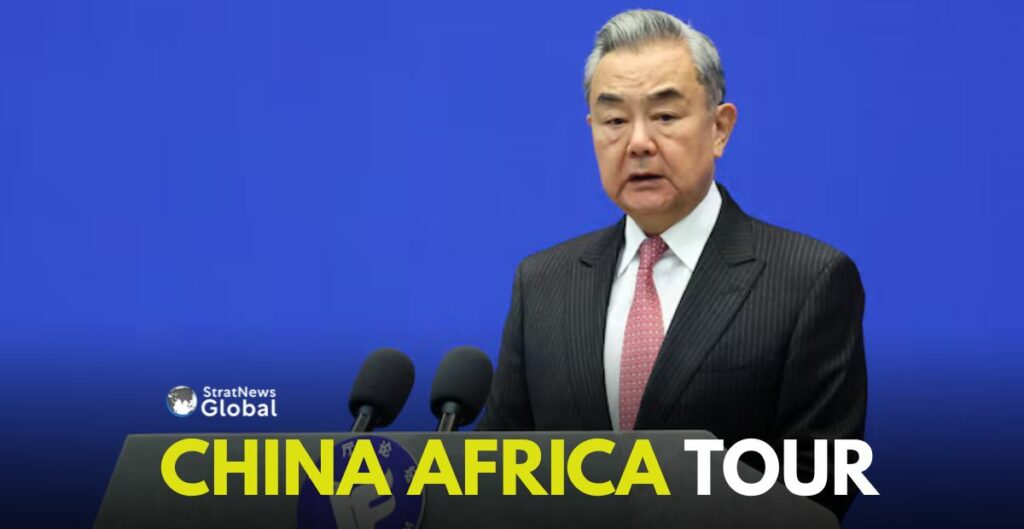
On Wednesday, China’s top diplomat launched his traditional New Year visit to Africa, concentrating on the strategically vital eastern region as the world’s second-largest economy works to strengthen its foothold on the continent.
Foreign Minister Wang Yi will travel to Ethiopia, Somalia, Tanzania and Lesotho on this year’s trip.
Strategic Stops
Wang’s visit to Somalia – the first by a Chinese foreign minister since the 1980s – is likely to provide Mogadishu with a diplomatic boost after Israel last month became the first country to formally recognise the breakaway Republic of Somaliland, a northern region that declared itself independent in 1991.
Beijing, which reiterated its support for Somalia after the Israeli announcement, is keen to buttress its influence around the Gulf of Aden, the entry to the Red Sea and a crucial corridor for Chinese trade heading through the Suez Canal to European markets.
Further south, Tanzania is central to Beijing’s push to secure access to Africa’s vast copper deposits. Chinese firms are refurbishing the Tazara Railway that runs through the country into Zambia. Li Qiang made a landmark trip to Zambia in November, the first visit by a Chinese premier in 28 years.
The railway is widely seen as a counterweight to the U.S. and European Union-backed Lobito Corridor, which connects Zambia to Atlantic ports via Angola and the Democratic Republic of the Congo.
Free Trade Push
By visiting the southern African kingdom of Lesotho, Wang aims to highlight Beijing’s push to position itself as a champion of free trade. Last year, China offered tariff-free market access to its $19 trillion economy for the world’s poorest nations, fulfilling a pledge by Chinese President Xi Jinping at the 2024 China-Africa Cooperation summit in Beijing.
Lesotho, one of the world’s poorest nations with a gross domestic product of just over $2 billion, was among the countries hardest hit by U.S. President Donald Trump’s sweeping tariffs last year, facing duties of up to 50% on its exports to the United States.
(With inputs from Reuters)
Trump Administration Freezes $10B In Childcare, Family Aid
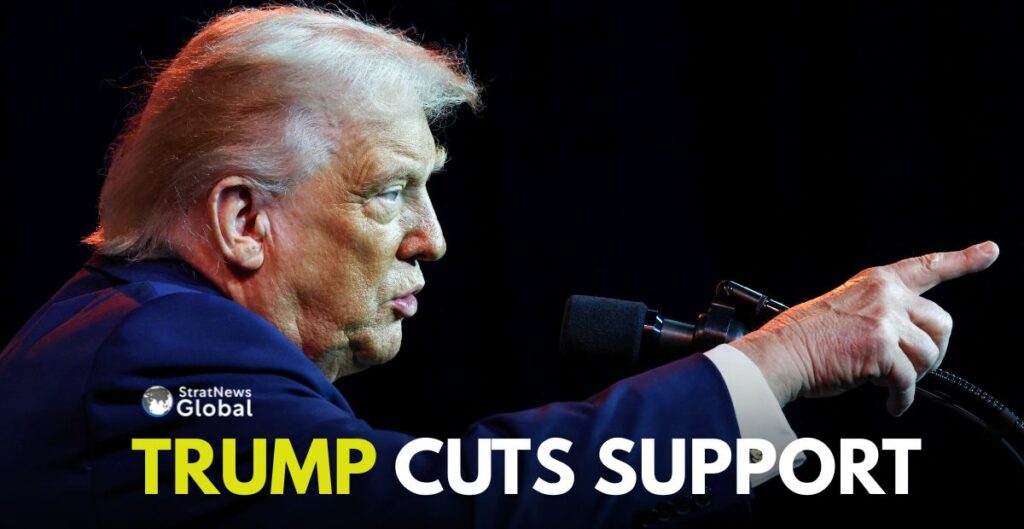
The Department of Health and Human Services (HHS) announced that President Donald Trump’s administration is halting over $10 billion in federal childcare and family assistance funding for California, Colorado, Illinois, Minnesota, and New York, citing alleged concerns about fraud and misuse.
The Trump administration has threatened federal funding cuts to organizations and states over a number of issues since taking office – ranging from alleged fraud in programs in states governed by Democrats to diversity initiatives and pro-Palestinian university protests against U.S. ally Israel’s assault on Gaza.
On Tuesday, HHS said it notified the five states, all with Democratic governors, that its freeze applied to the “Child Care and Development Fund” worth $2.4 billion, the “Temporary Assistance for Needy Families” worth $7.35 billion, and the “Social Services Block Grant” worth $869 million.
In a statement, the department said the states’ access to those funds would be restricted pending further review.
Democratic Governors and Officials Respond
Democrats condemned the plan.
“Our kids should not be political pawns in a fight that Donald Trump seems to have with blue state (Democratic states) governors,” New York Governor Kathy Hochul said, adding the step was “vindictive” and “cruel.” Illinois Governor JB Pritzker also called the step “wrong and cruel.”
California Governor Gavin Newsom’s office said that since taking office, Newsom has blocked over $125 billion in fraud.
Targeting Immigrant Communities
In recent weeks, the Trump administration has singled out Minnesota, alleging rampant fraud is being committed by immigrants in the welfare system and in social service programs.
Trump administration officials have frequently and sharply attacked the state’s Somali community, the largest in the country, as well as Minnesota Governor Tim Walz, the 2024 Democratic vice-presidential nominee, and Democratic Representative Ilhan Omar, a Somali-American who represents a Minneapolis-based district in Congress.
Rights advocates say the Trump administration is using the fraud investigations as an excuse to target immigrants and political opponents more broadly.
(With inputs from Reuters)
Pakistan and Bangladesh Discuss Fighter Jet Deal Amid Warming Ties
The air force chiefs of Pakistan and Bangladesh have held detailed discussions on a possible agreement for the sale of JF-17 Thunder fighter jets to Dhaka, Pakistan’s military said, marking a significant step in Islamabad’s bid to expand its defence exports and strengthen ties with Bangladesh.
Talks Focus on JF-17 and Training Support
The talks in Islamabad brought together Pakistan’s Air Chief Marshal Zaheer Ahmed Baber Sidhu and Bangladesh Air Chief Marshal Hasan Mahmood Khan. According to a statement from Pakistan’s Inter-Services Public Relations (ISPR), the two sides explored the potential procurement of the JF-17 Thunder, a multi-role combat aircraft jointly developed by Pakistan and China.
The ISPR added that Pakistan had pledged to “fast-track delivery of Super Mushshak trainer aircraft, along with a complete training and long-term support ecosystem.” The Mushshak trainers are a key part of Pakistan’s export portfolio and are already in use by several air forces in the Middle East and Africa.
The meeting comes as Pakistan seeks to leverage its recent military success in last May’s confrontation with India the worst fighting between the two nuclear-armed neighbours in nearly three decades to boost the global appeal of its home-grown defence technology.
Relations Improve After Diplomatic Freeze
The discussions also reflect a sharp improvement in relations between Islamabad and Dhaka after years of tension. Ties began to thaw following mass protests in Bangladesh in August 2024 that forced former Prime Minister Sheikh Hasina to flee to India, effectively rupturing Dhaka’s relations with New Delhi.
“The visit underscored the strong historical ties between Pakistan and Bangladesh and reflected a shared resolve to deepen defence cooperation and build a long-term strategic partnership,” the Pakistani military said in its statement.
Since Hasina’s ouster, the two countries have resumed direct trade for the first time since the 1971 war that led to Bangladesh’s independence. Their military officials have also held multiple rounds of talks aimed at expanding defence and economic collaboration.
Bangladesh is currently under an interim government led by Nobel laureate Muhammad Yunus and will hold general elections on 12 February. The upcoming vote could see the political return of the once-banned Jamaat-e-Islami party, which has long maintained ideological ties with Pakistan.
Expanding Pakistan’s Defence Export Ambitions
The JF-17 Thunder has become the centrepiece of Pakistan’s weapons development programme. The aircraft has already featured in deals with Azerbaijan and in a $4-billion weapons agreement with the Libyan National Army.
Pakistan’s Defence Minister Khawaja Asif said on Tuesday that the country’s growing weapons industry could soon play a pivotal role in its economic revival. “Our aircraft have been tested, and we are receiving so many orders that Pakistan may not need the International Monetary Fund in six months,” Asif told broadcaster Geo News.
Analysts say a potential aircraft deal with Bangladesh would not only symbolise a diplomatic reset but also enhance Pakistan’s position as an emerging defence exporter in Asia.
with inputs from Reuters
G7 Finance Ministers to Meet in Washington to Discuss Rare Earths Supply
Finance ministers from the Group of Seven (G7) nations are scheduled to meet in Washington on 12 January to discuss rare earths and other critical mineral supplies, three sources familiar with the plans said on Tuesday.
Price Floors on Agenda
One of the sources said the ministers are expected to debate possible price floors for rare earth elements an issue gaining traction as industrial nations seek to diversify supply chains and reduce dependence on China. The meeting will also cover broader strategies for securing access to key materials vital for clean energy technologies and high-end manufacturing.
G7 economies, except Japan, remain heavily or entirely reliant on China for rare earth magnets, battery metals, and other critical resources essential to electric vehicles, renewable energy systems and defence industries.
Drive to Reduce Dependence on China
In June last year, G7 leaders agreed on an action plan aimed at strengthening supply chain resilience and boosting investment in alternative sources. Since then, officials have been examining pricing mechanisms to make mining and processing projects outside China economically sustainable.
The United States took an early step by introducing a minimum price in a government-backed contract for domestic rare earth supplies in 2024. That initiative is viewed as a model for future cooperation among G7 members, which also include Canada, France, Germany, Italy, Japan, and the United Kingdom.
Economic and Strategic Context
The discussion reflects growing concern among Western nations about China’s dominance in critical minerals a sector Beijing has occasionally used as leverage in geopolitical disputes. Establishing price floors could encourage long-term investment in mining and refining projects in partner countries, ensuring stable access to these strategic materials.
A spokesperson for the U.S. Treasury, which will host the meeting, did not immediately respond to a request for comment. The upcoming talks are expected to produce a joint statement outlining next steps in implementing the G7’s supply chain diversification plan.
with inputs from Reuters
South Korea’s President Lee Seeks Xi’s Mediation in North Korea Dialogue
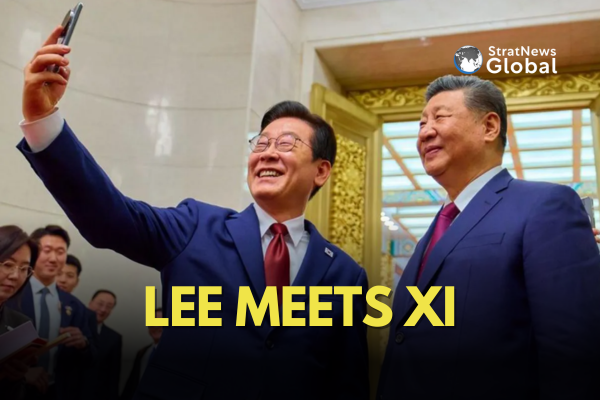
South Korean President Lee Jae Myung said on Wednesday that relations between Seoul and Beijing had entered a more positive phase, with “much progress” made in rebuilding trust. Speaking at a press conference in Shanghai after his meeting with Chinese President Xi Jinping, Lee said he had asked Xi to play a mediating role in efforts to restart dialogue with North Korea.
Lee Appeals for China’s Help on North Korea
Lee described his talks with Xi as constructive, noting that the Chinese leader had responded with caution regarding North Korea. “President Xi acknowledged our efforts so far and said patience is needed,” Lee told South Korean media during his televised remarks.
Seoul has repeatedly sought to resume talks with Pyongyang aimed at easing tensions on the Korean peninsula, but those overtures have so far been met with silence. Lee said he had presented Xi with a full account of his administration’s efforts to engage North Korea and appealed for China’s help in mediating future dialogue.
Beijing remains North Korea’s most important political and economic partner, and its cooperation is seen as critical for any progress in inter-Korean diplomacy.
Warming Ties After Years of Strain
Lee’s visit to China marks his second meeting with Xi in less than three months, underscoring his determination to “open a new phase” in bilateral ties after several years of diplomatic chill. Relations deteriorated sharply following the 2017 deployment of a U.S. missile defence system in South Korea, which prompted Beijing to restrict Korean cultural and business activities in retaliation.
According to Lee, Xi emphasised that while “talk is easy, action is not so easy,” stressing the need for sustained effort to rebuild trust. Lee said he agreed, noting that “diplomatic relations are inherently complex in balancing each other’s key national interests.”
Regional Balance and Hopes for Stability
Lee also expressed hope that rising tensions between China and Japan could be managed constructively, saying that South Korea values both relationships equally. “We consider our ties with Japan as important as our relations with China,” he said.
The South Korean president’s visit forms part of a broader diplomatic effort to strengthen Seoul’s regional standing while maintaining its strategic balance between China, Japan, and the United States. His outreach to Xi signals a pragmatic approach aimed at reviving dialogue and reducing tensions on the peninsula through diplomatic engagement rather than confrontation.
with inputs from Reuters
Beijing Bans Two Taiwanese Ministers, Escalating Cross-Strait Tensions
Beijing on Wednesday barred two senior Taiwanese ministers and their families from entering China, Hong Kong, and Macau, accusing them of promoting “Taiwan independence.” The move, which Taipei condemned as intimidation, marks another escalation in the already strained cross-strait relationship.
Beijing Targets ‘Die-Hard Secessionists’
China’s Taiwan Affairs Office labelled Taiwan’s Interior Minister Liu Shyh-fang and Education Minister Cheng Ying-yao as “die-hard Taiwan independence secessionists.” The decision extends to their relatives and follows a growing list of officials Beijing has blacklisted over what it calls separatist activities.
Mainland Affairs Office spokesperson Chen Binhua said the list now includes 14 individuals, among them Taiwan’s Vice President Hsiao Bi-khim, National Security Council head Joseph Wu, and Defence Minister Wellington Koo. Beijing has also accused Chen Shu-yi, a prosecutor with Taiwan’s High Prosecutors Office, of acting as an accomplice in separatist activities and vowed to hold her “accountable for life.”
Chen urged the public to submit evidence about Chen Shu-yi’s alleged actions, promising “severe punishment,” though he did not specify what form that might take. He added that Beijing’s actions targeted only “a small number of Taiwan independence die-hards” and were intended to “safeguard national sovereignty and territorial integrity.”
Taipei Condemns ‘Threats and Intimidation’
Taiwan’s Mainland Affairs Council issued a firm protest, calling Beijing’s actions politically motivated and counterproductive. It said the bans severely undermined cross-strait relations and would only “provoke anger among the public.”
“The Chinese Communist authorities are attempting to create a chilling effect beyond the named individuals, coercing Taiwanese people into abandoning their determination to uphold democracy and the status quo,” the council said. It accused China of trying to assert “long-arm jurisdiction” by treating the issue as a domestic criminal matter, despite Taiwan’s separate legal system.
“Threats and intimidation will never shake the resolve of the Taiwanese people to uphold democracy and freedom,” the council added, warning that Beijing must bear “all serious consequences” arising from its actions.
Military Pressure and Broader Context
The announcement comes just a week after China carried out its largest-ever military exercises around Taiwan, firing dozens of rockets and deploying warships and aircraft near the island. The drills disrupted dozens of flights in Taiwan and drew concern from regional allies and Western governments.
Beijing continues to claim Taiwan as part of its territory and has not ruled out the use of force to bring the island under its control. Taipei rejects China’s sovereignty claims, insisting that only the Taiwanese people can determine their future.
The latest bans reflect China’s broader strategy of political, military, and legal pressure on Taiwan, even as it denies targeting ordinary Taiwanese citizens. Analysts say the campaign underscores Beijing’s intent to isolate Taipei internationally while tightening its grip over the narrative on cross-strait relations.
with inputs from Reuters
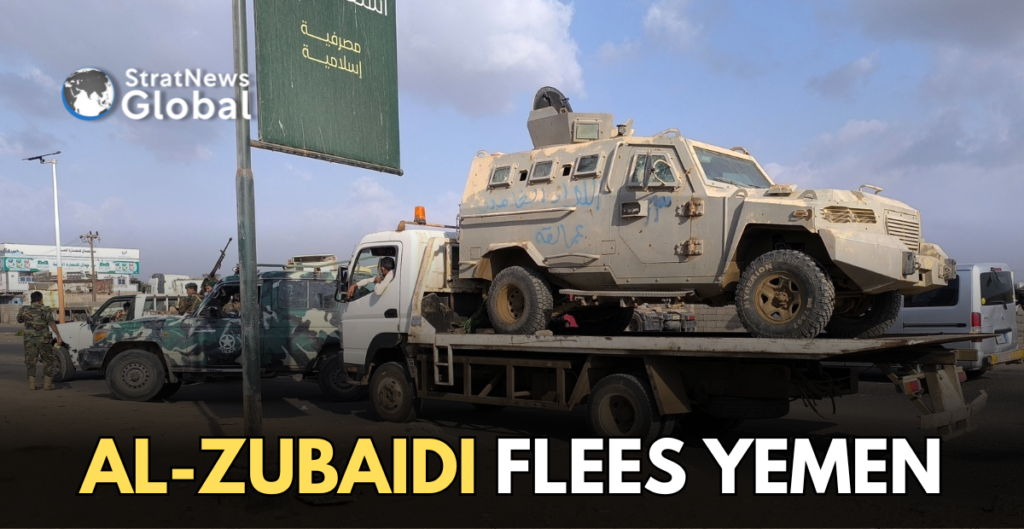
Yemen’s STC Leader Al-Zubaidi Fled Country, Saudi-Backed Coalition Says
The leader of Yemen’s Southern Transitional Council (STC), Aidarous al-Zubaidi, failed to board a plane set to take him to Riyadh and fled instead to an unknown destination, the Saudi-backed coalition in the country said on Wednesday.
The remarks came amid efforts to end fighting that erupted last month between the STC, backed by the United Arab Emirates, and Yemen’s Saudi-backed internationally recognised government, which has triggered a major feud between the Gulf allies.
Zubaidi was set to travel to Saudi Arabia days after Yemen’s government said it had asked Riyadh to host a forum on the southern issue.
In a statement, coalition spokesperson Turki al-Maliki said a flight carrying a large number of senior leaders of the separatist group departed after a delay of more than three hours without Zubaidi, and with no information on his whereabouts.
During the delay, “information became available indicating that he had moved large forces,” Maliki added, citing “calls for mobilisation and the movement and arming of factions with light and medium weapons”.
The feud between the UAE and Saudi Arabia has fractured a coalition originally created to fight the Iran-aligned Houthis, who are still the dominant military force in Yemen.
The Houthis seized the Yemeni capital of Sanaa in 2014, and Gulf countries intervened the following year in support of the internationally recognised government, splitting Yemen into rival zones of control.
Strikes In Al-Dhalea
The coalition also said it carried out limited pre-emptive airstrikes in Yemen’s southern province of al-Dhalea after monitoring the movements of armed forces that had left their camps.
Domestic sources and sources within the STC reported more than 15 strikes in the province, the birthplace of Zubaidi.
Following the developments, the Saudi-backed presidential council stripped Zubaidi of his membership and referred him to the public prosecutor on charges including high treason, state news agency SABA said.
The decision, issued by council chairman Rashad al-Alimi, accused Zubaidi of inciting armed rebellion, attacking constitutional authorities and committing abuses against civilians in southern Yemen.
For years, the STC has been part of Yemen’s internationally recognised government.
(with inputs from Reuters)
Chinese War Games Try To Undermine Global Support For Us, Says Taiwan
China’s war game exercises around Taiwan last week were part of a campaign to counter growing international support for the island and an attempt to divert attention away from Beijing’s economic troubles, Taiwan’s top security agency said on Wednesday.
As part of its exercises, called “Justice Mission 2025,” China fired dozens of rockets towards Taiwan and deployed a large number of warships and aircraft near the island. That caused dozens of domestic flights in Taiwan to be cancelled and drew concern from allies in the region and the West.
“The Taiwan-focused drills carried clear political intent: to push back in the international arena against democratic partners’ support for Taiwan,” the National Security Bureau said in a report to Parliament. A copy of the report was reviewed by Reuters.
The drills, China’s most extensive war games to date by coverage area, were also meant to “redirect public anger over economic setbacks and social disorder at home into nationalist sentiment framed as ‘resisting external interference,'” the report said.
‘Hybrid’ Campaign
The report said China has been ramping up a “hybrid” campaign to pressure Taiwan militarily and economically, drawing resistance from democratic partners in the U.S. and Europe.
The report also pointed to a comment from Japanese Prime Minister Sanae Takaichi about Taiwan late last year. She said a Chinese attack on democratically governed Taiwan could be deemed an existential threat to Japan. The report said the comment underscored how security in the Taiwan Strait was viewed as directly linked to stability in the Indo-Pacific and international order.
China’s Taiwan Affairs Office did not respond to a request for comment on the report.
Speaking at a regular press conference on Wednesday, the office said recent military drills around Taiwan, including those held last week, were intended to “staunchly defend national sovereignty and territorial integrity.”
The exercises were also aimed at “upholding the shared interests of compatriots on both sides of the strait and the fundamental interests of the Chinese nation,” it said.
Beijing claims Taiwan as its own territory and has not ruled out the use of force to bring the island under its control. Taipei strongly objects to China’s sovereignty claims and says only Taiwan’s people can decide their future.
China’s Aggression
The report said that during the drills, China used state media, artificial intelligence-generated content and online “troll armies” to amplify its narratives, cast doubt on the Taiwanese military’s capabilities and undermine trust in President Lai Ching-te and the U.S.
Some 19,000 “controversial messages” were pushed out across several social media platforms by 799 accounts in the span of five days, the report said.
On the first and second days of the drills, Taiwan’s government received more than two million cyberattacks, the report said. It named the People’s Liberation Army‑linked hacking groups APT24 and BlackTech as being among the most active participants.
China’s armed forces have been synchronising hacking campaigns with military drills around Taiwan to “disrupt the island’s cybersecurity environment and unsettle public morale,” the report said.
China has routinely denied being involved in hacking attacks.
(with inputs from Reuters)
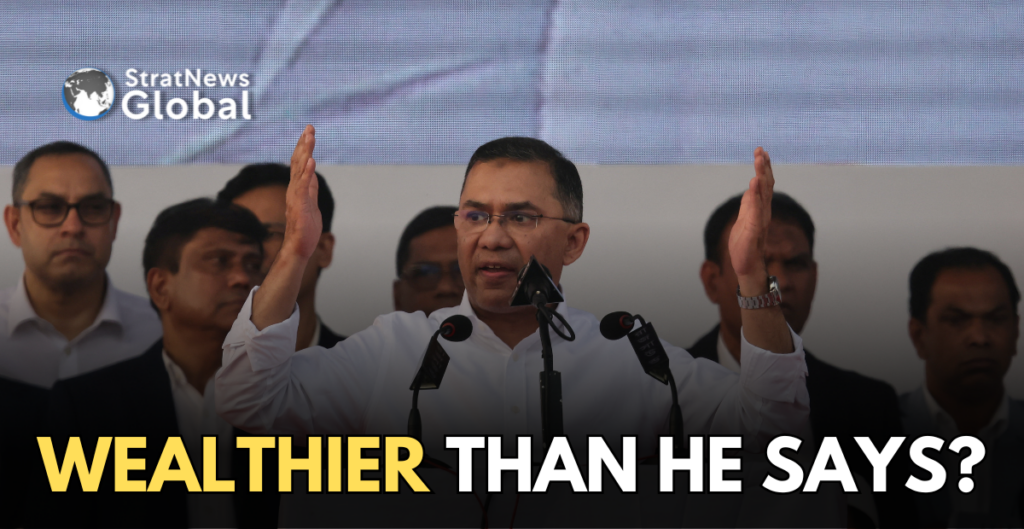
Is Tarique Rahman More Wealthy Than He Actually Claims?
“The Liberation War is the foundation of Bangladesh as a state and its politics. The country’s very existence cannot be imagined without 1971.”
This is not the first time BNP acting chief Tarique Rahman has spoken about the war with Pakistan that saw the emergence of Bangladesh. With him expected to formally take over as party chief amid the countdown to elections next month, Rahman appeared to be signalling that the BNP was not like the Jamaat-e-Islami, which sided with Pakistan.
Does that suggest there will be no electoral understanding? Difficult to say, but a recent opinion poll gave the BNP a decisive edge over the Jamaat. So BNP strategists may be thinking that the party should go it alone.
But public perception is something he will have to quickly deal with: his announcement that he will fund the party’s election campaign has raised eyebrows. In tandem with reports that he and other candidates have underreported their income, there is an issue that needs to be addressed without delay and in a credible manner.
Rahman has disclosed an annual income of 6.75 lakh Bangladeshi Taka, but the math doesn’t add up: his projected campaign spending is nearly nine times his total declared annual earnings.
Financial disclosures have been a longstanding problem in Bangladesh, especially with Tarique Rahman ’s family. Khaleda Zia’s wealth was often the subject of political controversy. In 2017, the Awami League alleged that the Zia family had invested nearly $12 billion across 12 countries, including Saudi Arabia and Qatar, while revealing a much lower income.
The Jamaat, too, shares these discrepancies. While Ameer Shafiqur Rahman’s salary has been declared as Tk 3.6 lakh and his campaign expenditure will come from party funds, a Prothom Alo report quoting from his affidavit revealed that he owns a duplex house on 11.77 decimals of land. The acquisition value of the land and the house combined is shown as Tk 2.7 million.
Those familiar with the market believe that the current value of such a house would be no less than several crore taka, highlighting a discrepancy between actual and declared income.
In a post-Hasina Bangladesh that demands transparency and change, the affidavits with income declarations are a stark reminder that while Zia and Hasina are out, old patterns remain.