

Support us by contributing to StratNewsGlobal on the following UPI ID
ultramodern@hdfcbank

Strategic affairs is our game, South Asia and beyond our playground. Put together by an experienced team led by Nitin A. Gokhale. Our focus is on strategic affairs, foreign policy and international relations, with higher quality reportage, analysis and commentary with new tie-ups across the South Asian region.
You can support our endeavours. Visit us at www.stratnewsglobal.com and follow us on YouTube, Twitter, Facebook and Instagram.
र 500 per month
र 1000 per month
र 5000 per year
र 10000 per year
Donate an amount of your choice
र 500 per month
Donate र 500 per month

र 1000 per month
Donate र 1000 per month
र 5000 per year
Donate र 5,000 per year
र 10000 per year
Donate र 10,000 per year
Donate an amount of your choice
Donate an amount of your choice

Landmark Trial Begins Over Trump’s Deployment Of National Guard In LA
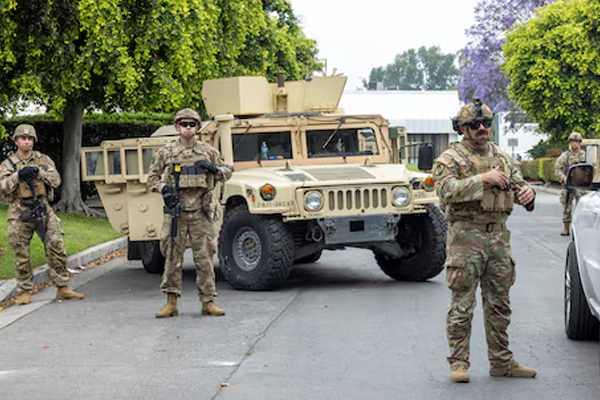
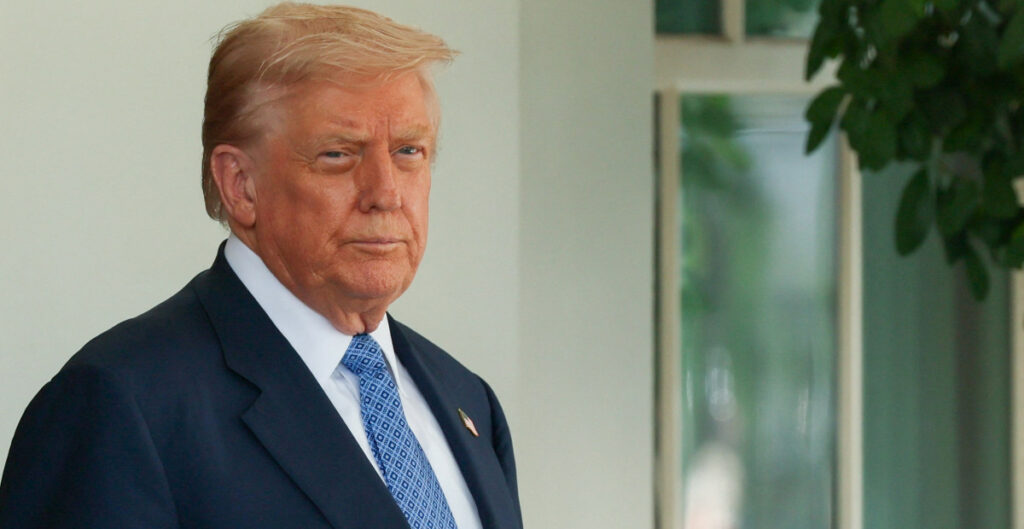
A landmark trial begins on Monday over the Trump administration’s deployment of National Guard troops to aid deportation operations and suppress protests in Los Angeles, in a legal challenge underscoring the president’s departure from long-standing norms against using soldiers on American streets.
The three-day non-jury trial before U.S. District Judge Charles Breyer in San Francisco will determine if the government violated a 19th-century law that bars the military from civil law enforcement when it deployed troops to Los Angeles in June.
Los Angeles suffered days of unrest and protests sparked by mass immigration raids at places where people gather to find work, like Home Depot stores, a garment factory and a warehouse.
The administration denies that troops were used in civil law enforcement and plans to show they were protecting federal property and U.S. Immigration and Customs Enforcement (ICE) agents.
National Guard Troops Still There
Many of the troops have been withdrawn, but California said in recent court papers that 2,000 National Guard members are still going on immigration raids and restricting civilian movements in the state.
A ruling against the government could restrict those troops’ activities and constrain President Donald Trump if he tries to deploy troops to police American cities in the future.
Trump said on Wednesday he might send the National Guard, a reserve force that answers to both state governors and the president, to patrol Washington, D.C., a city he said was “very unsafe.”
California and its Governor, Gavin Newsom, have asked Breyer to prohibit the troops from directly participating in domestic law enforcement activities. California and Newsom say the National Guard is accompanying ICE agents on raids and assisting in arrests, in violation of the Posse Comitatus Act of 1878 and other laws that forbid the U.S. military from taking part in civilian law enforcement.
Trump ordered 700 Marines and 4,000 National Guard troops to Los Angeles in June against Newsom’s wishes. Trump’s decision to send troops into Los Angeles prompted a national debate about the use of the military on U.S. soil and inflamed political tension in the country’s second-most-populous city.
California sued the Trump administration over the troop deployment, arguing it violates federal law and state sovereignty. A U.S. appeals court has allowed Trump to retain control of California’s National Guard during the legal challenge.
California’s lawsuit ultimately seeks a ruling that would return its National Guard troops to state control and a declaration that Trump’s action was illegal.
(With inputs from Reuters)
Firefighters Confront ‘Fire Whirls’ Fuelled By Blaze In Northern Spain
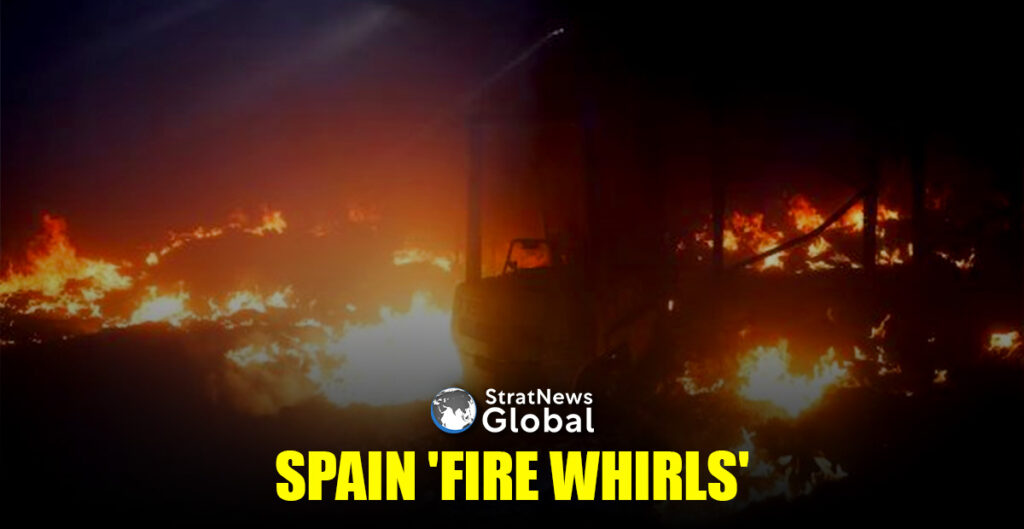
A combined effect of intense heat and strong winds produced “fire whirls” in northern Spain, where a blaze damaged several houses and forced hundreds of people to leave their homes near a UNESCO-listed national park, officials said on Monday.
Thirteen fires broke out in the north of the Castile and Leon region, with about 700 people told to abandon their homes in half a dozen villages.
Four fires were still live, Juan Carlos Suarez-Quinones, chief of environment for the regional government, said on Monday morning. Firefighters had extinguished the other nine.
High temperatures on Sunday had caused the so-called fire whirls near Las Medulas park, forcing firemen to retreat and burning some houses in the nearby village, according to Suarez-Quinones.
“This occurs when temperatures reach around 40 degrees Celsius (104 degrees Fahrenheit) in a very confined valley and then suddenly (the fire) enters a more open and oxygenated area. This produces a fireball, a fire whirl,” he said.
“This explosive and surprising phenomenon was very dangerous. It disrupted all the work that had been done, forcing us to start practically from scratch,” he added.
Prolonged Heatwave
Scientists say the Mediterranean region’s hotter, drier summers put it at high risk of wildfires. Once fires start, dry vegetation and strong winds can cause them to spread rapidly and burn out of control, sometimes provoking fire whirls.
A prolonged heatwave in Spain continued on Monday with temperatures set to reach 42 C in some regions.
Domingo Aparicio, 77, was evacuated to a nearby town from his home in Cubo de Benavente on Sunday after a warehouse in front of his home burned down.
“How am I supposed to feel? It’s always shocking for people close to the catastrophe,” he said.
Two or three fires may have been started by lightning strikes, Suarez-Quinones said, but there were indications that the majority were the result of arson, which he described as “environmental terrorism”.
In the northern part of neighbouring Portugal, nearly 700 firefighters were battling a blaze that started on Saturday in Trancoso, some 350 km (200 miles) northeast of Lisbon.
So far this year about 52,000 hectares (200 square miles), or 0.6% of Portugal’s total area, have burned, exceeding the 2006-2024 average for the same period by about 10,000 hectares, according to the European Forest Fire Information System.
Firefighters were also battling blazes in Navarra in northeastern Spain and in Huelva in the southwest, authorities said.
(With inputs from Reuters)
Trump’s Tariffs Trigger Calls To Boycott US Products In India
From McDonald’s and Coca-Cola to Amazon and Apple, U.S. multinationals face boycott calls in India as business leaders and Modi supporters fuel anti-American sentiment over U.S. tariffs.
India, the world’s most populous nation, is a key market for American brands that have rapidly expanded to target a growing base of affluent consumers, many of whom remain infatuated with international labels seen as symbols of moving up in life.
India, for example, is the biggest market by users for Meta’s WhatsApp, and Domino’s has more restaurants than any other brand in the country. Beverages like Pepsi and Coca-Cola often dominate store shelves, and people still queue up when a new Apple store opens or a Starbucks cafe doles out discounts.
Although there was no immediate indication of sales being hit, there’s a growing chorus both on social media and offline to buy local and ditch American products after Donald Trump imposed a 50% tariff on goods from India, rattling exporters and damaging ties between New Delhi and Washington.
McDonald’s, Coca-Cola, Amazon and Apple did not immediately respond to Reuters queries.
Manish Chowdhary, co-founder of India’s Wow Skin Science, took to LinkedIn with a video message urging support for farmers and startups to make “Made in India” a “global obsession,” and to learn from South Korea, whose food and beauty products are famous worldwide.
“We have lined up for products from thousands of miles away. We have proudly spent on brands that we don’t own, while our own makers fight for attention in their own country,” he said.
Rahm Shastry, CEO of India’s DriveU, which provides a car driver on call service, wrote on LinkedIn: “India should have its own home-grown Twitter/Google/YouTube/WhatsApp/FB — like China has.”
To be fair, Indian retail companies give foreign brands like Starbucks stiff competition in the domestic market, but going global has been a challenge.
Indian IT services firms, however, have become deeply entrenched in the global economy, with the likes of TCS and Infosys providing software solutions to clients worldwide.
On Sunday, Modi made a “special appeal” for becoming self-reliant, telling a gathering in Bengaluru that Indian technology companies made products for the world but “now is the time for us to give more priority to India’s needs.”
He did not name any company.
Don’t Drag My McPuff Into It
Even as anti-American protests simmer, Tesla launched its second showroom in India in New Delhi, with Monday’s opening attended by Indian commerce ministry officials and U.S. embassy officials.
The Swadeshi Jagran Manch group, which is linked to Modi’s Bharatiya Janata Party, took out small public rallies across India on Sunday, urging people to boycott American brands.
“People are now looking at Indian products. It will take some time to fructify,” Ashwani Mahajan, the group’s co-convenor, told Reuters. “This is a call for nationalism, patriotism.”
He also shared with Reuters a table his group is circulating on WhatsApp, listing Indian brands of bath soaps, toothpaste and cold drinks that people could choose over foreign ones.
On social media, one of the group’s campaigns is a graphic titled “Boycott foreign food chains”, with logos of McDonald’s and many other restaurant brands.
In Uttar Pradesh, Rajat Gupta, 37, who was dining at a McDonald’s in Lucknow on Monday, said he wasn’t concerned about the tariff protests and simply enjoyed the 49-rupee ($0.55) coffee he considered good value for money.
“Tariffs are a matter of diplomacy, and my McPuff, coffee should not be dragged into it,” he said.
(With inputs from Reuters)
Europe Scrambles To Shape US Stance Before Trump-Putin Talks
Polish Prime Minister Donald Tusk said the U.S. had promised to consult Europe before a summit with Russia’s Vladimir Putin, as European ministers are ready to hold talks amid concerns Washington could impose unfavourable peace terms on Ukraine.
European Union foreign ministers were due to hold a video conference on Monday afternoon to discuss their support for Kyiv and the upcoming meeting.
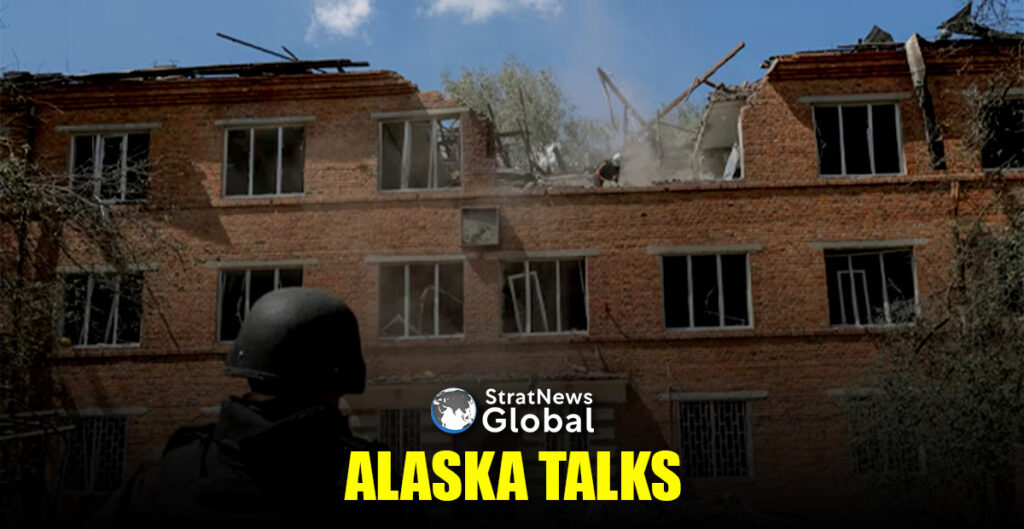
U.S. President Donald Trump announced last week he would meet Putin on Friday in Alaska to negotiate an end to the 3-1/2-year war, which began with Russia’s full-scale invasion of its neighbour.
“The American side has promised that it will consult with European partners on its position before the meeting in Alaska,” Poland’s Tusk told a press conference.
“I will wait… for the effects of the meeting between Presidents Trump and Putin – I have many fears and a lot of hope,” he said.
Zelenskyy Rejects Moscow Concessions
Ukrainian President Volodymyr Zelenskyy said on Monday that concessions to Moscow would not persuade it to stop fighting in Ukraine and that there was a need to ramp up pressure on the Kremlin.
European officials have sought to influence the White House’s positioning ahead of the Alaska talks, emphasising the need to safeguard Ukraine’s sovereignty, provide security guarantees and allow Kyiv to choose its own path.
U.S. Vice President JD Vance met European and Ukrainian officials over the weekend, and European leaders are expected to conduct more outreach to Washington in the coming days.
“Any deal between the U.S. and Russia must have Ukraine and the EU included, for it is a matter of Ukraine’s and the whole of Europe’s security,” EU foreign policy chief Kaja Kallas said on Sunday.
European leaders have also underscored their commitment to the idea that international borders cannot be changed by force, as EU capitals fear a deal forced on Kyiv could create a dangerous precedent.
“Regarding territorial issues, the Russian position is framed as a territorial swap, but it appears as a rather one-sided swap,” a European Commission official said on Sunday.
“In the context of these talks, the U.S. administration has been very involved and has shown interest in aligning positioning with Europe,” the official said.
“The most robust security guarantee would be that there are no limitations on Ukraine’s armed forces and third countries’ support to Ukraine.”
(With inputs from Reuters)
‘Nuclear Sabre-Rattling’: India Slams Asim Munir’s Nuke Threat From US
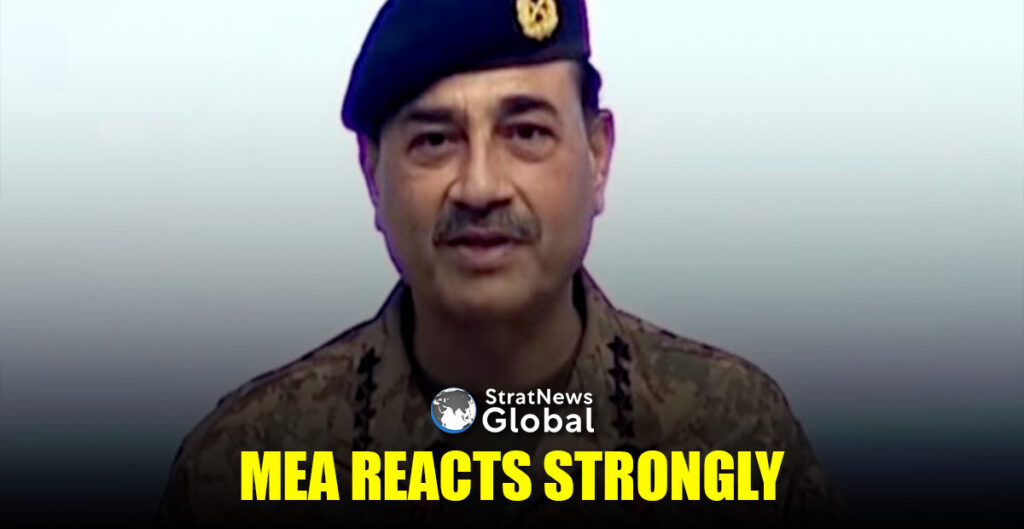
India on Monday issued a strong rebuke to reported remarks by Pakistan’s Chief of Army Staff, Asim Munir, during his visit to the United States, describing them as a case of Pakistan’s habitual “nuclear sabre-rattling.”
In an official statement, the Ministry of External Affairs (MEA) said the comments reinforced long-standing global concerns over the credibility and security of Pakistan’s nuclear command and control—particularly in a state where the military is “hand-in-glove with terrorist groups.”
The ministry also noted it was “regrettable” that such remarks were made on the soil of a friendly third country, underscoring the inappropriateness of the venue and the message.
Reaffirming its long-standing position, the MEA reiterated that India would never succumb to nuclear blackmail and would take every necessary measure to safeguard its national security interests.
MEA’s Full Statement
Our attention has been drawn to remarks reportedly made by the Pakistani Chief of Army Staff while on a visit to the United States.
Nuclear sabre-rattling is Pakistan’s stock-in-trade.
The international community can draw its own conclusions on the irresponsibility inherent in such remarks, which also reinforce the well-held doubts about the integrity of nuclear command and control in a state where the military is hand-in-glove with terrorist groups.
It is also regrettable that these remarks should have been made from the soil of a friendly third country.
India has already made it clear that it will not give in to nuclear blackmail. We will continue to take all steps necessary to safeguard our national security.
Munir’s Nuke Threat
According to media reports, Pakistan’s Army Chief Asim Munir issued an explicit nuclear threat during an address to the Pakistani diaspora in Tampa, Florida.
He reportedly said that if his country were ever confronted with an existential threat in a future conflict with India, “We are a nuclear nation. If we think we are going down, we’ll take half the world down with us.”
Sources in India noted that such remarks fit into a broader pattern wherein Pakistani military leaders reveal aggressive posturing whenever Washington extends support to their armed forces.
They described the comments as further evidence of the lack of democratic governance in Pakistan, where the military retains effective control over the state’s affairs.
One source even speculated that Munir’s warm reception in the U.S. could embolden him to take more drastic steps, hinting at the possibility of a silent or overt coup that could elevate him to the presidency—effectively transforming him into a Field Marshal-President.
(With inputs from IBNS)
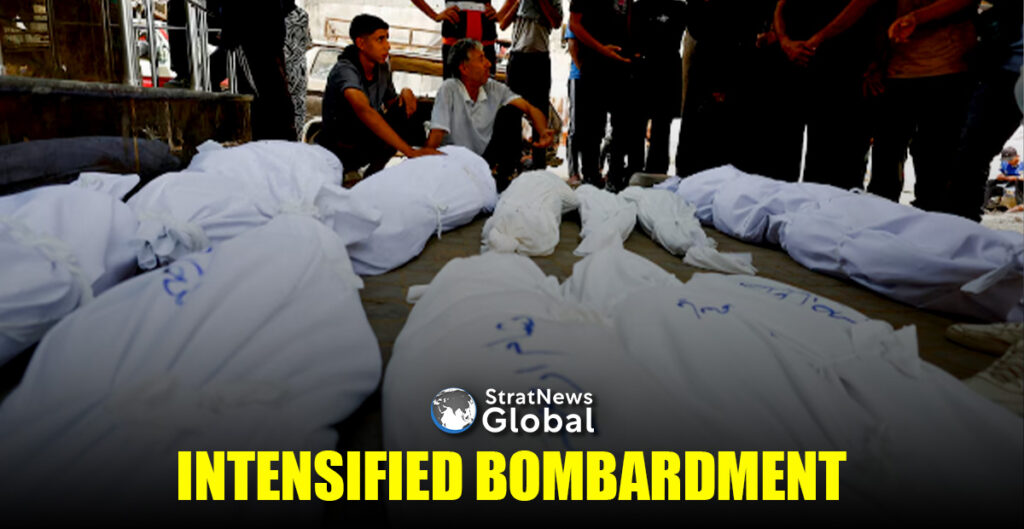
Israel Intensifies Gaza City Bombing After Netanyahu Pledges Offensive Expansion
Palestinians reported the heaviest bombardment in weeks on Monday in eastern Gaza City, hours after Israel’s Prime Minister Benjamin Netanyahu pledged to swiftly complete an expanded offensive.
An airstrike also killed six journalists, including prominent Al Jazeera correspondent Anas Al Sharif, in a tent at the Al Shifa Hospital compound.
Witnesses said Israeli tanks and planes pounded Sabra, Zeitoun, and Shejaia, three eastern suburbs of Gaza City in the north of the territory, on Monday, pushing many families out of their homes westwards.
Some Gaza City residents said it was one of the worst nights in weeks, raising fears of military preparations for a deeper offensive into their city, which, according to the Palestinian militant group Hamas, is now sheltering about 1 million people after the displacement of residents from the enclave’s northern edges.
Israeli Artillery Strikes
The Israeli military said its forces fired artillery at Hamas militants in the area. There was no sign on the ground of forces moving deeper into Gaza City as part of the newly approved Israeli offensive, which is not expected to begin in the coming weeks.
“It sounded like the war was restarting,” said Amr Salah, 25. “Tanks fired shells at houses, and several houses were hit, and the planes carried what we call fire rings, whereby several missiles landed on some roads in eastern Gaza,” he told Reuters via a chat app.
The Israeli military said its forces on Sunday dismantled a launch site east of Gaza City, which Hamas used to fire rockets towards Israeli communities across the border.
Netanyahu on Sunday said he had instructed the Israeli military to speed up its plans for the new offensive.
“I want to end the war as quickly as possible, and that is why I have instructed the IDF (Israel Defence Forces) to shorten the schedule for seizing control of Gaza City,” he said.
New Offensive
Netanyahu on Sunday said the new offensive will focus on Gaza City, which he described as Hamas’ “capital of terrorism”. He also pointed to a map and indicated that the coastal area of central Gaza may be next, saying Hamas militants have been pushed there too.
The new plans have raised alarm abroad. On Friday, Germany, a key European ally, announced it would halt exports of military equipment to Israel that could be used in Gaza. Britain and other European allies urged Israel to reconsider its decision to escalate the Gaza military campaign.
Mike Huckabee, the U.S. ambassador to Israel, told Reuters that some countries appeared to be putting pressure on Israel rather than on Hamas, whose deadly attack on Israel on October 7, 2023, ignited the war.
Journalists Killed
The airstrike that killed Al Jazeera’s Anas Al Sharif and four of his colleagues at Al Shifa Hospital was the deadliest for journalists in the conflict so far and was condemned by journalists and rights groups.
Medics at the hospital said on Monday that local freelancer Mohammad Al-Khaldi had also died in the attack, raising the number of dead journalists from the same strike to six.
Al Sharif had previously been threatened by Israel, which confirmed it had targeted and killed him, alleging he had headed a Hamas cell and was involved in rocket attacks against Israel.
Al Jazeera rejected the claim, and before his death, Al Sharif had also rejected Israeli allegations that he had links to Hamas.
Hamas, which runs Gaza, linked his killing to the new planned offensive.
“The assassination of journalists and the intimidation of those who remain pave the way for a major crime that the occupation is planning to commit in Gaza City,” it said.
The Hamas-run Gaza government media office said 238 journalists have been killed in almost two years of war. The Committee to Protect Journalists said at least 186 journalists have been killed.
Hamas-led fighters triggered the war in October 2023, when they stormed into Israel, killing 1,200 people and taking 251 hostages, according to Israeli tallies. About 50 hostages are still in Gaza, but only around 20 are thought to be alive.
More than 61,000 Palestinians have since been killed by Israel’s campaign, according to Gaza health officials. Most of Gaza’s population has been displaced multiple times, and its residents are facing a humanitarian crisis, with swaths of the territory reduced to rubble.
(With inputs from Reuters)
Operation Sindoor Aftermath: Did Trump Read The Room Wrong?
Was President Donald Trump wrongly briefed by his close advisors about the so-called U.S. role in stopping India’s Operation Sindoor against Pakistan, officials in New Delhi and Washington, DC are wondering.
Although he has imposed a stiff 50 per cent tariff plus penalties on India, ostensibly for India buying Russian crude, Trump’s ire against India is more personal than professional, most people aware of the internal discussions have concluded.
Exactly three months after India paused Operation Sindoor following the panic call by Pakistan’s Director General of Military Operations (DGMO) to his Indian counterpart, officials are yet to figure out why Trump continues to wrongly claim that he stopped a potentially dangerous escalation between India and Pakistan.
An analysis of the sequence of events on May 9 and 10 shows U.S. Vice President JD Vance called Prime Minister Narendra Modi on the night of May 9. His response to Vance (that India will hit back with greater ferocity than before) is by now well-known.
As Pakistan attacked in the intervening night of May 9 and 10, India unleashed a punitive strike in four waves that not only crippled Pakistan’s two mobile command and control centres, but also downed half a dozen Pakistani Air Force jets besides damaging airfields and other assets on the ground, forcing Pakistan to go running to U.S. in panic. (Read the entire details here)
U.S. Secretary of State Marco Rubio then called India’s External Affairs Minister Dr S. Jaishankar on May 10 who told him to instruct the Pakistanis to use the DGsMO channel to commence the discussion on when to stop firing. Simultaneously, the Saudi Arabian and UAE leadership were also making calls to both India and Pakistan, seeking to dial down the tension. Even the Iranians apparently asked India at one point if they could be of any help. Presumably, all sides were talking to the Pakistanis as well. India’s message was consistent: Let the Pakistani military call.
As is well known by now, the DGMO of Pakistan initiated the call, had a conversation with his Indian counterpart. They both then agreed to stop firing from 5 pm that evening.
This is where it becomes hazy. Rubio and team appear to have briefed Trump on all the conversations and the agreement that India and Pakistan had reached. What was Trump told? Was he informed about the exact sequence of events, the nuances of the conversations? Or was he simply told, ‘Mr President, it was your intervention alone that has prevented a nuclear war,’ or something to that effect? Who knows.
Given the nature of current White House functioning, it is not beyond belief that the briefings may have exaggerated Trump and the U.S. role in effecting the pause in firing. Once Trump concluded in his mind that it was his administration that stopped the war, there was no stopping the American President.
He clearly wanted India and particularly Prime Minister Narendra Modi to thank him personally. The establishment in New Delhi however did not see the U.S. role in the same light as perhaps some of the senior U.S. interlocutors projected it to Trump. Unlike India, the Pakistanis, past masters in flattery, were quick to credit Trump for preventing the escalation and stopping the firing. The U.S. President immediately rewarded newly minted Field Marshal Asim Munir with a meeting in the White House and signalled more help to Pakistan.
The egoist that he is, Trump appears to have taken Prime Minister Modi’s refusal to stop over in DC on his way back from Canada where he attended the G-7 meeting, as a personal insult too. Perhaps he was trying to get Modi and Munir in the same room as he did with the leaders of Azerbaijan and Armenia last week for a peace agreement. India was not grateful enough, the President may have thought and that’s when the script went awry.
Indian and American teams negotiating the trade agreement were ready for an ‘early harvest’ tranche of the pact to be followed by the final document later this year but when Trump unilaterally announced a 50 per cent tariff, plus penalties, the carefully nurtured Indo-U.S. relationship was on a rapid downward spiral.
What next? The understanding among those who specialise in watching and analysing the Delhi-DC relationship is it will get worse before it gets better. In private conversations several observers point out that officials who stitch together many agreements and are constantly talking at the working level do not share the ‘scorched earth’ policy that Trump seems to have adopted just to satisfy his ego but at the moment, there is no alternative but to ride the storm. The question is: How long will the storm last? And how extensive the damage would be in the long run? There is no alternative but to wait and watch.
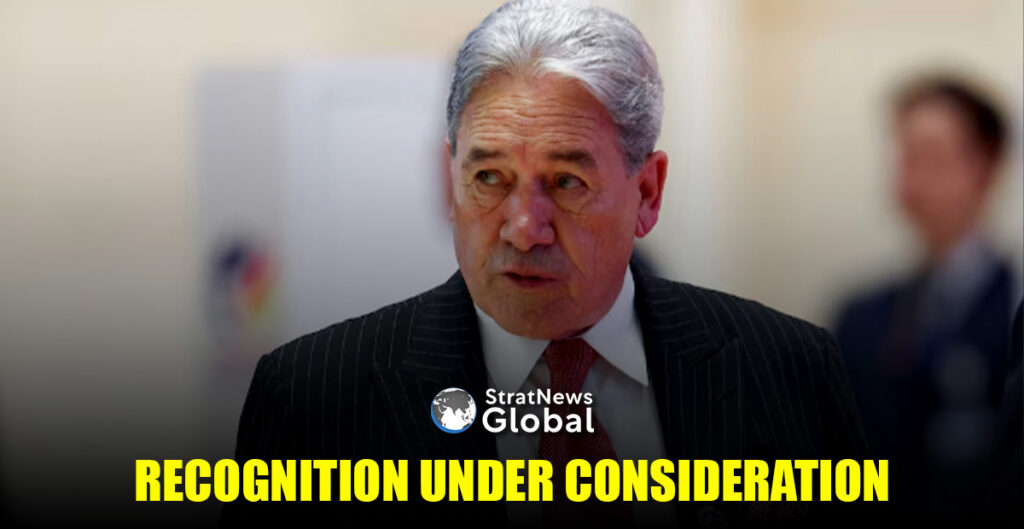
New Zealand Weighs Recognising Palestinian State: Foreign Minister
Foreign Minister Winston Peters said on Monday that New Zealand is weighing the recognition of a Palestinian state.
Prime Minister Christopher Luxon’s cabinet would make a formal decision in September and present the government’s approach at the U.N. Leaders’ Week, he said.
Several countries, including Australia, Britain and Canada, have announced in recent weeks that they will recognise a Palestinian state at September’s U.N. General Assembly.
Independent Policy Stance
Peters said that while some of New Zealand’s close partners had opted to recognise a Palestinian state, New Zealand had an independent foreign policy.
“We intend to weigh up the issue carefully and then act according to New Zealand’s principles, values and national interest,” Peters said in a statement.
The government needed to weigh up whether sufficient progress was being made towards the Palestinian territories becoming a viable and legitimate state for New Zealand to grant recognition.
“New Zealand has been clear for some time that our recognition of a Palestinian state is a matter of when, not if,” Peters added.
Australia To Recognise Soon
Anthony Albanese, the Prime Minister of neighbouring Australia, announced on Monday that Canberra will recognise a Palestinian state at next month’s UN General Assembly, joining France, Britain, and Canada in increasing pressure on Israel.
“Australia will recognise the State of Palestine at the 80th Session of the United Nations General Assembly in September, to contribute to international momentum towards a two-state solution, a ceasefire in Gaza and the release of hostages,” Albanese said in a statement.
Albanese told reporters in Canberra that recognition would be predicated on commitments Australia received from the Palestinian Authority, including that Islamist militant group Hamas would have no involvement in any future state.
‘Two-State Solution’
“A two-state solution is humanity’s best hope to break the cycle of violence in the Middle East and to bring an end to the conflict, suffering and starvation in Gaza,” Albanese said at a press conference.
Albanese said he spoke with Israeli Prime Minister Benjamin Netanyahu on Thursday and told him a political solution was needed and not a military one.
Australia last week criticised Israel’s plan to take military control of Gaza, and Albanese said the decision to recognise a Palestinian state was “further compelled” by Netanyahu’s disregard of the international community’s calls and failure to comply with legal and ethical obligations in Gaza.
(With inputs from Reuters)
South Korea, Vietnam Vow Stronger Ties Despite Trade Hurdles
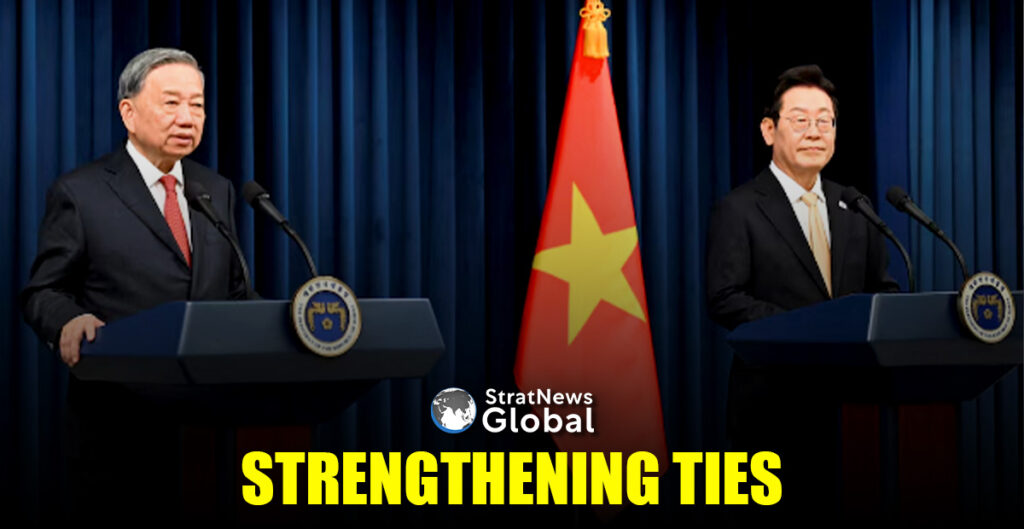
South Korea and Vietnam vowed to strengthen economic and strategic cooperation during a summit on Monday, aiming to leverage business ties to navigate a tough global trade climate.
South Korean President Lee Jae Myung is hosting Vietnamese leader To Lam as his first state guest since taking office on June 4 and discussed promoting trade and investment in the Southeast Asian country, Lee’s office said.
Lam, who is the Vietnamese Communist Party general secretary, leads a delegation of industry, trade, foreign and technology ministers and senior party and parliament members on the four-day state visit.
“Our countries agreed that about 10,000 Korean companies operating in Vietnam contribute to Vietnam’s economic development and mutually beneficial cooperation between the two countries.” Lee said in a televised address,”
“I asked for a continued interest in the stable economic activities of our companies in Vietnam.”
Trade Growth
Lam said the countries agreed to further open up their markets and expand trade to $150 billion by 2030, adding Vietnam welcomed an increase in investment by South Korean businesses along with greater technological cooperation.
The countries are due to sign at least 10 memoranda of understanding at the summit meeting, pledging cooperation in areas including nuclear and renewable energy, monetary and financial policies, and science and technology, Lee’s office said.
Other agreements covered cooperation in infrastructure, including high-speed rail, Lee’s office said.
The rare visit by the Vietnamese leader is expected to contribute to a favourable condition for South Korean businesses to invest in major infrastructure and nuclear energy projects planned in Vietnam, it said.
A number of major South Korean companies, including Samsung Electronics, have used Vietnam as an export hub, benefiting for years from lower labour costs, generous tax incentives and Hanoi’s numerous free trade pacts with dozens of countries.
But the trade policy of U.S. President Donald Trump, who imposed sweeping new tariffs on Asian countries in recent weeks, has increased uncertainty over future business commitments, with Vietnamese official data showing a slowdown in new investment.
South Korean companies have been cited as potential investors in Vietnam’s planned nuclear energy, LNG power plants and high-speed rail projects.
Trump has imposed a tariff rate of 15% for South Korean goods and 20% for imports from Vietnam.
(With inputs from Reuters)
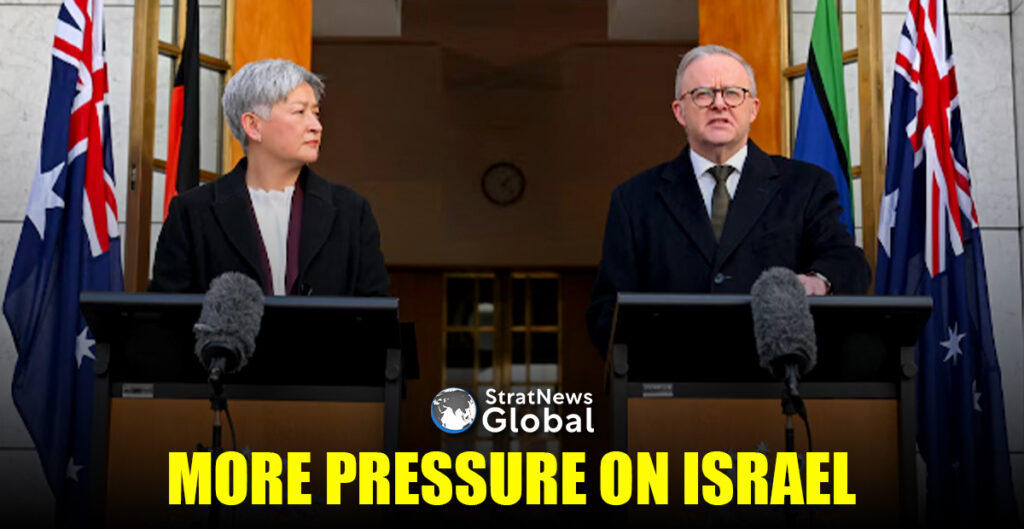
After France, UK And Canada, Australia To Recognise Palestinian State
Prime Minister Anthony Albanese announced on Monday that Australia will recognise a Palestinian state at next month’s UN General Assembly, joining France, Britain, and Canada in increasing pressure on Israel.
“Australia will recognise the State of Palestine at the 80th Session of the United Nations General Assembly in September, to contribute to international momentum towards a two-state solution, a ceasefire in Gaza and the release of hostages,” Albanese said in a statement.
Albanese told reporters in Canberra that recognition would be predicated on commitments Australia received from the Palestinian Authority, including that Islamist militant group Hamas would have no involvement in any future state.
‘Two-State Solution’
“A two-state solution is humanity’s best hope to break the cycle of violence in the Middle East and to bring an end to the conflict, suffering and starvation in Gaza,” Albanese said at a press conference.
Albanese said he spoke with Israeli Prime Minister Benjamin Netanyahu on Thursday and told him a political solution was needed and not a military one.
Australia last week criticised Israel’s plan to take military control of Gaza, and Albanese said the decision to recognise a Palestinian state was “further compelled” by Netanyahu’s disregard of the international community’s calls and failure to comply with legal and ethical obligations in Gaza.
“The Netanyahu Government is extinguishing the prospect of a two-state solution by rapidly expanding illegal settlements, threatening annexation in the Occupied Palestinian Territories, and explicitly opposing any Palestinian state,” Albanese said in the joint statement with Foreign Minister Penny Wong.
Commitments by the Palestinian Authority to reform governance, demilitarise and hold general elections, as well as Arab League demands for Hamas to end its rule in Gaza, created an opportunity, he said.
“This is an opportunity to isolate Hamas,” he added.
Wong said she had informed U.S. Secretary of State Marco Rubio of Australia’s decision.
Trump Slams Canada
U.S. President Donald Trump last month criticised Canada’s decision to back Palestinian statehood, and Rubio has said the decision by France was reckless.
Israel’s Ambassador to Australia, Amir Maimon, criticised Australia’s decision on social media platform X as undermining Israel’s security and derailing hostage negotiations.
Last month, Albanese would not publicly commit to a timeframe for recognition, and has previously been wary of divided public opinion in Australia over Gaza.
Tens of thousands of demonstrators marched across Sydney’s Harbour Bridge this month, calling for aid deliveries in Gaza as the humanitarian crisis worsened.
Albanese said on Monday “massive concern” over the devastation in Gaza came not just from international leaders but community members.
New Zealand ‘Considering’ Recognition
New Zealand said it would consider its position on the recognition of Palestine this month.
Israel launched its assault on Gaza after Hamas-led fighters stormed Israeli towns near the border, killing some 1,200 people and capturing 251 hostages on October 7, 2023. Since then, Israeli forces have killed at least 60,000 people in Gaza, health officials there say, and reduced much of the enclave to ruins.
Malnutrition is widespread in the enclave due to what international aid agencies say is a deliberate plan by Israel to restrict aid. Israel rejects that allegation, blaming Hamas for the hunger among Palestinians and saying a lot of aid has been distributed.
(With inputs from Reuters)