

Support us by contributing to StratNewsGlobal on the following UPI ID
ultramodern@hdfcbank

Strategic affairs is our game, South Asia and beyond our playground. Put together by an experienced team led by Nitin A. Gokhale. Our focus is on strategic affairs, foreign policy and international relations, with higher quality reportage, analysis and commentary with new tie-ups across the South Asian region.
You can support our endeavours. Visit us at www.stratnewsglobal.com and follow us on YouTube, Twitter, Facebook and Instagram.
र 500 per month
र 1000 per month
र 5000 per year
र 10000 per year
Donate an amount of your choice
र 500 per month
Donate र 500 per month

र 1000 per month
Donate र 1000 per month
र 5000 per year
Donate र 5,000 per year
र 10000 per year
Donate र 10,000 per year
Donate an amount of your choice
Donate an amount of your choice
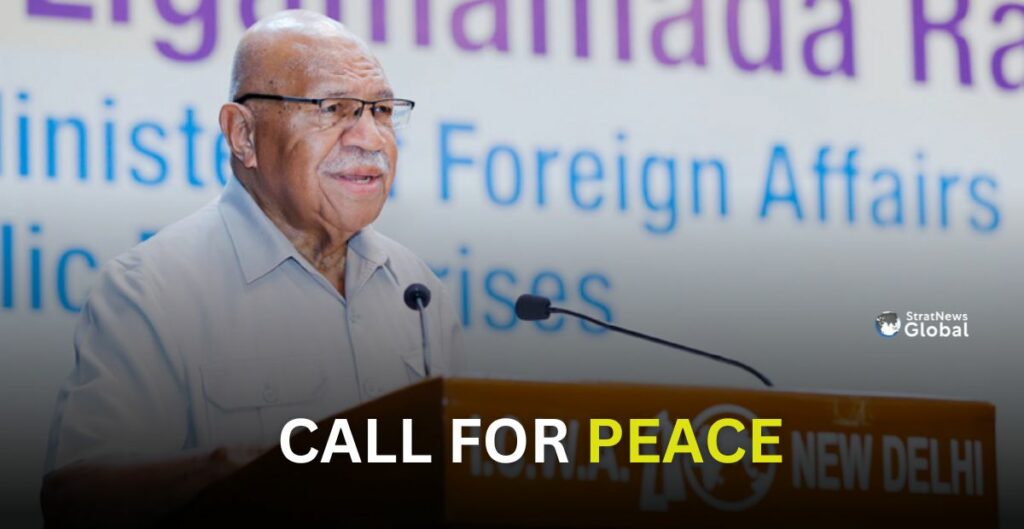
Fiji PM Rabuka: India Is Big Enough To Weather Trump’s Tariffs
“I told him the other day somebody is not very happy with you but then you are big enough to weather those discomforts,” Fiji’s visiting Prime Minister Sitiveni Rabuka recalled telling Prime Minister Modi, while addressing the Indian Council of World Affairs on Wednesday.
He did not say what Modi told him, but with Trump’s 50% tariffs against India kicking in on Wednesday, it’s clear what Rabuka was hinting: that the Global South is closely watching how this confrontation between the US and India will evolve at a time when richer, economically stronger countries like South Korea, Japan and even the EU have caved in to the US president’s demands.
Rabuka confessed he has had no personal interaction with Trump, but the man was upending the decades old international order.
“We live in a time when there is growing economic uncertainty throughout the world. The global rules based international order have been tested to its limits and multilateralism is eroding in the face of prolonged conflicts and humanitarian catastrophes.”
In the region where he comes from, Rabuka pointed to climate change, rising sea levels, increasingly severe weather systems and the changing ecosystem, as issues they were facing.
Rabuka had proposed the Ocean of Peace concept where “strategic competition is managed, where stability is a touchstone of regional relationships and where coercion is kept in check.”
He does not believe this can be achieved through force of arms or even police. The way forward requires commitment by the island states of the region to peacefully settle disputes, respect international norms and freedom to determine its own strategic and security quality.
While lauding India’s support for the region through digital solutions, healthcare, renewable energy and so on, he also urged that New Delhi amplify the Pacific region’s concerns at international fora like the UN.
He noted that the draft declaration of the Ocean of Peace had been cleared only last week by the Pacific Leaders Forum. A final round of deliberations will be held next month in Manila, the Philippines, before it is adopted. He was hopeful that the declaration would eliminate strategic competition in the region and ensure a cooperative and stable Pacific.
India Releases Dam Water, Warns Pakistan Of Potential Cross-Border Flooding
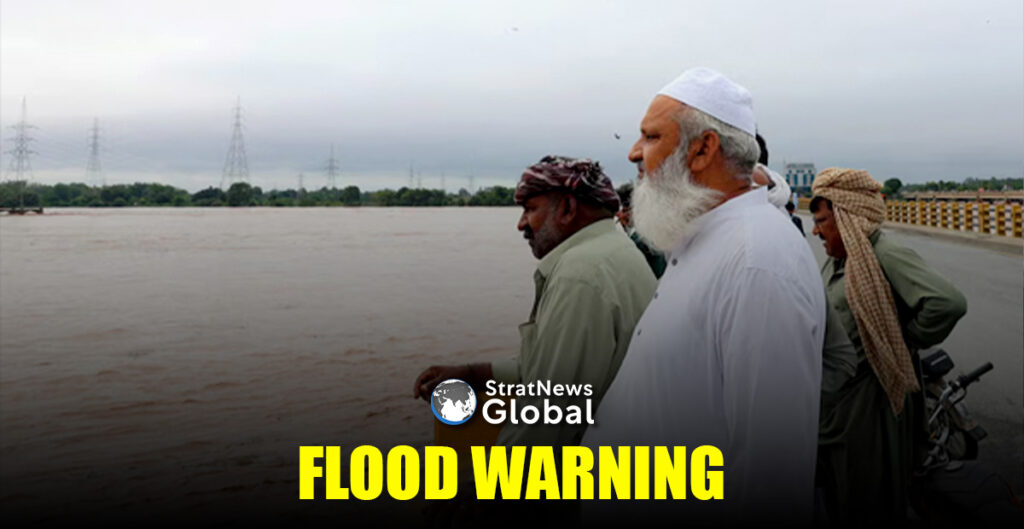
India opened all gates of major dams in Jammu and Kashmir on Wednesday after heavy rains and cautioned neighbouring Pakistan about possible downstream flooding, a government source said.
Pakistan said Islamabad received the warning and subsequently issued an alert for flooding on three rivers which flow into the country from India.
Arch-rivals India and Pakistan have been ravaged by intense monsoon rains and flooding in recent weeks.
Pakistan’s heartland province of Punjab faces an “exceptionally high” risk of flooding due to a combination of heavy rains and the excess water India is releasing from the dams, which then flows across the border, according to Pakistani officials.
Pakistani Punjab serves as the country’s breadbasket and is home to half of its 240 million people.
An Indian source said that some 200,000 cusecs of water are likely to be released. A cusec is a volume equivalent to one cubic foot, or 28 cubic litres, per second. It was unclear whether the Indian water release would be a one-off event or would be carried out in stages.
Warning Issued
A Pakistani disaster management official had warned on Tuesday that India would be releasing controlled volumes of water in the coming days.
Pakistan says New Delhi had passed on two earlier flood warnings since Sunday.
The nuclear-armed nations have been in a tense stand-off since a brief conflict in May, their worst fighting in decades, and any flooding in Pakistan blamed on India could inflame ties.
India routinely releases water from its dams when they get too full, with the excess flowing into Pakistan, as the two nations share rivers.
Pakistani authorities on Wednesday called in army troops to help rescue people from already flooded areas in the Punjab province, and for relief and evacuation efforts. Pakistan began forced evacuations due to floods on Friday.
The number of displaced people in Pakistani Punjab due to flooding now exceeds 167,000, including nearly 40,000 people who left voluntarily following flood warnings since August 14.
The death toll from flooding in Pakistan since the start of the monsoon season in late June now stands at 802, half of them in this month alone.
Punjab province was divided between the two countries when they gained independence in 1947.
(With inputs from Reuters)
Trump’s 50% ‘Penalty’ Tariff On Indian Imports Kicks In, Escalating Trade Tensions
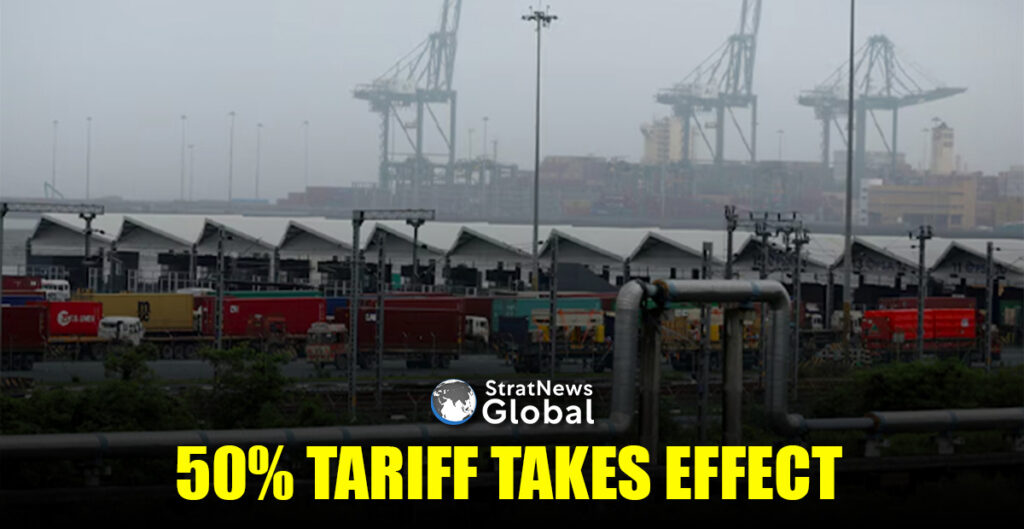
United States President Donald Trump’s move to double tariffs on Indian goods, raising them to as high as 50%, came into effect on Wednesday, intensifying strains between the world’s two largest democracies and strategic allies.
A punitive 25% tariff imposed due to India’s purchases of Russian oil adds to Trump’s prior 25% tariff on many Indian goods. It takes total duties as high as 50% for goods such as garments, gems and jewellery, footwear, sporting goods, furniture and chemicals – among the highest imposed by the U.S. and on par with Brazil and China.
The new tariffs threaten thousands of small exporters and jobs, including in Prime Minister Narendra Modi’s home state of Gujarat.
India’s Commerce Ministry did not immediately respond to a request for comment. However, a Commerce Ministry official, speaking on condition of anonymity, said exporters hit by tariffs would receive financial assistance and be encouraged to diversify to markets such as China, Latin America and the Middle East.
A U.S. Customs and Border Protection notice to shippers provides a three-week exemption for Indian goods that were loaded onto a vessel and in transit to the U.S. before the midnight deadline. These goods can still enter the U.S. at prior lower tariff rates before 12:01 a.m. EDT (0401 GMT) on September 17.
Also exempted are steel, aluminium and derivative products, passenger vehicles, copper and other goods subject to separate tariffs of up to 50% under the Section 232 national security trade law.
India trade ministry officials say the average tariff on U.S. imports is around 7.5%, while the U.S. Trade Representative’s office has highlighted rates of up to 100% on autos and an average applied tariff rate of 39% on U.S. farm goods.
Failed Talks
As the midnight activation deadline approached, U.S. officials offered no hope for India to avert the tariffs.
“Yeah,” said White House trade adviser Peter Navarro when asked if the increased tariffs on India’s U.S.-bound exports would go into effect as previously announced on Wednesday. He offered no further details.
Wednesday’s tariff move follows five rounds of failed talks, during which Indian officials had signalled optimism that U.S. tariffs could be capped at 15%, the rate granted to goods from some other major U.S. trade partners, including Japan, South Korea and the European Union.
Officials on both sides blamed political misjudgment and missed signals for the breakdown in talks between the world’s biggest and fifth-largest economies. Their two-way goods trade totalled $129 billion in 2024, with a $45.8 billion U.S. trade deficit, according to U.S. Census Bureau data.
Exporters Lose Competitive Edge
Exporter groups estimate hikes could affect nearly 55% of India’s $87 billion in merchandise exports to the U.S., while benefiting competitors such as Vietnam, Bangladesh and China.
“The move will disrupt Indian exports to the largest export market,” said S.C. Ralhan, president of Federation of Indian Export Organisations, noting about 55% of exports — including textiles, chemicals and leather – will face a 30–35% price disadvantage against competitors.
The government should consider a one-year moratorium on bank loans for affected exporters, besides extending low-cost credit and easier availability of loans, he said.
Rajeswari Sengupta, an economics professor at Mumbai’s Indira Gandhi Institute of Development Research, said allowing the rupee to “depreciate is one way to provide indirect support to the exporters” and regain lost competitiveness.
Sustained tariffs at this rate could dent India’s growing appeal as an alternative manufacturing hub to China for goods such as smartphones and electronics.
The U.S.-India standoff has raised questions about the broader relationship between India and the U.S., important security partners who share concerns about China.
However, on Tuesday, the U.S. State Department and India’s Ministry of External Affairs issued identical statements saying senior officials of the ministries and defence departments met virtually on Monday and expressed “eagerness to continue enhancing the breadth and depth of the bilateral relationship.”
Both sides also reaffirmed their commitment to the Quad, a partnership that brings together the U.S. and India with Australia and Japan.
(With inputs from Reuters)
Manhunt Underway In Australia For Armed Suspect After Deadly Shooting
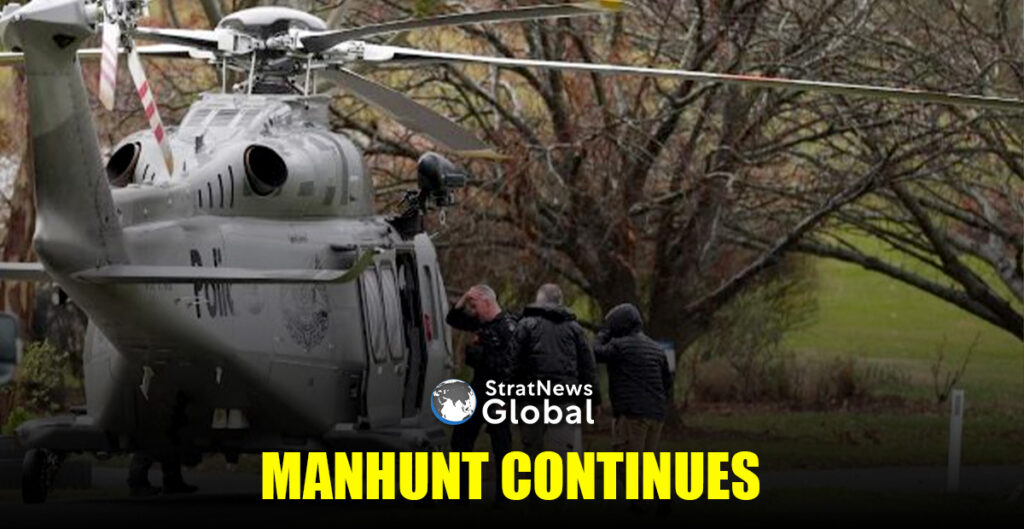
Australian police are searching rugged alpine bushland for a heavily armed gunman accused of killing two officers and wounding another while they were serving a warrant at his rural property in Victoria. The manhunt entered its second day on Wednesday.
Victoria police said the suspected gunman, identified as 56-year-old Dezi Freeman, was a local man with expert knowledge of bushcraft and in possession of multiple powerful firearms.
“I can confirm that the suspect for this horrific event is still at large,” Victoria Police Chief Commissioner Mike Bush said at a news conference on Wednesday.
“The hunt will continue until we find him.”
On Tuesday, a team of 10 police officers, including members of the sexual offences and child investigation team, arrived at Freeman’s property in Porepunkah, about 300 km (186 miles) northeast of the city of Melbourne, to execute a search warrant.
Fatal Shooting
Freeman, also known as “Filby”, is alleged to have fired on the group, killing a 59-year-old detective and a 35-year-old senior constable and seriously injuring a detective before fleeing on foot into dense bushland, police said.
Police said Freeman’s partner and children had been located safely overnight amid speculation they had been taken hostage.
Porepunkah is home to around 1,000 residents and is located at the base of Australia’s alpine ranges.
Bush said that winter weather in the region made the manhunt conditions “tough going” for police and that Freeman “will know the area better than us”.
“He understands bushcraft well, which provides a challenge for us,” Bush said, adding Freeman was “heavily armed” with multiple firearms and urging the local community to stay indoors.
Local media outlets reported that police believed Freeman was a “sovereign citizen” who believes the government is illegitimate.
Court documents show Freedman campaigned against COVID-19 lockdowns and attempted to prosecute then Victorian state premier Dan Andrews for treason and fraud in 2021.
(With inputs from Reuters)
Germany To Allow Entry Of Vulnerable Afghans Following Mounting Pressure
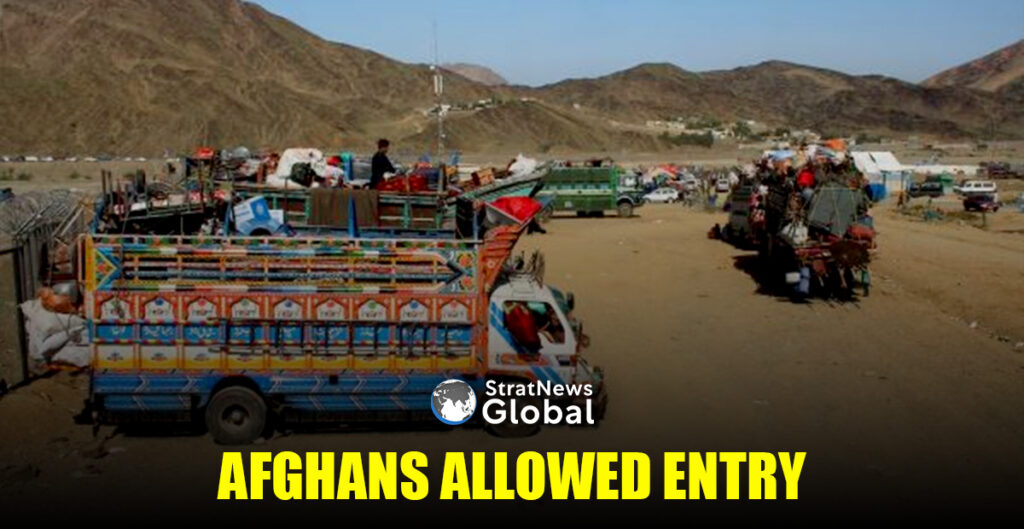
Germany will reopen its doors to vulnerable Afghan nationals it had earlier promised to accept, according to a foreign ministry official. The move comes after growing legal challenges within the country and Pakistan’s push to deport Afghan refugees.
Around 2,000 Afghans approved for relocation to Germany under a programme for those deemed at risk under Taliban rule have been stranded in neighbouring Pakistan for months, after Berlin froze the scheme amid a pledge to curb migration.
“In Pakistan, individuals are at different stages of the departure process. The various verification procedures are currently resuming,” the official said. “Personnel from the competent authorities are on the ground in Pakistan to continue the admission procedures.”
The decision comes following several lawsuits by groups and dozens of affected Afghans challenging the freeze.
The interior ministry, which had put the programme on hold in the first place and was blocking its resumption, said Afghan nationals who were promised admission under earlier programmes were undergoing individual case reviews.
“Afghans for whom the Federal Republic of Germany has been legally obliged by binding court decisions to issue visas and allow entry will gradually be admitted to Germany,” a ministry official said.
Only Afghans with binding admission approvals will be allowed in after security checks, the official said, noting that numbers were unclear and exit permits from Pakistan would still be required.
Matthias Lehnert, a lawyer representing Afghans who had challenged the suspension, said he had informed the affected families of the news and that they were “overjoyed”.
“These are all proceedings that were enforced through the courts. In that sense, the federal government is doing the absolute minimum,” Lehnert added.
Sense Of Urgency
The sense of urgency has increased as Pakistan moves to expel Afghan refugees ahead of a September 1 deadline, including those in Germany’s relocation programme.
Lehnert, who won four cases against the government, said the courts had ruled in principle that people could rely on Berlin’s admission commitments and were at serious risk of deportation to Afghanistan if not flown to Germany.
“That’s why it’s really scandalous that the government isn’t acting in all the other cases and continues to drag things out.”
Families with court rulings will be flying out of Pakistan soon but the details have not yet been disclosed, said Eva Beyer, media and advocacy officer for aid organisation Kabul Luftbruecke (Kabul Air Bridge).
“Some of them have been waiting for many, many months, some even for years, to be able to leave (Pakistan),” she said, adding that the Afghans would be flown to Germany on regular commercial airlines, not charter flights.
(With inputs from Reuters)
Iran Holds Geneva Talks With European Powers Amid Sanctions Deadline
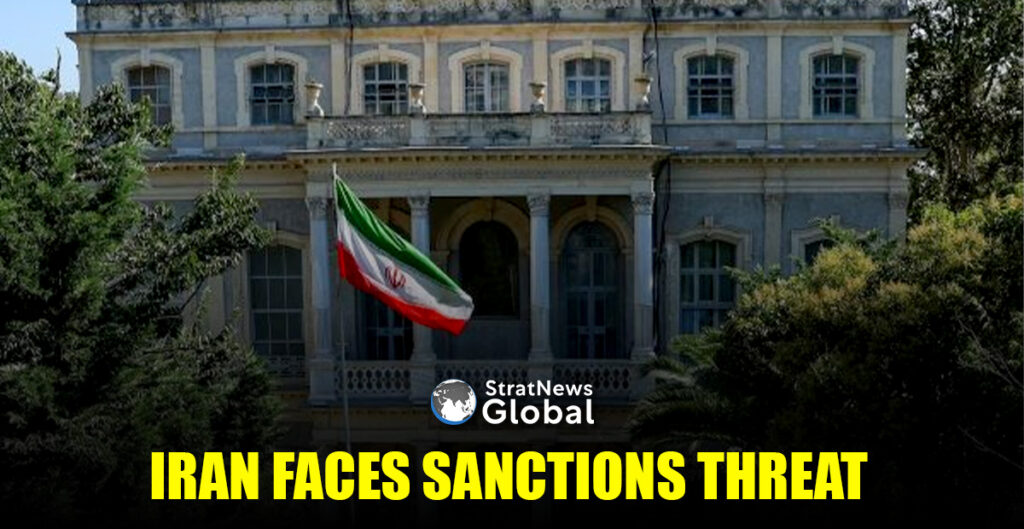
Iran held talks with France, Britain, and Germany in Geneva on Tuesday in an effort to revive negotiations over its nuclear programme, as the window for reimposing United Nations sanctions on Tehran draws closer.
The trio, known as the E3, is ready to trigger a so-called snapback of U.N. sanctions in the coming days over accusations that Iran has violated a 2015 deal with world powers that aimed to prevent Tehran from developing a nuclear weapon.
But they have offered to delay such a move for a limited time if Iran resumes U.N. inspections – which would also seek to account for Iran’s large stock of enriched uranium – and engages in talks with the United States.
To do this, the U.N. Security Council would have to extend a 2015 U.N. Security Council resolution that enshrined the nuclear deal. It is currently due to expire on October 18 and Germany, France and Britain would lose the ability to trigger a snapback of U.N. sanctions.
Iran’s Warning
Tehran has warned of a “harsh response” if sanctions are reinstated. Talks between the E3 and Iran are tense as Tehran is furious at the bombing in June of its nuclear facilities by the U.S. and Israel.
In an unexpected move, Russia and China – also parties to the nuclear deal – circulated a draft resolution to the 15 council members on Sunday that would extend the nuclear deal until April 18, 2026.
However, a revised Russian and Chinese draft text shared with council members on Tuesday also seeks to suspend “any substantive action on any matters related to the implementation of resolution” or the nuclear deal by the Security Council – language that is likely to raise concerns among the E3.
A senior Russian diplomat, speaking on condition of anonymity, told Reuters this language would block the E3 from reimposing U.N. sanctions on Iran. It was not immediately clear when the draft resolution could be put to a vote.
“It is time for the E3 and the U.N. Security Council to make the right choice and give diplomacy the time and space it needs,” Iranian Deputy Foreign Minister Kazem Gharibabadi said in a post on X after the meeting with Germany, France and Britain in Geneva.
Iran Buying Time?
Iranian foreign ministry spokesperson Esmaeil Baghaei said communication with the E3 would continue in the coming days.
Western officials have said they suspect Iran has returned to negotiating tactics aimed at buying time and dragging out talks.
“We are going to see whether the Iranians are credible about an extension or whether they are messing us around. We want to see whether they have made any progress on the conditions we set to extend,” said one E3 official, speaking on condition of anonymity, before Tuesday’s talks.
Iran has been enriching uranium to up to 60% fissile purity, a short step from the roughly 90% of weapons-grade, and had enough material enriched to that level, if refined further, for six nuclear weapons before the strikes by Israel started on June 13.
Actually producing a weapon would take more time, however, and the International Atomic Energy Agency has said that while it cannot guarantee Tehran’s nuclear programme is entirely peaceful, it has no credible indication of a coordinated weapons project in the Islamic Republic.
Israel and the United States have said they needed to strike Iran’s uranium enrichment sites because the country was making such rapid advances towards the ability to produce a nuclear weapon.
Tehran denies any intention to develop atomic bombs.
While Iran’s enrichment plants were badly damaged or destroyed in the June war, Tehran has not granted the IAEA access to them since then, arguing that it is not safe for inspectors. The status and whereabouts of Iran’s large stockpile of enriched uranium are also unclear.
“Due to the damage to our nuclear sites, we need to agree on a new plan with the agency — and we’ve conveyed that to IAEA officials,” one Iranian official said.
IAEA chief Rafael Grossi told Fox News on Tuesday that “the first team of IAEA inspectors is back in Iran,” but that the agency was still discussing with Tehran the practical modalities of resuming inspections.
(With inputs from Reuters)
Trump Aims To End Israel-Gaza Conflict Before 2025 Ends
US special envoy Steve Witkoff on Tuesday said President Donald Trump will chair a White House meeting on Gaza, adding that Washington expects the Israel-Gaza conflict to be resolved by year-end.
The US State Department separately said Secretary of State Marco Rubio will meet Israeli Foreign Minister Gideon Saar in Washington on Wednesday. It released the information in a regular next-day public schedule that said their meeting at the State Department would be held at 1515 ET (1915 GMT).
Elusive Goal
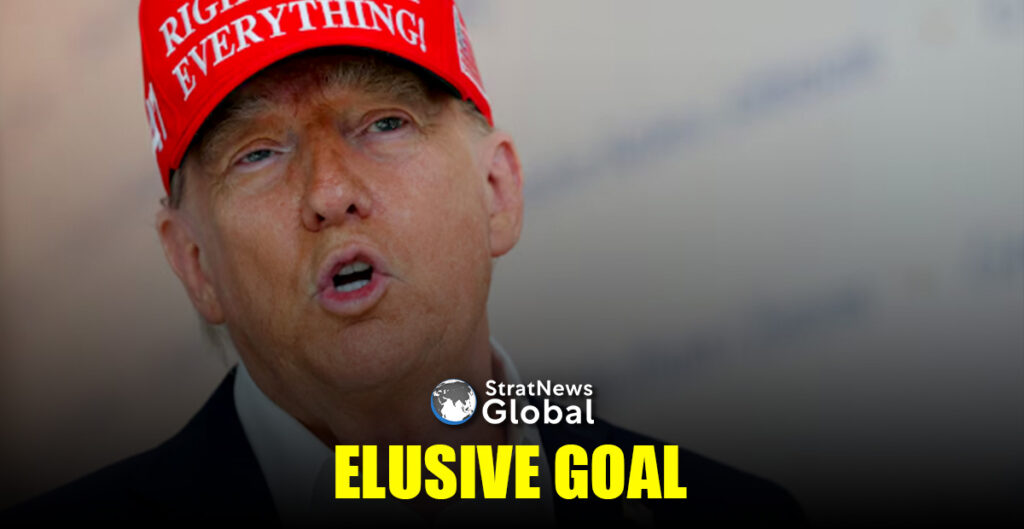
Trump had promised a swift end to the war in Gaza during the 2024 US election campaign and after taking office in January, but almost seven months into his term, that stated goal remains elusive.
Trump’s term began with a ceasefire which lasted two months and ended when Israeli strikes killed around 400 Palestinians on March 18. In recent weeks, images of starving Palestinians in Gaza, including children, have shocked the world and fueled criticism of Israel over the worsening conditions.
‘Comprehensive Plan’
When asked on Fox News’ “Special Report with Bret Baier” show if there is a post-war plan for Gaza, Witkoff said: “Yes, we’ve got a large meeting in the White House tomorrow, chaired by the president, and it’s a very comprehensive plan we’re putting together on the next day.”
He did not elaborate further and did not list the meeting’s participants.
When asked should Israel be doing anything differently to end the war and secure the release of the hostages, Witkoff said: “We think that we’re going to settle this one way or another, certainly before the end of this year.”
Witkoff said Israel was open to continuing discussions with Palestinian militant group Hamas. He said Hamas had signaled it was open to a settlement.
Context
US ally Israel’s devastating assault on Gaza since October 2023 has killed over 62,000 Palestinians, according to Gaza health authorities. It has also caused a hunger crisis, internally displaced Gaza’s entire population and prompted accusations of genocide and war crimes at international courts that Israel denies.
The latest bloodshed in the decades-old Israeli-Palestinian conflict was triggered in October 2023 when Hamas attacked Israel, killing 1,200 and taking about 250 hostages, Israeli tallies show.
(With inputs from Reuters)
Canberra Refutes Israeli Claims On Iran Envoy’s Expulsion
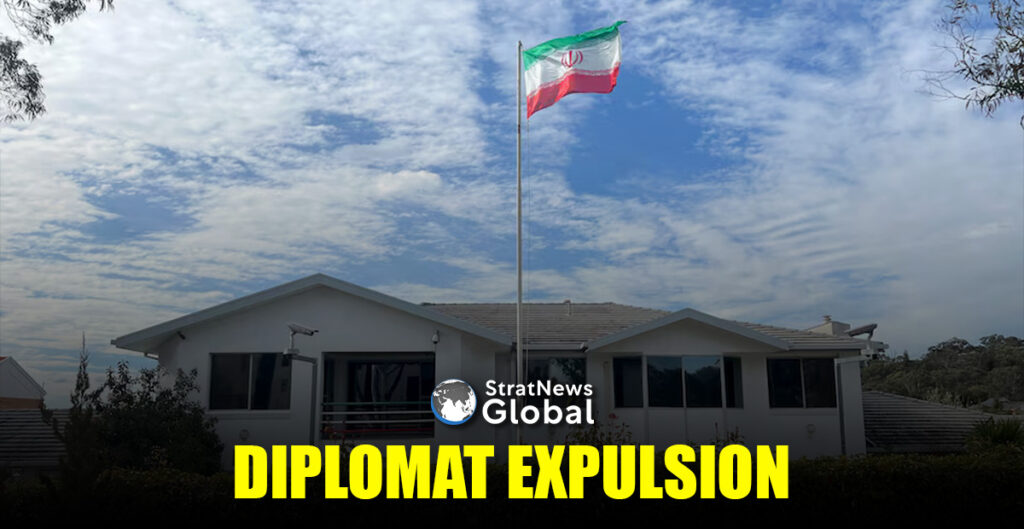
Australia on Wednesday firmly rejected Israel’s claim that its envoy’s expulsion was influenced by outside pressure, instead holding Iran directly responsible for orchestrating two antisemitic arson attacks in Sydney and Melbourne.
“Complete nonsense,” Home Affairs Minister Tony Burke told ABC Radio, when asked about Israel claiming credit for Australia’s decision to order Tehran’s ambassador Ahmad Sadeghi to leave the country.
“There was not a minute between us receiving this assessment and us starting to work through what we would do as a response.”
‘Forthright Intervention’
Israeli government spokesperson David Mencer said on Tuesday Prime Minister Benjamin Netanyahu’s “forthright intervention” and his criticisms against Australia’s decision to recognise a Palestinian state may have triggered Australia’s response.
“The relationship between this country and Australia was damaged, and so it’s welcome that after Prime Minister Netanyahu’s timely intervention that these actions have been taken by Australia’s government,” Mencer told reporters.
Netanyahu has personally attacked his Australian counterpart Anthony Albanese, describing him as “a weak politician who betrayed Israel and abandoned Australia’s Jews” over his decision to recognise a Palestinian statehood at the United Nations General Assembly in September.
Rare Expulsion
Since the Israel-Gaza war began in October 2023, Australian homes, schools, synagogues, and vehicles have been targeted in antisemitic vandalism and arson, while Islamophobic incidents have also surged.
Australia on Tuesday said Iran sought to “disguise its involvement” in last year’s attacks on a kosher restaurant in Sydney and the Adass Israel Synagogue in Melbourne. Canberra’s order for the Iranian ambassador to leave within seven days was its first such expulsion since World War Two.
Burke said there was no reason to believe the people behind the two antisemitic attacks were aware Tehran’s Islamic Revolutionary Guard Corps (IRGC) was directing them.
“But that doesn’t change the seriousness from the Australian government’s point of view that Iran was still involved in directing attacks on Australian soil,” Burke said.
Iran Denies Involvement
Iran has repeatedly denied such allegations, which it says are part of a campaign against it by hostile Western powers.
Australian Foreign Minister Penny Wong warned Australians to avoid travelling to Iran after the government decided to close its embassy in the country, where she estimates up to 4,000 Australian citizens are currently living.
“If you are in Iran, you should come home,” Wong told Nine News.
(With inputs from Reuters)
Trump Admin Urges Supreme Court To Back Aid Spending Pause
The Trump administration on Tuesday urged the US Supreme Court to step in as it seeks to block billions in foreign aid and overturn a court order requiring continued payments.
The US Department of Justice in an emergency filing with the 6-3 conservative majority court noted that a 2-1 panel of the US Court of Appeals for the District of Columbia Circuit earlier this month ruled the injunction should be overturned.
Despite that ruling, the injunction issued by Washington-based US District Judge Amir Ali remains in effect, after the full federal appeals court last week declined to put it on hold. Ali rejected a similar request on Monday.
90-Day Pause
Trump imposed a 90-day pause on all foreign aid on January 20, the day that he was inaugurated for a second term in the White House.
His executive order was followed by aggressive moves to gut USAID, the main US foreign aid agency, including placing much of its staff on leave and exploring bringing the formerly independent agency under the State Department.
Funding Freeze Unlawful?
Two nonprofit groups that receive federal funding, AIDS Vaccine Advocacy Coalition and Journalism Development Network, brought litigation alleging Trump’s funding freeze was unlawful.
The Trump administration in its filing to the Supreme Court said the congressionally appropriated funds subject to the injunction comprise tens of billions of dollars, some $12 billion of which would need to be spent by the US Department of State before September 30, when they expire.
The Republican president’s administration said that without the justices’ intervention, it will be forced to keep making payments before the expiration date, “overriding the Executive Branch’s foreign-policy judgments regarding whether to pursue rescissions and thwarting interbranch dialogue.”
Lawyers for the plaintiffs did not immediately respond to a request for comment.
Ali, an appointee of Democratic President Joe Biden, ordered the Trump administration to pay nearly $2 billion in outstanding aid to its humanitarian partners worldwide. The US Supreme Court in March by a 5-4 vote declined to let the administration avoid making those payments.
But the DC Circuit panel ruled that the nonprofit groups failed to satisfy the requirements for an injunction. US Circuit Judge Karen Henderson, writing for the majority, said only the US Government Accountability Office, a watchdog agency, could challenge Trump’s efforts to withhold the funding.
(With inputs from Reuters)
Trump’s Tariffs Bite, But India-U.S. Strategic Ties Hold Firm
Even as U.S. President Donald Trump’s tariff measures sharpen trade frictions with New Delhi, India and the United States pressed ahead with their strategic agenda, holding the virtual U.S.-India 2+2 Intersessional Dialogue on August 25.
The dialogue was co-chaired by U.S. Senior Bureau Official for South and Central Asian Affairs Bethany P. Morrison and Acting Assistant Secretary of Defence for Indo-Pacific Security Affairs Jedidiah P. Royal, alongside India’s Additional Secretary (Americas) in the Ministry of External Affairs Nagaraj Naidu Kakanur and Ministry of Defence Joint Secretary (International Cooperation) Vishwesh Negi.
Both governments said the talks advanced bilateral initiatives, reviewed regional security developments, and exchanged views on shared strategic priorities. These ranged from trade and investment to energy security, including civil-nuclear cooperation, as well as critical minerals exploration, counternarcotics, and counterterrorism cooperation.
Despite the shadow of tariffs, defence cooperation emerged as the centrepiece of the dialogue. Officials reaffirmed plans to sign a new ten-year Framework for the Major Defence Partnership, aimed at strengthening collaboration in defence industrial production, science and technology, operational coordination, regional security, and information-sharing.
The meeting also emphasised the importance of the U.S.-India COMPACT (Catalysing Opportunities for Military Partnership, Accelerated Commerce & Technology), a framework designed to accelerate cooperation across defence and commerce.
With an eye on regional geopolitics, both sides reiterated their shared commitment to advancing a “safer, stronger, and more prosperous” Indo-Pacific through the Quad grouping of India, the U.S., Japan, and Australia.
The talks concluded with the chairs describing the meeting as “productive” and stressing their determination to expand the breadth and depth of bilateral ties in ways that directly benefit citizens in both countries.
While trade tensions continue to test the relationship, the outcome of the 2+2 Intersessional Dialogue suggests that the strategic partnership remains on a steady track, with New Delhi and Washington choosing to firewall defence and security cooperation from tariff disputes.