

Support us by contributing to StratNewsGlobal on the following UPI ID
ultramodern@hdfcbank

Strategic affairs is our game, South Asia and beyond our playground. Put together by an experienced team led by Nitin A. Gokhale. Our focus is on strategic affairs, foreign policy and international relations, with higher quality reportage, analysis and commentary with new tie-ups across the South Asian region.
You can support our endeavours. Visit us at www.stratnewsglobal.com and follow us on YouTube, Twitter, Facebook and Instagram.
र 500 per month
र 1000 per month
र 5000 per year
र 10000 per year
Donate an amount of your choice
र 500 per month
Donate र 500 per month

र 1000 per month
Donate र 1000 per month
र 5000 per year
Donate र 5,000 per year
र 10000 per year
Donate र 10,000 per year
Donate an amount of your choice
Donate an amount of your choice



Democrats Press Trump To Abandon Rollback Of Vehicle Emission Limits
Over 100 Democratic members of the U.S. House of Representatives on Wednesday called on the Trump administration to withdraw its proposal to repeal existing vehicle emission regulations.
According to sources, 102 lawmakers led by Representative Doris Matsui called on the Environmental Protection Agency to drop its aim to repeal all greenhouse gas emission standards for light-duty, medium-duty and heavy-duty vehicles and engines.
“Repealing the vehicle pollution standards would hamstring this growing industry, killing thousands of good-paying American jobs and ceding the future of global automotive leadership to China,” the lawmakers wrote in a letter.
Greenhouse Gas Pollution
In July, the EPA said it will rescind the long-standing finding that greenhouse gas emissions endanger human health, removing the legal foundation for all U.S. greenhouse gas regulations, a move that would end current limits on greenhouse gas pollution from vehicle tailpipes, power plants, smokestacks and other sources.
The EPA said it will review the letter and respond through the appropriate channels. Comments on its proposal are due by September 22.
“If we turn our backs on clean vehicle technologies, the next generation of American vehicles will be significantly more expensive to fuel, maintain, and repair,” according to the letter, which was also signed by Representatives Rick Larsen, Alexandria Ocasio-Cortez, Raja Krishnamoorthi and Jerrold Nadler.
The letter said EPA’s analysis “suggests the proposal to eliminate vehicle pollution standards would result in $1.3 trillion in lost fuel and maintenance savings.”
The Trump administration has taken aim at vehicle environmental rules on a number of fronts. In June, Trump signed a resolution of disapproval under the Congressional Review Act to bar California’s landmark plan to end the sale of gasoline-only vehicles by 2035 and two other vehicle rules.
In June, NHTSA paved the way for looser U.S. fuel economy standards by declaring that former President Joe Biden’s administration exceeded its authority by assuming high uptake of electric vehicles in calculating rules.
Trump also signed legislation eliminating penalties for automakers not meeting U.S. fuel economy standards dating back to 2022.
(With inputs from Reuters)
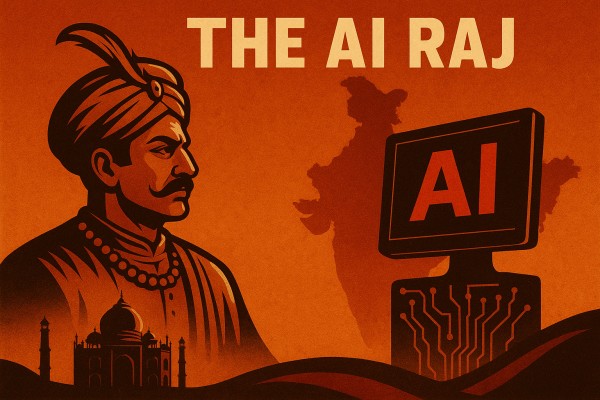
India’s Second Colonization: The AI Raj
Artificial intelligence is no longer just about chatbots or automation—it is fast becoming a framework through which power itself is exercised.
That is the central warning in Allison Stanger’s recent essay, “The AI Raj: How Tech Giants Are Recolonizing Power,” published in The Bulletin of the Atomic Scientists. Stanger draws a stark historical parallel: just as the East India Company began as a trading venture and ended up governing vast parts of India, today’s AI giants are stepping into roles that once belonged exclusively to the state.
Her analysis traces how firms are gradually taking on governmental functions in three critical areas: information, infrastructure, and money. For India, the echoes of history are particularly sharp. If the East India Company’s capture of India began with trade, the “AI Raj” risks beginning with data. And once again, the warning is clear—if sovereignty is ceded in these new domains, reclaiming it later will come at immense cost.
Stanger points first to the power of algorithms, especially in content moderation. Platforms that once claimed to nurture open dialogue are now engineered to privilege engagement at all costs. Truth, nuance, and accountability give way to outrage, misinformation, and viral half-truths.
For India, this is more than a theoretical concern. The country is both one of the largest markets for social media platforms and one of the most politically contested. With hundreds of millions of citizens online, what Facebook, YouTube, or X decides to amplify has direct consequences for democracy. A tweak in the algorithm can tilt electoral discourse, shape public anger, or fuel communal polarisation.
In Stanger’s framing, this is not simply private firms “managing” platforms—it is corporations performing a public function without accountability, in effect deciding the boundaries of speech in the world’s largest democracy.
The second domain she identifies is infrastructure. Satellite constellations such as Starlink and undersea cable systems now form part of the backbone of global communications. Because they transcend national borders, owners can dictate terms in ways governments cannot easily regulate.
India has ambitions of digital self-reliance, but its dependence on private infrastructure is already significant. From cloud services hosted by Amazon and Microsoft to submarine cables laid and controlled by private consortia, much of India’s connectivity rests on decisions made outside New Delhi. Should geopolitical tensions rise, these assets can be withheld, priced strategically, or even repurposed for leverage.
The East India Company once controlled ports and trade routes; today’s AI-era firms control the digital equivalents. For a country that values “data sovereignty”, this is a vulnerability hiding in plain sight.
The third concern lies in the world of money, where cryptocurrencies and stablecoins are reshaping financial ecosystems.
Stanger points to the GENIUS Act in the U.S., which favours stablecoin adoption and exempts key political figures from conflict-of-interest restrictions. Such selective deregulation cements private power in financial governance.
For India, the lesson is timely. The Reserve Bank of India has been cautious, even hostile, toward private cryptocurrencies while experimenting with its own digital rupee. Yet stablecoins pegged to the dollar continue to circulate informally within Indian markets, often beyond regulatory oversight. If these systems grow dominant, monetary sovereignty risks erosion: the “rupee” in digital transactions could become de facto subservient to tokens issued abroad and controlled by firms outside India’s jurisdiction.
Underlying all these domains is what Stanger calls a democratic deficit. Technologies advance and entrench themselves far faster than institutions can respond. By the time laws are debated in parliament or cases reach the courts, dependencies have already formed. In India’s case, the contradiction is stark. The state has pushed for tighter digital regulations—the IT Rules, data localisation mandates, and even proposals for algorithmic oversight.
Yet enforcement lags, expertise is thin, and corporations with global reach can often negotiate exemptions or delay compliance. Citizens, meanwhile, are left with little recourse when their data is mined, their speech curtailed, or their transactions routed through opaque systems. This imbalance of speed and power is the heart of the “AI Raj.” Just as the East India Company’s ships sailed faster than Indian rulers could respond, today’s firms innovate faster than democratic institutions can legislate.
Stanger does not argue that resistance is impossible. She highlights efforts like the European Union’s EuroStack, an attempt to build independent digital infrastructure, and Taiwan’s use of civic platforms like Pol.is to integrate citizen input into policymaking.
These examples show that alternatives exist. For India, the challenge is to translate its ambitions of “Digital India” and “Atmanirbhar Bharat” into tangible autonomy. Aadhaar, UPI, and DigiLocker have already demonstrated that public digital platforms can scale nationally. Extending this model to cloud services, AI training datasets, and even foundational models could reduce dependency on foreign firms.
India’s size also gives it bargaining power. Demanding transparency in content moderation and algorithmic design, as the EU has done, could create accountability where little exists. By accelerating the digital rupee and ensuring it integrates seamlessly with UPI, India can pre-empt reliance on foreign stablecoins. And by strengthening participatory tools that allow citizens to engage with digital policy decisions, India can make governance more resilient.
The historical analogy that runs through Stanger’s essay—the East India Company as a precursor to today’s AI giants—resonates deeply in India. It was not military conquest that first handed power to the Company; it was control of trade routes, revenue systems, and infrastructure.
Over time, these economic dependencies hardened into political subjugation. The “AI Raj” suggests a similar trajectory. If India allows foreign firms to dominate information flows, digital infrastructure, and monetary systems, sovereignty could be hollowed out from within. Unlike in the 18th century, however, this colonisation is not territorial but algorithmic.
India now stands at a pivotal juncture. Its scale, market, and technological talent make it uniquely positioned to resist the consolidation of power by private firms. Yet resistance requires urgency. As Stanger concludes, the risk is not merely private power—it is whether democratic self-rule can survive in the digital age.
For India, with its living memory of colonial rule, the stakes could not be higher. The East India Company began with trade. The AI Raj begins with code. The question now is whether India will allow history to rhyme—or break the cycle before it hardens into destiny.
Security And Stability Take Center Stage As Chile’s Presidential Race Kicks Off
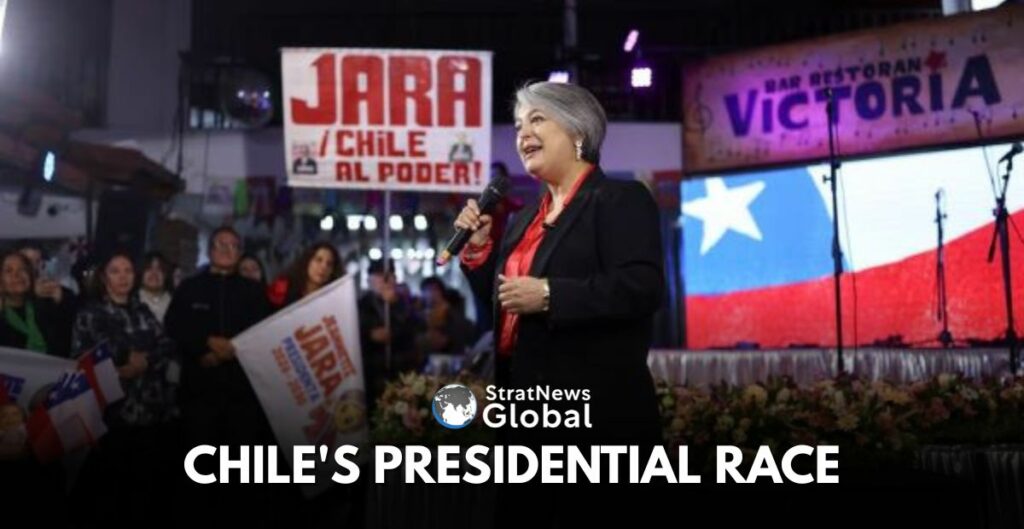
Chile’s presidential race formally began on Wednesday as leading candidates launched their campaigns ahead of the November 16 election, a contest that could mark a rightward shift for the mining powerhouse.
The election’s top contenders are a left-wing coalition candidate from the Communist Party, Jeannette Jara, and conservative candidates Including the Republican Party’s Jose Antonio Kast, the far-right firebrand who lost the last run-off against current President Gabriel Boric in 2021 but is viewed as strongly positioned this time.
Eight candidates are in the presidential race, including Evelyn Matthei, an experienced conservative politician from the Independent Democratic Union Party, who served as a legislator and mayor of a wealthy municipality of Santiago.
Matthei led polls early in the year but has since dipped and struggled to regain momentum. Matthei is currently polling third at 18% in pollster Cadem’s latest numbers released Sunday.
Kast and Jara have been trading the top spot in recent weeks and they also exchanged the most barbs during the first televised debate featuring all eight candidates last Wednesday. Cadem showed no monumental post-debate shift with Jara at 26% (-2%) and Kast at 25% (-1%).
Very Different Political Environment
A run-off between Jara and Kast would be Kast’s second of the decade but the political environment is vastly different this time around.
Boric, who defeated Kast in the 2021 presidential race and is not allowed to run for consecutive reelection, rode a wave of left-wing optimism to the presidency that has largely dissipated.
Boric’s election was the culmination of widespread protests against inequality in 2019 and the election of a largely independent and left-wing body in 2021 that was tasked with drafting a new constitution.
But voters overwhelmingly rejected the progressive constitution while rising crime, immigration and economic unease forced the administration to shift its focus.
Despite those efforts, security remains a sore point with many voters. Although Chile is still one of the safest countries in Latin America, a rise in violence, much of it stemming from organized crime, has rattled the nation and hampered economic growth.
“Crime has become a salient issue in Chile, the data support that, but I think more importantly, it’s the perception of insecurity and people’s fear,” said Michael Shifter, a senior fellow at the Inter-American Dialogue and professor of Latin American studies at Georgetown.
“I think that is a sharp contrast from 2021 to 2025. I think that has become a growing concern.”
Kast has proposed closing borders, creating maximum security prisons to isolate organized crime leaders and deploying the military to high-crime neighbourhoods.
Jara has advocated increasing funding for police, social programmes and biometric screening at the border.
Possibility Of A ‘Run-Off’
If no candidate receives more than 50% of the votes on November 16, there will be a run-off on December 14.
Although Kast’s Republican Party in 2023 repelled voters with its handling of a second constitutional rewrite that was subsequently rejected, the left may be even more toxic at this point.
“I think he’s more ideological and more to the right than most Chileans I think are comfortable with,” Shifter said. “But if the choice is between him and Jara, from the Communist Party, I think he would have the edge in that contest.”
The election could be another reversal for the “pink tide” which put leftists in control of several Latin American nations a few years ago, following similar rightward shifts in Argentina, Bolivia and Ecuador.
Colombia and Brazil are both facing presidential elections next year where incumbent leftists are on the ballot and facing challenges from the right.
Shifter says both races present unique factors, like Colombia’s fractured right and the “Trump factor” in Brazil, where Lula’s opposition to the U.S. president has boosted his popularity.
(With inputs from Reuters)
EU Set To Miss UN Deadline For New Climate Targets Amid Internal Divisions
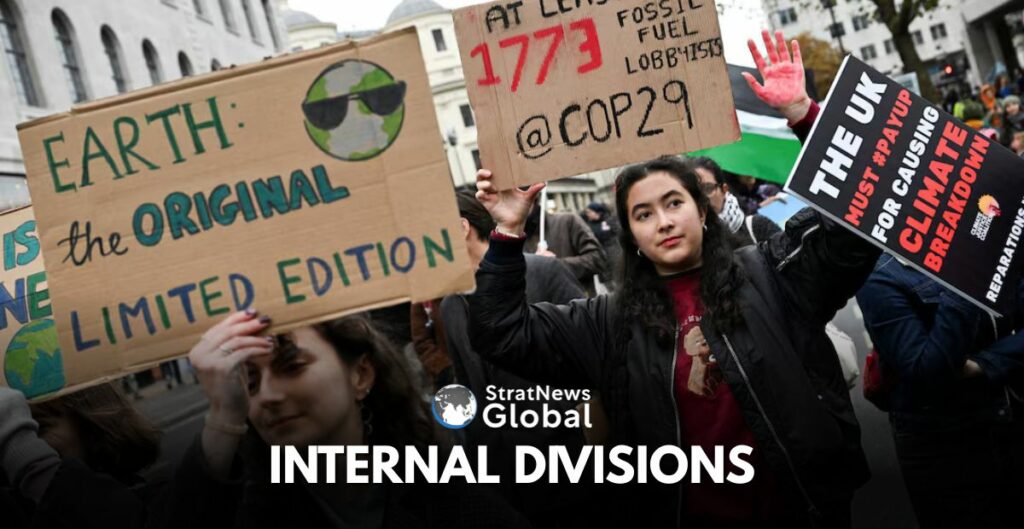
In a setback to global climate efforts, European Union (EU) climate ministers are expected to confirm on Thursday that the bloc will miss a key international deadline for announcing new emissions-reduction targets — a delay caused by internal divisions among member states over future climate commitments.
The delay could knock the EU’s international leadership ahead of a United Nations climate summit next week where world leaders are expected to present new goals. The EU will attend without a new target, and miss the end-September UN deadline for countries to submit their climate plans.
Major emitters, including China, are expected to meet the deadline.
UN Urges Updated Climate Plans
The UN has urged countries to bring updated climate plans to its General Assembly next week, in a bid to revive global momentum to tackle climate change. That momentum has been hit by President Donald Trump rolling back the US’s climate commitments, and governments struggling to balance environmental protection alongside economic and geopolitical challenges.
The EU had planned to agree new climate targets for both 2040 and 2035 this month. But countries – including Germany, France and Poland – demanded government leaders first discuss the 2040 goal at a summit in October, derailing talks on both targets.
‘Statement Of Intent’
As a fallback, EU ministers will try on Thursday to agree a “statement of intent” outlining what climate goal the EU eventually hopes to approve. The UN refers to countries’ climate plans as nationally determined contributions (NDCs).
“This statement of intent, is it as good as an NDC? Probably not. Is it much better than nothing? You bet,” one senior EU official said.
A draft of the statement, previously reported by Reuters, said the EU would try to agree a target between a 66.3% and a 72.5% emissions reduction by 2035.
It said the EU would still aim to submit a final 2035 target before the UN COP30 climate summit in November – where nearly 200 countries will negotiate their next steps to address global warming.
Linda Kalcher, executive director of think-tank Strategic Perspectives, said failure to do this could weaken ambition at COP30.
“Other countries could use the EU as an excuse for their own inaction,” she said.
EU Countries Divided
Traditionally, the EU has pushed for ambitious global climate deals, citing its own policies – which are among the world’s most ambitious – as proof it was leading by example.
But rising concerns over the cost of climate measures and pressure to boost defence and industrial spending have triggered pushback from some member states.
EU countries are at odds over a 2040 climate target, which the European Commission proposed should reduce net greenhouse gas emissions by 90%.
“We clearly reject the 90% target because we simply do not see the technological path to it,” the Czech Republic’s environment minister Petr Hladik said on Wednesday.
The Czech Republic, alongside countries, including Italy, also wants to weaken existing EU climate policies, including the bloc’s 2035 ban on new CO2-emitting cars.
Other governments, including Spain and Denmark, support stronger climate action, citing the severe heatwaves and wildfires which now blaze across Europe each summer – and the need to reduce reliance on imported fossil fuels.
“This is a particularly important year for our international climate commitments, and when the world is debating whether we should continue the energy transition,” Spain’s state secretary for energy, Joan Groizard, said at an EU meeting earlier this month.
“It’s very, very important that Europe agrees on a 90% target for 2040,” he said.
(With inputs from Reuters)
France Braces For Strikes As Public Sector Protests Looming Budget Cuts
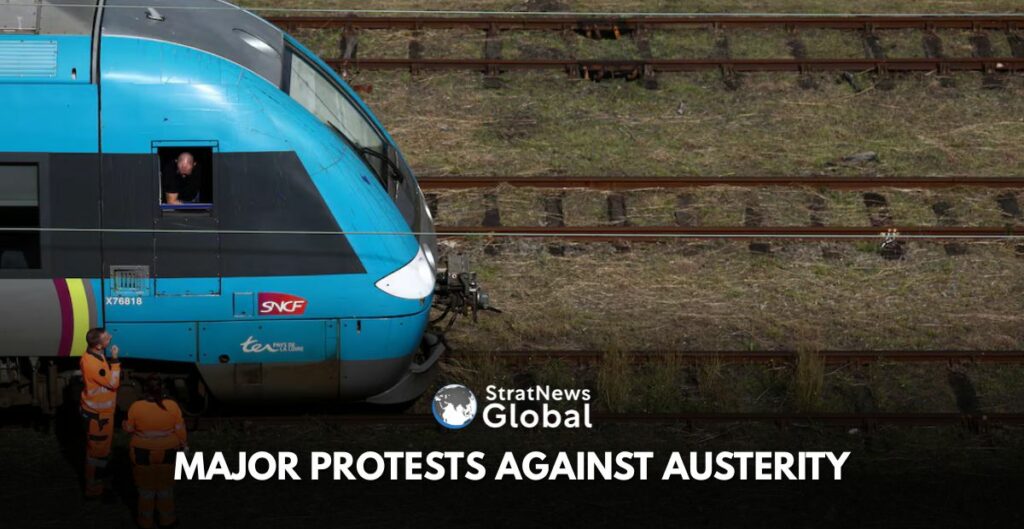
In a coordinated show of dissent, teachers, train drivers, pharmacists, and hospital staff across France are set to strike on Thursday, protesting against impending budget cuts expected to impact public services.
Unions are calling for more spending on public services, more tax on the wealthy and for the scrapping of an unpopular change to state pensions.
The social unrest comes as President Emmanuel Macron and his newly appointed Prime Minister Sebastien Lecornu are facing a political crisis and pressure to bring finances under control in the euro zone’s second largest economy.
An Interior Ministry source said that as many as 800,000 people were expected to take part in the strikes and protests.
Workers Angry Over Fiscal Plans
“The workers we represent are angry,” the country’s main unions said in a joint statement in which they rejected the previous government’s “brutal” and “unfair” fiscal plans.
France’s budget deficit last year was close to double the EU’s 3% ceiling but much as he wants to reduce that, Lecornu – reliant on other parties to push through legislation – will face a political battle to gather parliamentary support for a budget for 2026.
Lecornu was appointed prime minister last week after parliament ousted Francois Bayrou over his plan for a 44 billion euro budget squeeze. The new prime minister has not yet said what he will do with Bayrou’s plans, although he has opened the door to making compromises.
“We will continue to mobilise as long as there is no adequate response,” CGT union chief Sophie Binet said after meeting with Lecornu earlier this week. “The budget will be decided in the streets.”
Protests Expected To Hit Schools, Trains
One in three primary school teachers will strike, the FSU-SNUipp union said. Power company EDF said some of its workers would be on strike.
Widespread disruption is expected on the metro network in Paris and regional trains will be also heavily affected, while most of the country’s high-speed TGV train lines will work, officials said.
The farmers’ union Confederation Paysanne has also called for mobilisation. Pharmacists are angry over changes affecting their business and the USPO pharmacists’ union said a survey it did among pharmacies showed 98% could close for the day.
Interior Minister Bruno Retailleau told BFM TV that 80,000 police and gendarmes will be deployed.
Riot units, drones and armoured vehicles will be on hand to counter what Retailleau said was possible sabotage and attempts to block various sites early in the day. He said he also expected some violent troublemakers to try to clash with police.
(With inputs from Reuters)
China Sounds Alarm Over Divided World, Swipes At US Hegemony
Calling for stronger global solidarity, China’s defence minister on Thursday warned against a growingly fragmented world driven by “the rule of the jungle”.
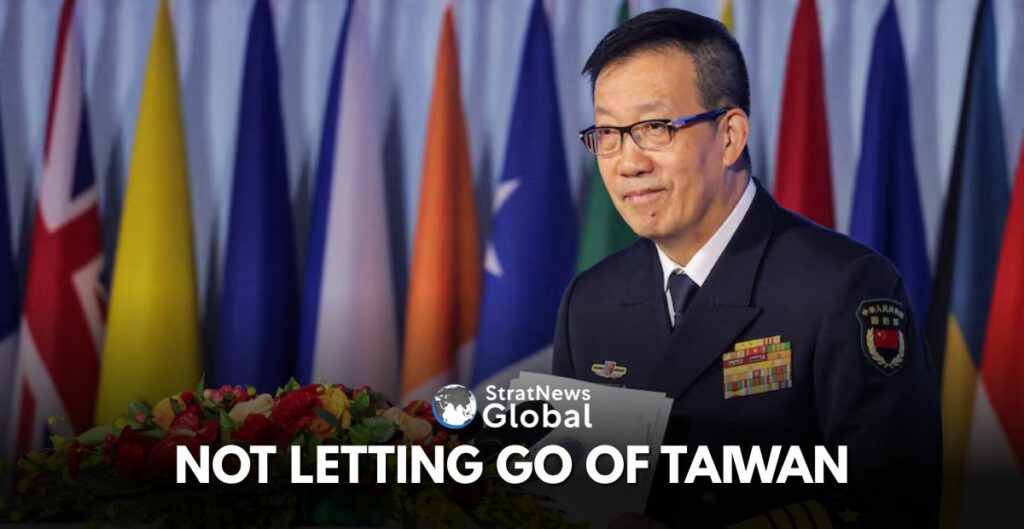
Speaking to formally open the Beijing Xiangshan Forum on security, Dong Jun said the world was overshadowed by Cold War thinking, hegemony and protectionism.
Veiled Swipe At US
“External military interference, seeking spheres of influence and coercing others to take sides will bring the international community into chaos,” Dong said, adding that the world was at another “crossroads” and had to choose dialogue over confrontation.
Dong’s remarks contained several veiled swipes at the United States and appeared more hawkish than his speech to open last year’s forum.
“An obsession with absolute superiority in military strength and a ‘might is right’ approach will lead to a divided world defined by the rule of the jungle and disorder,” Dong said.
A strong Chinese military would be a force for peace, he added.
In Line With Xi
Dong’s remarks follow recent speeches by President Xi Jinping against “hegemonism and power politics” and a large military parade in Beijing earlier this month that unveiled a host of new weapons.
His remarks come amid simmering tensions between China and the US and its allies and partners over flashpoints across East Asia, including Taiwan and the South China Sea, as well as broader economic rivalries under the administration of US President Donald Trump.
Not Giving Up On Taiwan
While saying that China was open to doing its part to uphold the international order, Dong said the People’s Liberation Army would never allow any Taiwan “separatist” attempts to succeed.
“The return of Taiwan to China is an integral part of the postwar international order,” he said, adding that it was ready “to thwart external military interference at all times”.
China claims Taiwan as its territory and has never renounced the use of force to seize it.
Taiwan’s President Lai Ching-te and his government strongly object to China’s sovereignty claims, saying it is up to the island’s people to decide their own future.
Some 1,800 representatives from 100 countries, including officials, military personnel and scholars, are attending the annual three-day event, China’s official Xinhua news agency reported.
Most Western nations have sent relatively low-level diplomatic representatives to the forum, with some saying they are seeking to learn more about China’s ongoing military build-up and opaque military leadership.
The forum ends on Friday.
(With inputs from Reuters)
Trump Proposes Terror Tag For Antifa Movement
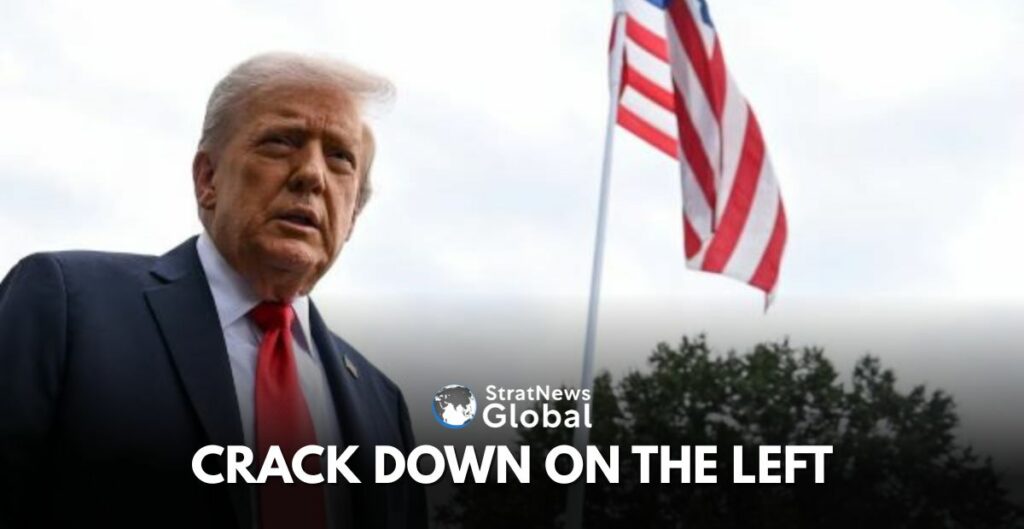
In the wake of right-wing activist Charlie Kirk’s assassination, US President Donald Trump on Wednesday signalled fresh action against left-wing groups, moving to designate the anti-fascist movement Antifa as a “terrorist organisation” — a move likely to escalate political tensions further.
Trump said on Truth Social that he was “designating” the movement as a terrorist organisation. “I will also be strongly recommending that those funding ANTIFA be thoroughly investigated in accordance with the highest legal standards and practices,” Trump wrote.
It was not clear what legal weight Trump’s proclamation carried. Antifa is a loosely organised ideological movement without a clear leadership structure or hierarchy, experts said.
A day after Utah prosecutors unveiled formal charges against the suspect in the assassination of Charlie Kirk, no evidence has emerged connecting 22-year-old Tyler Robinson with any outside group. Questions also remain about his precise motives.
Blaming The Left
Trump and senior officials have repeatedly blamed left-wing groups for creating an atmosphere of hostility towards conservatives before Kirk’s assassination.
The White House is preparing an executive order on political violence and hate speech, a Trump administration official said earlier on Wednesday.
US Vice President JD Vance, in an interview with Fox News on Wednesday, repeatedly blamed what he called left-wing political radicalisation for the assassination.
He said the White House was working hard to ensure that “funding networks for left-wing violence” are going to be treated like a terrorist organisation.
Using Death To Crack Down
Critics say that Trump is using Kirk’s assassination as a pretext to crack down on political opponents.
Trump initially floated the idea of such a designation for Antifa in 2020 amid violent nationwide protests following the police killing of George Floyd in Minneapolis.
At the time, legal experts said such a step lacked a basis in law, would be hard to execute, and raised free-speech concerns, given that subscription to an ideology is not generally considered criminal.
The White House did not immediately respond to a request for further details on Wednesday.
(With inputs from Reuters)
Riyadh’s Digital Future: Silicon Valley or Shenzhen?
Saudi Arabia is no longer content to be seen merely as an oil giant. Under Crown Prince Mohammed bin Salman, the Kingdom is driving Vision 2030, a reform blueprint that puts technology at the very core of its economic diversification and modernisation.
Artificial intelligence, semiconductors, advanced telecom networks, and smart cities are not peripheral ambitions; they are the very foundation of Riyadh’s plans for global relevance. Nearly 70 per cent of Vision 2030’s objectives, according to official estimates, directly involve AI or data.
The stakes could not be clearer: whoever partners with Saudi Arabia on this technological leap will secure not just lucrative contracts, but deep influence over the Kingdom’s digital infrastructure and standards.
A new report from the Center for a New American Security (CNAS), authored by Vivek Chilukuri and Ruby Scanlon, lays out how China and the United States are vying for that role.
For Beijing, the so-called Digital Silk Road has become a flagship project to export not just hardware but political influence. Huawei, ZTE, Chinese cloud providers, and AI companies have already embedded themselves in Saudi telecom, data centres, and smart city ventures. This is clearly part of a larger strategy to draw Riyadh into China’s digital orbit.
The United States is hardly starting from scratch. It remains the Kingdom’s principal security partner, and decades of cooperation in defence, energy, and technology have created enduring institutional trust. U.S. technology, as the CNAS report notes, still carries the cachet of being “best in class”. Saudi leaders themselves express a preference for top-tier systems rather than cheaper substitutes.
But these advantages are not unassailable. Chinese firms are gaining ground, and political frictions between Washington and Riyadh over issues like Yemen, Iran, and human rights have sometimes made Beijing look like a more accommodating partner.
The scale of Saudi ambition makes the contest especially urgent. With 99 per cent population connectivity, mobile internet speeds roughly double the global average, and what it describes as the largest and fastest-growing digital economy in the Middle East, Riyadh has positioned itself as a hub of technological transformation.
Mega-projects like Neom are meant to showcase this future, but they rely heavily on foreign investment and expertise. That creates both an opening and a risk: an opening for the U.S. to reassert its technological leadership, and a risk that Chinese firms could lock in long-term influence over the Kingdom’s infrastructure.
The CNAS report argues that Washington cannot afford to be passive. It recommends a phased strategy to provide Saudi Arabia access to advanced AI chips, under strict oversight and security safeguards. It suggests encouraging the Kingdom to build legacy semiconductor fabrication facilities, while keeping cutting-edge design tools off the table unless there is stronger alignment with U.S. standards. It calls for streamlining investment from allied countries, ensuring high levels of IP protection and cybersecurity.
Beyond hardware and contracts, the report highlights the need to expand educational and professional exchanges, strengthening people-to-people ties and cultivating Saudi talent through U.S. universities and institutions. And it proposes creative regulatory measures, such as designating American-operated data centres in the Kingdom as “data embassies” under U.S. jurisdiction, alongside joint security frameworks around sensitive AI systems.
What emerges from the CNAS study is a simple but powerful point: Saudi Arabia is not just another participant in China’s Digital Silk Road. Its wealth, geopolitical clout, and reform ambitions make it a bellwether for how global technology competition will unfold.
If the United States moves decisively, it can secure a partnership that advances both Saudi modernisation and U.S. strategic interests. If it hesitates, it risks watching the Kingdom slip further into Beijing’s embrace.
Iran, European Ministers Struggle In Talks To Avert Looming Nuclear Sanctions
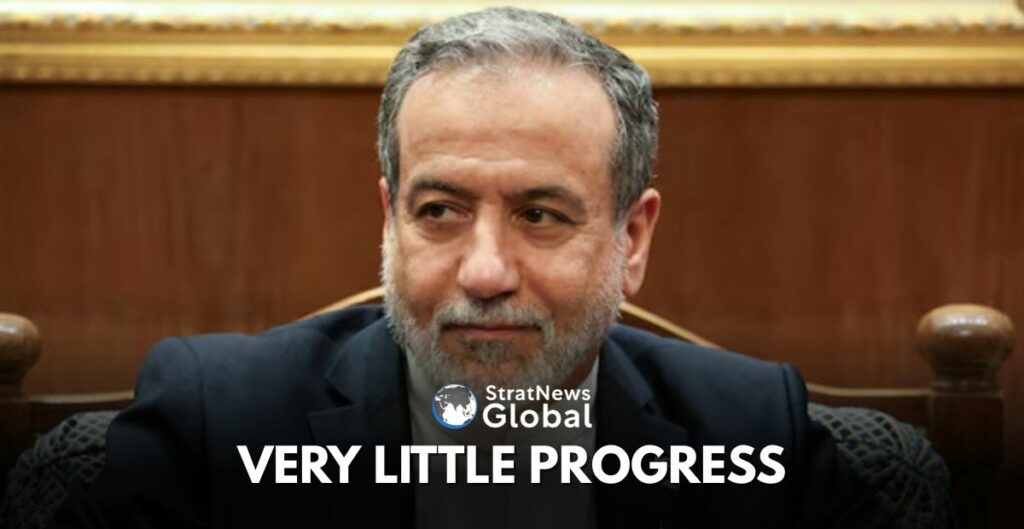
Wednesday’s talks between Iranian and European ministers yielded little progress in efforts to prevent the reimposition of international sanctions on Tehran’s nuclear programme at the end of this month, according to two European diplomats and one Iranian diplomat.
Britain, France and Germany, the so-called E3, launched a 30-day process at the end of August to reimpose U.N. sanctions. They set conditions for Tehran to meet during September to convince them to delay the “snapback mechanism”.
The offer by the E3 to put off the snapback for up to six months to enable serious negotiations is conditional on Iran restoring access for U.N. nuclear inspectors – who would also seek to account for Iran’s large stock of enriched uranium – and engaging in talks with the U.S.
The status of Iran’s enriched uranium stocks has been unknown since Israel and the U.S. bombed Iranian nuclear sites in June.
Talks With Europeans Followed IAEA Accord
Wednesday’s phone call between the E3 foreign ministers, the European Union foreign policy chief and their Iranian counterpart followed an agreement between Iran and the International Atomic Energy Agency last week on resuming cooperation, including, in principle, the inspection of nuclear sites.
Several Western diplomats have said, however, that the accord is not detailed enough, sets no timeframe and leaves the door open for Iran to continue stonewalling.
There has also been no indication of a willingness from Iran to resume talks with Washington.
Iran says it is still refining how it will work with the IAEA.
In the call, Iran’s Foreign Minister Abbas Araqchi expressed willingness to reach a “fair and balanced” solution, according to a statement on Iranian state media.
“The Islamic Republic of Iran has entered into dialogue with the International Atomic Energy Agency with a responsible approach … on how Iran will fulfil its safeguards obligations in the new situation … It is now the turn of the opposing parties to use this opportunity to continue the diplomatic path and prevent an avoidable crisis,” Araqchi said.
Germany Says Iran Has Not Met Conditions
Germany’s foreign ministry said on X that the E3 had “underscored that Iran has yet to take the reasonable and precise actions necessary to reach an extension of Resolution 2231”, adding that sanctions would be reimposed unless there were “concrete actions in the coming days”.
The sanctions would hit Iran’s financial, banking, hydrocarbons and defence sectors.
Four European diplomats and an Iranian official said before the call that the most likely scenario would be the E3 going ahead with a reimposition of sanctions.
An Iranian diplomat said Tehran had reiterated that it would retaliate if the decision to restore U.N. sanctions was made.
“The understanding in Tehran is that the U.N. sanctions will be reimposed. That is why Tehran refuses to give concessions,” an Iranian official said.
The West says the advancement of Iran’s nuclear programme goes beyond civilian needs, while Tehran says it wants nuclear energy only for peaceful purposes.
(With inputs from Reuters)
One Year On, Lebanese Survivors Of Israel’s Pager Attack Fight For Recovery
Zainab Mustarah once managed a busy events planning firm in Beirut, but over the past year, she has undergone multiple surgeries to salvage what remains of her right hand and both eyes after being severely injured by booby-trapped pagers detonated by Israel in Lebanon.
On September 17, 2024, thousands of pagers carried by members of the Lebanese armed group Hezbollah exploded simultaneously, followed the next day by booby-trapped walkie-talkies.
Thirty-nine people were killed and more than 3,400 wounded, including children and other civilians who were near the devices when they blew up but were not members of the Iran-backed group.
Mustarah, now 27, was one of the wounded. She told Reuters she was working from home when the pager, which belonged to a relative, beeped as if receiving a message. It exploded without her touching it, leaving her conscious but with severe wounds to her face and hand.
‘Shocking’ Attack
Her last year has been a flurry of 14 operations, including in Iran, with seven cosmetic reconstruction surgeries left to go. She lost the fingers on her right hand and 90% of her sight.
“I can no longer continue with interior design because my vision is 10%. God willing, next year we will see which university majors will suit my wounds, so I can continue,” she said.
The exploding pagers and walkie-talkies were the opening salvo of a devastating war between Israel and Hezbollah that left the group badly weakened and swathes of Lebanon in ruins.
Israeli Prime Minister Benjamin Netanyahu gave the green light for the attacks, his spokesperson said two months later.
A Reuters investigation found that Israel had concealed a small but potent charge of plastic explosive and a detonator in thousands of pagers procured by the group.
They were carried by fighters, but also by members of Hezbollah’s social services branches and medical services.
The United Nations High Commissioner for Human Rights, Volker Türk, said at the time that the explosions were “shocking, and their impact on civilians unacceptable.”
He said simultaneously targeting thousands of people without knowing precisely who was in possession of the targeted devices, or where they were, “violates international human rights law and, to the extent applicable, international humanitarian law.”
Hospital Staff Wounded
Mohammed Nasser al-Din, 34, was the director of the medical equipment and engineering department at Al-Rasoul Al-Aazam Hospital, a Hezbollah-affiliated facility, at the time of the pager blasts. He said he had a pager to be easily reached for any maintenance needs there.
At the hospital on September 17 last year, he spoke by phone with his wife to check in on their son’s first day back at school.
Moments later, his pager exploded.
The blast cost him his left eye and left fingers and lodged shrapnel in his skull. He lay in a coma for two weeks and is still undergoing surgeries on his face.
He woke to learn of the killing of Hezbollah leader Hassan Nasrallah in a barrage of Israeli strikes on Beirut’s southern suburbs, a turning point for the group and its supporters.
But Nasser al-Din did not shed a tear – until his son saw the state he was in.
“The distress I felt was over how my son could accept that my condition was like this,” he said.
Elias Jrade, a Lebanese member of parliament and eye surgeon who conducted dozens of operations on those affected, said that some of the cases would have to receive lifelong treatment.
“There were children and women who would ask, what happened to us? And you can’t answer them,” he told Reuters.
(With inputs from Reuters)