

Support us by contributing to StratNewsGlobal on the following UPI ID
ultramodern@hdfcbank

Strategic affairs is our game, South Asia and beyond our playground. Put together by an experienced team led by Nitin A. Gokhale. Our focus is on strategic affairs, foreign policy and international relations, with higher quality reportage, analysis and commentary with new tie-ups across the South Asian region.
You can support our endeavours. Visit us at www.stratnewsglobal.com and follow us on YouTube, Twitter, Facebook and Instagram.
र 500 per month
र 1000 per month
र 5000 per year
र 10000 per year
Donate an amount of your choice
र 500 per month
Donate र 500 per month

र 1000 per month
Donate र 1000 per month
र 5000 per year
Donate र 5,000 per year
र 10000 per year
Donate र 10,000 per year
Donate an amount of your choice
Donate an amount of your choice

India, Europe, And The Technology Squeeze
This is one of those weeks when diplomacy stops being ceremonial and starts becoming transactional. New Delhi has turned into a magnet for European strategic attention, not because of speeches or summits, but because several hard, expensive, and politically sensitive defence negotiations are reaching decision point.
The most consequential movement is on the Franco-Indian track. The visit of French NSA Emmanuel Bonne to New Delhi on Tuesday ahead of President Emmanuel Macron’s arrival for the AI Impact Summit in February, is officially about technology and governance. But in reality, the real action is happening in side rooms, where aerospace files dominate the agenda.
At the top of that list is the jet engine deal that India has chased for decades and rarely secured on its own terms. The proposed partnership between Safran and DRDO for the AMCA Mark 2 engine is different from past arrangements in one critical way: it promises full technology transfer and joint ownership of intellectual property. This is not licensed production or assembly. Safran has already committed to a clean-sheet design in the 110–120 kN class—exactly the kind of capability India has historically been denied.
Running in parallel is the push to move Rafale from a purchase to a production story.
Talks on the 114-aircraft MRFA programme are likely to gain pace, with the intent clearly shifting from buying fighters to building them in India. With Indian industry already embedded in the supply chain of Dassault Aviation, this is about industrial depth as much as squadron numbers.
Germany’s engagement is more awkward—and therefore more revealing. Chancellor Friedrich Merz’s visit has an economic gloss, but the real test lies beneath the waterline. The $8-billion P-75I submarine deal is yet to be clinched not for lack of interest but because of hard negotiations over price, liability, and technology.
Russia, meanwhile, hovers at the edge of the room with a very different proposition. The Indian Air Force is examining the Su-57 less as a prestige platform and more as a problem-solver. The attraction is not stealth alone, but long-range punch—missiles like the R-37M and Kinzhal that offer stand-off options identified as gaps after recent border tensions.
There is a pragmatic logic here. With the indigenous AMCA still years away, a limited Su-57 induction could serve as a bridge, especially given existing Su-30MKI infrastructure. But geopolitics intrudes. The shadow of US sanctions hangs over the file, making any decision a calculated risk.
The next battleground is airlift. The Medium Transport Aircraft requirement—covering the 18–30 tonne class—has drawn in nearly every serious aerospace player. Lockheed Martin is offering the C-130J, Embraer is pitching the C-390 with an Indian partner, and Airbus has the A400M.
Seen together, these negotiations tell a larger story. Europe is wooing India not out of sentiment, but out of necessity. Strategic uncertainty, shifting supply chains, and the unpredictability of US trade and defence policy have made India a market too large—and too important—to ignore. For New Delhi, this moment enables a version of multi-alignment that is less rhetorical and more extractive.
India is no longer shopping for platforms alone. It is bargaining for technology, intellectual property, and production ecosystems. The real victory this week will not be measured in signed contracts alone but in how much capability India locks in for the decades ahead.
‘Iran Govt Has Monopoly On Violence, Can Inflict Enormous Pain’
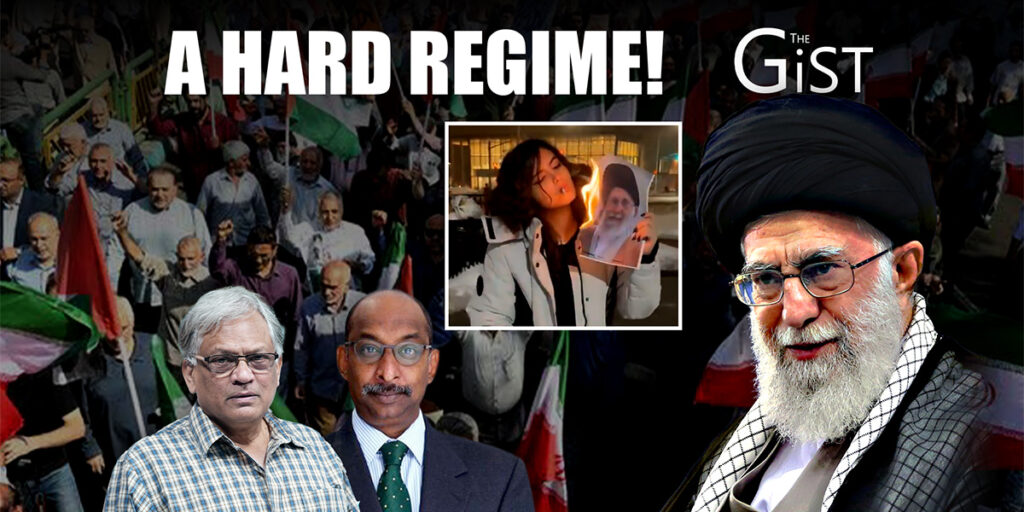
The mass demonstrations in Iran are now two weeks old, and although the internet is down, reports say 180 cities in 13 provinces are in revolt with more than 2000 people detained and at least 65 dead.
“The government has a monopoly on violence,” Gaddam Dharmendra, India’s former ambassador to Iran told StratNews Global on The Gist. “They can they can inflict a lot, bring harsh measures to control what seems to be quite serious escalation and a serious challenge for the regime. So we’ll have to wait and see.”
In his view, although the security apparatus has held together there is a divide on how exactly to approach these protests. The public pain as a result of sanctions is too obvious to be denied and President Pezeshkian, who comes from the minority Kurdish-Azeri areas to the northwest, is a known moderate.
“His initial statements were quite conciliatory, that he does understand the people’s economic difficulties, asking for patience and also calling for engagement and dialogue. On the other hand, Supreme Leader Ayatollah Ali Khamenei, who holds the ultimate decision making authority, has been much more harsh.
“He’s called for, making a distinction between rioters and protesters. Protesters can be engaged, but rioters will face, severe, very harsh, repression.”
The demonstrations have come on the back of severe setbacks for the clerical regime, which has lost influence in Syria and Lebanon. The axis of resistance has collapsed and now a dramatic escalation by President Trump that if the regime cracks down, he will target them.
There should be no doubt, Ambassador Dharmendra said, that if it comes down to regime survival, they circle the wagons and everybody is invested in upholding the system. The fact that the protests have not seen the emergence of any leader or leadership, helps the regime but the protests are also organic and the gap between such mass uprisings is less.
Tune in for more in this conversation with Gaddam Dharmendra, India’s former ambassador to the Islamic Republic of Iran.
Dhaka Weighs JF-17s, India Urges Calm
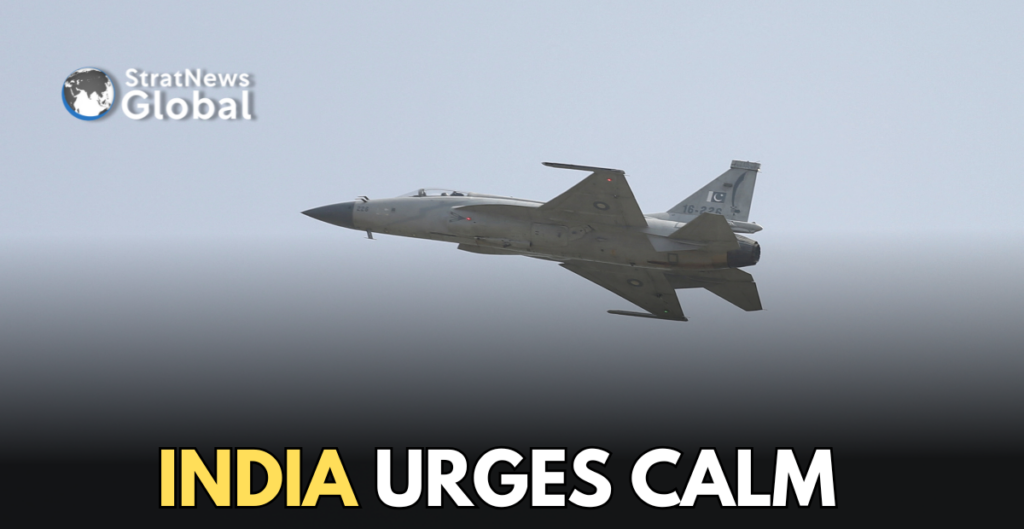
India should not overreact to Bangladesh considering the purchase of JF-17 fighter jets from Pakistan, believes Brigadier Arun Sahgal (Retd), calling for a measured response and continued engagement with Dhaka.
“India must take note of this development and follow through later, but not lose sleep over it,” Sahgal said, commenting on reports that Bangladesh is mulling the acquisition of the aircraft.
According to Pakistan’s military media wing, the Inter-Services Public Relations (ISPR), the possible deal would support the Bangladesh Air Force’s “ageing fleet and integration of air defence radar systems to enhance air surveillance.”
The JF-17 Thunder is a lightweight, single-engine fighter powered by a Russian-designed RD-93 turbofan. It was jointly developed by China’s Chengdu Aircraft Corporation and the Pakistan Aeronautical Complex and has undergone several upgrades since entering service with the Pakistan Air Force. Block 2 and Block 3 variants are currently being promoted for export, according to Eurasian Times.
Pakistan’s Dawn reported that Islamabad has in recent months stepped up defence outreach to expand arms exports and monetise its domestic defence industry. Last month, Pakistan concluded a weapons deal with Libya’s Libyan National Army that includes JF-17 jets and training aircraft. Bangladesh is the latest country to engage Pakistan on such purchases.
Sahgal said the development should not provoke India. “We should take it in our stride and post-election in February, we should not only reach out to the (Bangladeshi) government in part, as we always do, but also try to reach the people, the opinion makers, etc.”
While a limited number of fighter jet sales may not in themselves be a concern, Sahgal said the broader relationship warranted attention. “What is not visible is the support system that Bangladesh can subsequently get directly from China and not through Pakistan or through Pakistan, whichever way they want to. But the consent of the Chinese for the sale is there,” he said.
As India-Bangladesh relations face strain, Sahgal said the appropriate approach would be restraint and engagement. India should “lie low, engage at multiple levels and then try and shape the discourse and reach out where they require you more, without being ostentatious and slowly build your relationship,” he said.
Immigrating To Europe? Think Again, The Future May Not Be Rosy
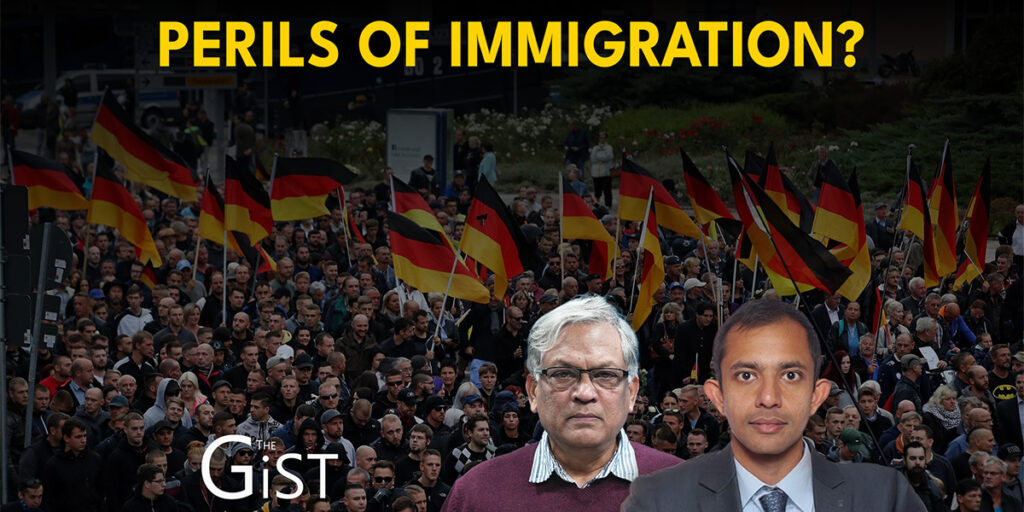
A Europe-based Indian scholar on terrorism and organised crime has not only closely studied but also experienced the immigration story. In a conversation on The Gist, Prem Mahadevan says that the ongoing rush of skilled Indians to Germany is something that needs to be carefully monitored, because the future may not be rosy.
Mahadevan says that there is nothing to suggest that Germans resent the entry of skilled Indians who are filling vital jobs that will boost the economy. But generally in Europe, it is accepted that skilled migrants entering the country will stay for some years and then leave. But when they stay on, what happens then?
“Europeans, I think, have often envied the United States that attracted the best brains from the world, so they would like to think that the people they have coming to Europe, are the elite or the cream of that society.”
But oftentimes they’re not the elite. They’re very much middle middle class, hardworking people whose main offering is the fact that they’re ready to work long hours, but they’re not necessarily leaders in their respective fields.
So this is when the local Europeans start seeing the migrants as “raw material”, that have to be trained and built up. If that is the case, why not train their own people instead rather than migrants.
“Why don’t we give our own people better opportunities than foreigners? So those are the kinds of thoughts and sentiments, I think which are floating around,” Mahadevan said.
The sentiment towards migrants in Central Europe plays to a different tune. These are not former colonial powers and see no need to allow migrants from different ethnic grooups or cultures into their societies.
Europe is also closely watching the treatment of Indians in the US, where Donald Trump’s MAGA constituency is turning the heat on them. From a time when they were billed as the “ideal minority” to today when they are accused of stealing American jobs, it’s been a steep fall and a warning to Indians seduced by visions of living a great life overseas.
Tune in for more in this conversation with Prem Mahadevan, Europe-based scholar on immigration, terrorism and organised crime.
India And The ‘Almost Powerful’ Syndrome
There is a quiet consensus in India today that time is on our side, scale will save us, and history will somehow bend in our favour.
It is a comforting belief. It is also wrong.
India likes to describe itself as an “emerging power”. The problem is that emergence has become a permanent condition. We are always arriving, never quite there—strong enough to be taken seriously, weak enough to avoid hard choices.
But the world will not reward intent, demographics, or moral positioning. It will reward capability. And capability, brutally speaking, is where India remains hesitant, inconsistent, and often self-deluding.
India’s global relevance for three decades rested on information technology and services. That story is ending. Automation, AI, and platformisation are flattening the very advantages that once made Indian ITeS indispensable. Yet policy thinking still treats tech talent as an inexhaustible natural resource, rather than a perishable strategic asset.
The uncomfortable truth is this: India does not control the technologies it increasingly depends on. We integrate systems designed elsewhere, optimise costs for others, and celebrate scale as if it were sovereignty. It is not.
Nowhere is this self-deception clearer than in artificial intelligence. India hosts conferences, drafts ethical frameworks, and issues strategy documents—but owns neither frontier models nor the compute infrastructure that underpins them.
This is a strategic, not a moral failure.
AI power is not built on hope or regulation-first governance. It is built through compute, data control, and ruthless talent retention. India currently bleeds its best minds into American and Chinese ecosystems while congratulating itself on “frugal innovation”. And while frugality is admirable, it cannot be a substitute for fundamentals.
At the current pace, India risks becoming an AI-dependent power—forced to adapt tools built by others, constrained by architectures it did not design, and vulnerable in domains where autonomy matters most: defence, intelligence, and critical infrastructure.
India’s military self-image rests on bravery, numbers, and selective excellence. None of these are insignificant. But none of them are sufficient.
Modern wars are not won by platforms alone, but by systems—sensor fusion, real-time decision loops, AI-enabled targeting, cyber and space resilience. India fields capable missiles and aircraft, yet remains structurally dependent on foreign engines, electronics, and electronic warfare suites.
This gap cannot be masked by parades, slogans, and the comforting “we are lethal” refrain. Lethality is not dominance, nor does raw courage compensate for technological lag. Future wars will punish delay, not forgive valour.
India’s central weakness is not corruption, poverty, or even bureaucracy. It is comfort.
We are comfortable debating instead of building, announcing instead of measuring, and regulating before understanding. Institutions are rarely penalised for failure; timelines stretch without consequence; ambition is performed, not enforced. This culture produces adequacy at scale—but never excellence at speed.
China builds first and apologises later. Israel prototypes, fails, and iterates in real time. The United States tolerates chaos but protects capability. India, by contrast, seeks consensus before competence and reassurance before readiness.
The world does not need India to be another China, nor a moral counterweight to the West. It needs India to become something rarer: a systems-capable power that can absorb shocks, stabilise regions, and offer alternatives without dependency.
India’s real long-term value lies in:
- Human capital at scale with technological depth
- Digital public infrastructure that enhances state capacity
- Strategic autonomy backed by real capability, not posture
None of this is automatic.
- Demography without skill becomes liability.
- Autonomy without technology becomes vulnerability.
- Scale without systems becomes stagnation.
By the mid-2040s, India will either be:
- A large but dependent power—respected, consulted, but constrained; or
- A systems power—limited in some domains, formidable in the ones that matter
That outcome will not be decided by declarations or destiny, but by India’s willingness and ability to abandon comforting narratives and embrace uncomfortable execution.
History is littered with civilisations that mistook longevity for inevitability.
India’s challenge is not to rise—but to stop settling for being almost powerful.
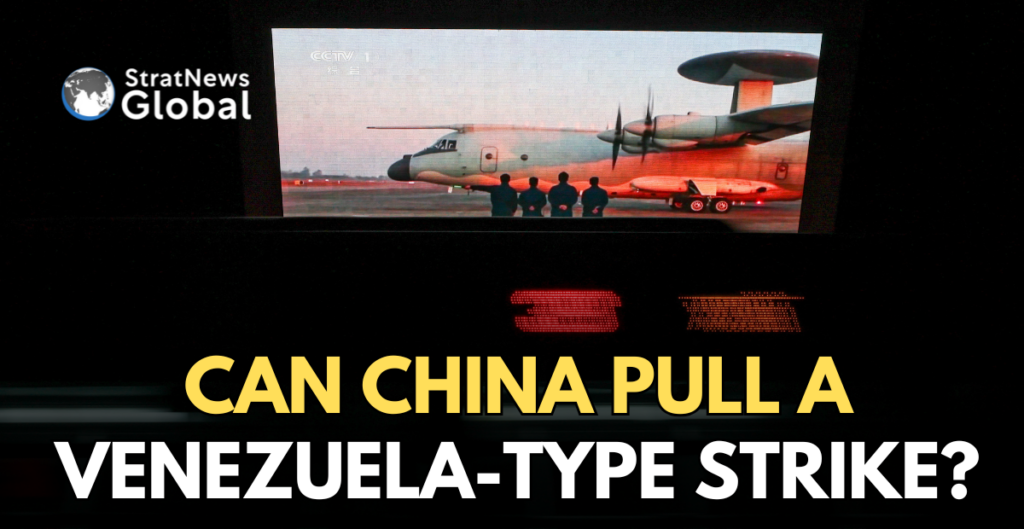
Venezuela-Style Strike On Taiwan Could Prove Tricky For China
Some Chinese online users are calling for a lightning Venezuela-style snatch of Taiwan’s leaders in a prelude to taking over the island, but analysts, scholars and security officials say China ‘s modernising military is still far from ready.
In Taiwan, they say, China’s military has an zadversary which has prepared for years against a “decapitation operation” on its leaders, besides extensive air defences and radar capabilities, as well as likely support from the United States and its allies.
Although China has spent years acquiring advanced weapons, questions remain about the capabilities of its People’s Liberation Army in using them effectively, as well as a command structure that must knit them together in combat.
“Once such an operation runs into trouble, it would quickly escalate into a full-scale conflict, with extremely high political and military risk,” said Chen Kuan-ting, a lawmaker of Taiwan’s ruling Democratic Progressive Party.
Taiwan’s layered air-defence and early-warning systems meant any air assault or special-operations infiltration effort would risk detection as it crossed the Taiwan Strait, foreshadowing escalation, he added.
American Air Dominance
The United States showcased its forces’ battle-tested air dominance with last weekend’s operation to extract Venezuelan President Nicolas Maduro and his wife.
Its military controlled the skies with stealth fighters, jets that jammed enemy defences and covert reconnaissance drones and satellites feeding commanders real-time intelligence.
By contrast, the PLA “still has clear gaps in real joint-operations experience, electro-magnetic and electronic-warfare capabilities, and actual combat validation of high-risk missions,” said Chen.
China’s defence ministry did not immediately respond to faxed questions from Reuters.
China, which claims democratically governed Taiwan as its own territory, has not ruled out using force to bring the island under its control. Taiwan’s government rejects China’s claims.
“Operationally, while the PLA is in recent times trying to get up to speed with force integration, it is still baby steps compared to what the Americans have for decades been accumulating,” said Singapore-based security scholar Collin Koh.
Taiwan’s Sovereignty
Taiwan is determined to defend its sovereignty and boost its defence, President Lai Ching-te said last month, after Beijing fired rockets towards Taiwan as part of its latest military drills.
The drills surrounding Taiwan – the most extensive to date – were accompanied by strong messaging from Chinese officials and the military.
“Any external forces that attempt to intervene in the Taiwan issue or interfere in China’s internal affairs will surely smash their heads bloody against the iron walls of the Chinese People’s Liberation Army,” China’s Taiwan Affairs Office said in a statement.
In October, Lai unveiled a multi-layered air-defence system called “T-Dome”.
It is intended to be similar to Israel’s “Iron Dome”, with a more efficient and “sensor-to-shooter” mechanism for a higher kill rate that integrates weaponry from Taiwan-developed Sky Bow missiles to U.S.-supplied HIMARS rocket systems.
In July, Taiwan’s military staged a drill to protect Taipei’s main airport from a hostile landing.
Su Tzu-yun, a researcher at Taiwan’s Institute for National Defence and Security, described significant defences around Taipei, including long-range missiles in nearby mountains, shorter-range weapons at the Tamsui River entrance and military police equipped with shoulder-fired Stinger missiles.
“Altogether, this forms a complete defensive perimeter,” Su said.
Inspiration From Maduro’s Extraction?
While military attaches say China has war-gamed extraction operations in Taipei in a broad range of military options to take control of Taiwan, some Chinese online users cited the U.S. action in Venezuela as inspiration.
“The Venezuelan situation has provided us a solution for unifying Taiwan,” said one user on the X-like microblogging site Weibo.
“First, use special operations to arrest Lai Ching-te, then immediately announce the takeover of Taiwan, issue new identity cards … and achieve a swift and decisive victory.”
Chen, who sits on the foreign affairs and defence committee of Taiwan’s parliament, dismissed such remarks as “fantasy” and other analysts said any such attempt would quickly face hard military realities.
China had added aircraft to replicate platforms such as Boeing’s EA-18G Growler electronic-warfare jet and Northrop Grumman’s NOC.N E-2D Advanced Hawkeye command and early warning aircraft, but their precise capabilities had yet to be delineated, Koh said.
(with inputs from Reuters)
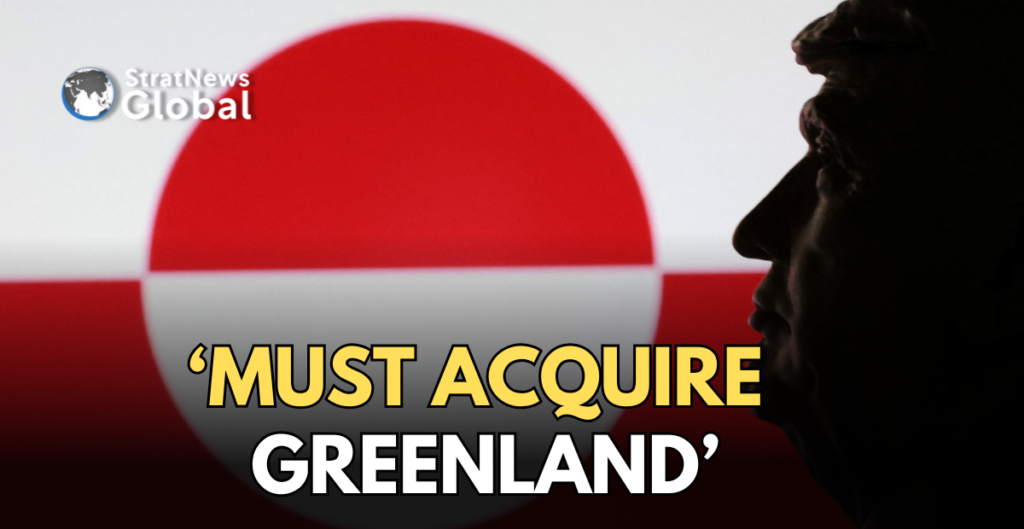
U.S. Must Acquire Greenland To Deter Russia, China: Trump
The U.S. needs to own Greenland to prevent Russia or China from occupying it in the future, President Donald Trump said on Friday.
“We are going to do something on Greenland whether they like it or not. Because if we don’t do it, Russia or China will take over Greenland, and we’re not going to have Russia or China as a neighbour,” Trump told reporters at the White House while meeting with oil company executives.
‘Must Acquire Greenland’
Trump said the U.S. must acquire Greenland, even though it already has a military presence on the island under a 1951 agreement, because such deals are not enough to guarantee Greenland’s defence. The island of 57,000 people is an autonomous territory of the Kingdom of Denmark.
“You defend ownership. You don’t defend leases. And we’ll have to defend Greenland. If we don’t do it, China or Russia will,” Trump said.
Trump and White House officials have been discussing various plans to bring Greenland under U.S. control, including potential use of the U.S. military and lump sum payments to Greenlanders as part of a bid to convince them to secede from Denmark and potentially join the U.S.
Europe’s Reaction
Leaders in Copenhagen and throughout Europe have reacted with disdain in recent days to comments by Trump and other White House officials asserting their right to Greenland. The U.S. and Denmark are NATO allies bound by a mutual defence agreement.
On Tuesday, France, Germany, Italy, Poland, Spain, Britain and Denmark issued a joint statement, saying only Greenland and Denmark can decide matters regarding their relations.
Italian Prime Minister Giorgia Meloni said she did not believe the United States would use military force to seize Greenland, warning on Friday that such a move would have grave consequences for NATO.
Meloni has traditionally had strong ties with Trump and was the only European leader to attend his inauguration last year.
Her supporters had hoped she would have privileged access to him and become a bridge between Washington and Europe, but it is far from clear that he has heeded her advice up until now.
Europe is perfectly within its rights to push back against the United States at a time when it is making unacceptable proposals, France’s foreign minister said on Friday.
Jean-Noel Barrot’s comments come amid increasing frustration among some of Washington’s allies over how President Donald Trump’s “America First” foreign and trade policies have upended traditional relationships and alliances.
(with inputs from Reuters)
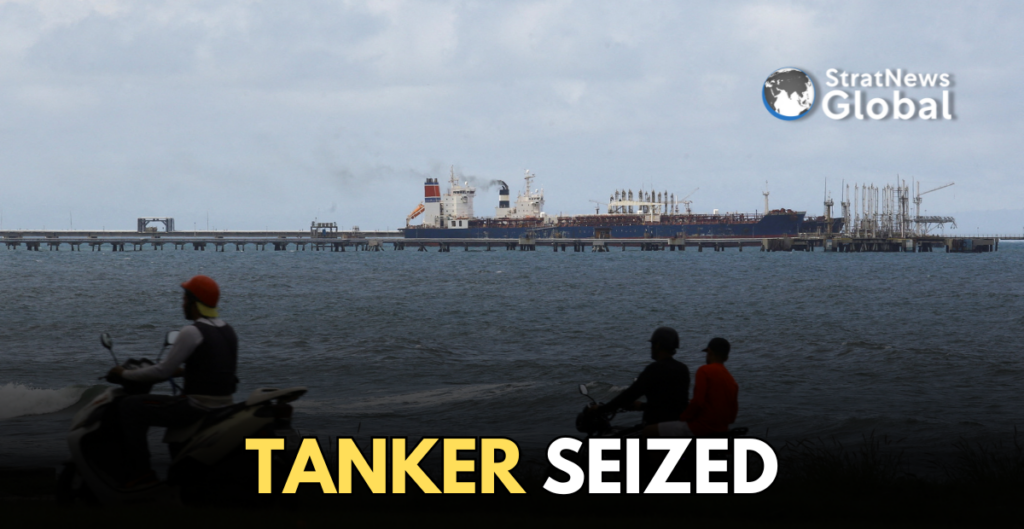
US Seizes Tanker In Caribbean, 5th Vessel In Venezuela Blockade
The U.S. has seized the Olina tanker in the Caribbean, the fifth vessel targeted in recent weeks as Washington steps up efforts to curb Venezuela oil exports, U.S. officials said on Friday.
The Olina, which, according to public shipping database Equasi, was falsely flying the flag of Timor Leste, previously sailed from Venezuela and had returned to the region, said an industry source with direct knowledge of the matter.
In a pre-dawn move, marines and sailors from Joint Task Force Southern Spear, launched from the carrier USS Gerald R. Ford, apprehended the Olina in the Caribbean Sea “without incident”, the U.S. Southern Command said on X.
“Once again, our joint interagency forces sent a clear message this morning: ‘there is no safe haven for criminals,'” it said.
Olina’s Seizure
The Olina tanker left Venezuela last week fully loaded with oil as part of a flotilla shortly after the U.S. seized Venezuelan President Nicolas Maduro on January 3, and the vessel was returning fully loaded to Venezuela following the U.S. blockade of Venezuelan oil exports, the industry source said.
“The vessel’s AIS (location) tracker was last active 52 days ago in the Venezuelan EEZ, northeast of Curacao,” British maritime risk management company Vanguard said separately.
“The seizure follows a prolonged pursuit of tankers linked to sanctioned Venezuelan oil shipments in the region.”
The U.S. imposed sanctions on the Olina in January last year, when it was named the Minerva M, for what Washington said was its being part of the so-called shadow fleet of ships that sail with little regulation or known insurance.
The M Sophia, another of the tankers that was part of a flotilla of a dozen vessels that left Venezuela earlier this month, was seized by U.S. forces earlier this week.
Three vessels – Skylyn, Min Hang and Merope – all fully loaded and part of the same flotilla that left last week, sailed back to Venezuelan waters on Thursday, according to the industry source.
Return Of Tankers
Seven additional tankers from that flotilla, also fully loaded, were set to return to Venezuelan waters on Friday and Saturday, the person said.
“In the past 24 hours alone, at least seven ‘dark fleet’ oil vessels have turned around to avoid interdiction – because they know we mean business,” Pentagon spokesperson Sean Parnell said Friday on X.
All of the oil on board these 10 tankers is owned by Venezuelan state producer PDVSA, the person added. PDVSA did not immediately respond to a request for comment.
It was unclear whether Washington would take action on the other tankers sailing towards Venezuela.
The U.S. blockade of sanctioned Venezuelan oil remains in full effect “anywhere in the world”, Defence Secretary Pete Hegseth said on Wednesday.
(with inputs from Reuters)
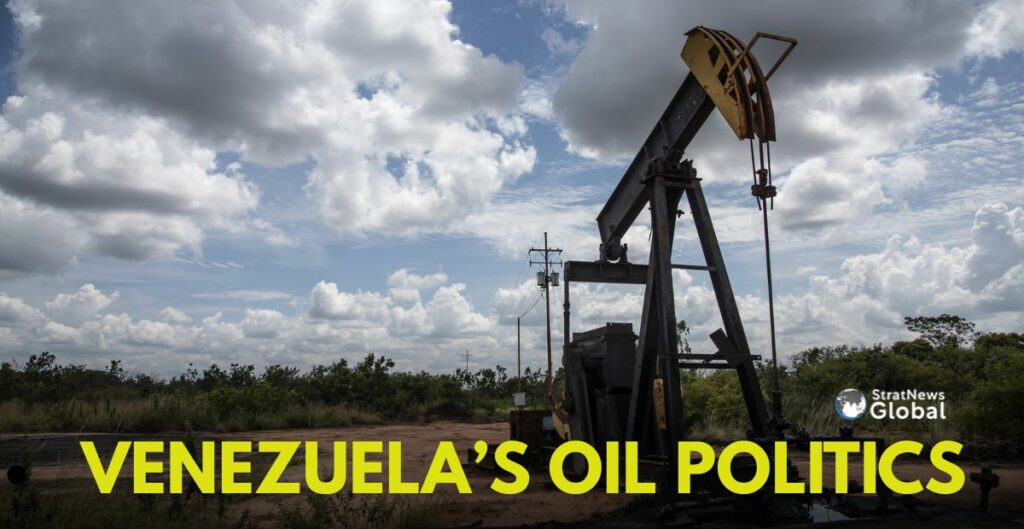
Venezuela, Oil And The Illusion Of Regime Change: What Really Happened
For years, Venezuela has been reduced to a single word in global discourse: oil. But it hides a far more complex situation, one that blends economic collapse, geopolitical rivalry, internal factional warfare, and a quiet recalibration of U.S. power in the Western Hemisphere.
The recent developments surrounding President Nicolás Maduro’s removal, Delcy Rodríguez’s elevation, and Washington’s growing grip on Venezuelan crude are not about democracy, elections, or even immediate profits. They are about control, leverage, and timing and they reveal how Cold War–style politics are returning in a new, more transactional form.
Venezuela was one of Latin America’s most modern societies. Its universities attracted talent from across the region, its professionals had global exposure, and its private sector, especially banking, telecom, and insurance, was unusually sophisticated by regional standards.
The entrepreneurial culture existed long before “startups” became fashionable elsewhere. Caracas was once a regional hub for finance and consumption, not unlike Miami or São Paulo today.
That world unravelled after 2014, when sanctions, mismanagement, and political paralysis triggered one of the largest peacetime migrations in modern history. Millions left not because they wanted to, but because survival demanded it. Those who stayed adapted to scarcity, not growth. And when a society is locked in survival mode, long-term nation-building becomes nearly impossible.
The Oil Story
Venezuela holds the largest proven oil reserves on Earth, around 303 billion barrels. But this statistic is misleading.
Most of that oil is heavy crude, which is expensive to extract, technically demanding, and slow to monetize. It requires advanced infrastructure, steady electricity, political stability, and refineries designed to process it. Venezuela today has none of those conditions at scale.
However, the United States does. Refineries along the U.S. Gulf Coast, especially in Texas and Louisiana, are among the world’s best equipped to handle heavy crude. Over the past four decades, the U.S. has become increasingly dependent on such oil, even as its own production surged.
This created a paradox: The US produces more oil than ever but still needs foreign heavy crude to keep its refining system profitable. Venezuela fits that need perfectly. On paper.
The idea that Venezuela can quickly “pay for itself” through oil is unreal. Experts say that reviving production from current levels to even modest historical output would require tens of billions of dollars, years of work, and a stable political settlement. Heavy crude does not generate fast cash. It generates slow, capital-intensive returns.
Even U.S. oil majors understand this. Chevron’s presence in Venezuela is cautious and limited. Other Western companies remain hesitant, not because oil isn’t there, but because risk still overpowers reward. Which raises a key question: What is it about?
Delcy Rodríguez
She is not an accidental leader. She is a long-time Chavista insider, daughter of a slain revolutionary, and one of the most articulate defenders of the Bolivarian project on the global stage.
She has spent years confronting U.S. diplomats, dismantling sanctions narratives at international forums, and framing Venezuela’s isolation as part of a broader system of financial coercion. Her critique of sanctions, linking them to global inequality and even conflicts like Palestine, has resonated far beyond Venezuela.
This is precisely why claims that she is a “traitor” do not fully add up. What is more plausible is something different: a negotiated survival pact. By allowing Maduro to be removed without dismantling the Chavista power structure, Rodríguez preserved the military, the party apparatus, and the armed collectives that actually control the country.
In return, Washington avoided a chaotic collapse and blocked a hostile opposition takeover. This is not regime change. It is regime modification.
Why was Nobel Prize winner Marina Machado sidelined? Her fatal mistake was strategic, not moral. She believed power would arrive from outside, delivered cleanly, decisively, and backed by Washington. Latin American history suggests otherwise. Transitions that succeed usually involve ugly compromises, amnesties, and coexistence with former enemies.
Machado offered none of that. She positioned herself as an existential threat to the existing order, leaving millions with nothing to lose. In such conditions, resistance is guaranteed. By contrast, Rodríguez represents continuity without Maduro, a formula foreign mediators have quietly floated for years.
Washington did not choose democracy. It chose containment.
The Bigger Board
Venezuela is also a chessboard square in a much larger game.
- China remains a major buyer of Venezuelan oil
- Russia holds similar heavy crude reserves
- Weakening Venezuela’s independent leverage indirectly weakens both
At the same time, the real near-term prize may not be Venezuela at all, but Guyana, where massive new oil discoveries promise faster, cleaner returns. Maduro’s territorial claims over Guyana’s oil-rich Essequibo region represented a serious threat to Western energy security. Neutralizing Caracas also neutralizes that risk.
What is emerging is not a restoration of democracy, but a new doctrine: economic trusteeship without formal occupation. Under recent agreements, Venezuelan oil marketing, revenue flows, and even procurement are increasingly routed through U.S. discretion. Elections are postponed indefinitely. Sovereignty exists in name, not in practice.
This aligns with Washington’s updated security doctrine: countries that depend most on the U.S. will be bound through exclusive contracts and controlled access.
Simón Bolívar warned of this nearly two centuries ago. His words feel uncomfortably current.
Who Actually Won?
- Maduro lost power
- Machado lost relevance
- The Venezuelan people remain trapped
- The United States gained leverage without rebuilding a nation
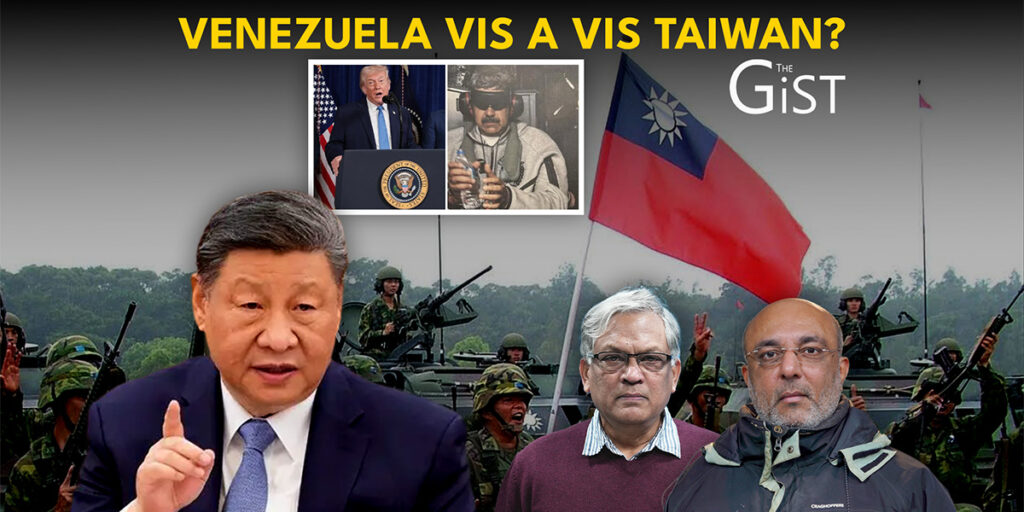
Why Maduro Capture Won’t Spur Chinese Invasion Of Taiwan
China’s initial muted criticism of the abduction of Venezuela’s President Nicolas Maduro reflects a hard reality, says Prof Raj Verma, non-resident scholar at the Elliott School of International Affairs, George Washington University.
“We can see that China supplied arms but it did not say that it would militarily protect in anyway Venezuela, because Venezuela is not the core interest or of China per se. So I do not see any military action taken by China to, to recover its investments.
China has a strategic partnership with Venezuela but that does not require Beijing acting as a security guarantor. That is not China’s way. In fact it is something China would be careful to avoid, Prof Verma said.
“China has invested a lot of money in Latin America. And but to be honest, all these countries have something in common with China against the Western liberal order. But, things might change in the future, depending on, what the US administration does with other countries in Latin America, which are a little bit towards the left.”
As for arguments that China may see the US action in Venezuela as setting a precedent for similar action in Taiwan, Prof Verma argues that the two situations are completely different. China sees Taiwan as a domestic issue, something dating back from the civil war that the Communists waged against Nationalists.
There is also a huge asymmetry in military capabilities. Taiwan’s military although small is well equipped with the latest of US equipment so whether its regime change that Beijing may seek, or leadership change. it’s going to be very difficult.
To those who believe that the $11 billion Trump arms package for Taiwan signals Washington’s commitment, Verma notes that “Initially, he was not keen on a military intervention in, in Venezuela, but after six months, he just made a point to do it. So everything is up in the air at this point in time.
“But we need to understand, that the repercussions for China might be much much higher as compared to the effect of the US action in Venezuela. We also need to take into account the fact that at this point in time, the Chinese military is not ready to occupy Taiwan.”
Tune in for more in this conversation with Prof Raj Verma, non-resident scholar at the Elliott School of International Affairs, George Washington University.