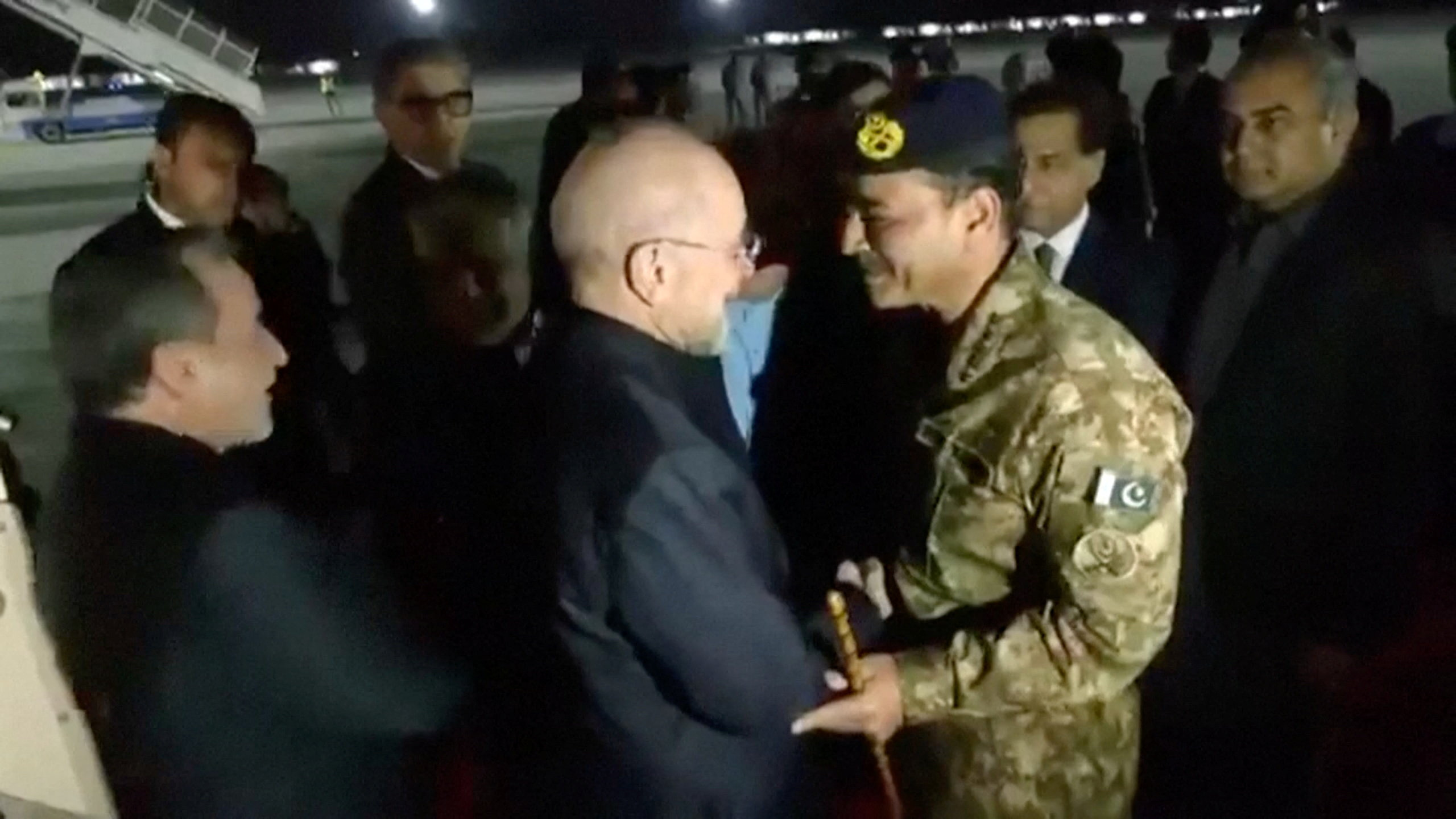
Iranian officials have met Pakistan’s Prime Minister Shehbaz Sharif ahead of US peace talks on Saturday. US Vice President JD Vance has also met Sharif. He was accompanied by special envoy Steve Witkoff and Donald Trump’s adviser and son-in-law Jared Kushner.
“Prime Minister expressed the hope that these talks would serve as a stepping stone toward durable peace in the region,” Sharif’s office said.
No peace plans have been shared through the media although it is broadly known what either side wants. Distrust is acute but Vance is seen by Tehran as perhaps the most anti-war person in the Trump administration.
Tehran has also warned it will walk out of the talks if its conditions are not met. Mohammad Galibaf, who is heading the Iranian delegation, said his team was there in Islamabad with “good intentions” but “do not trust the US.”
Vance previously warned the Americans won’t be receptive if Iran “try to play us”. A Guardian report said “Vance will be face a difficult choice in Islamabad: to either undersign considerable US concessions to Iran in order to hold the ceasefire and negotiate the opening of the strait of Hormuz – or effectively cut off negotiations, personally backing a return to war that is unpopular with the American public.”
President Trump added to the din with the Washington Post quoting him as saying “We have a reset going. We’re loading up the ships with the best ammunition, the best weapons ever made – even better than what we did previously and we blew them apart.”
World Bank President Ajay Banga sounded a note of pessimissim into the debate when he said that even if a ceasefire is agreed upon and is lasting, global economic growth could be lower by 0.3 to 0.4 per cent. No ceasefire means 1 percentage point loss in global growth.