When viewed with hindsight, strategic commentary generated during the week beginning Monday 15 June 2026 will likely seem strange to future generations of security analysts because of the frequent use of one word: ‘deal’.
Early on Monday (or late on Sunday evening 14 June, according to Washington DC time), the governments of Iran and the United States, as well as mediating powers such as Pakistan and Qatar, announced that a ‘deal’ had been reached between Tehran and Washington. The government of Israel notably distanced itself from any such deal.
An MoU will be likely signed on Friday 19 June at Geneva. Once it comes into effect, it will allow for a 60-day extension of the ceasefire which had marked the first real de-escalatory step between Iran and the US, back on 8 April 2026. During that 60-day extension starting from mid-June, talks will be held on the Iranian nuclear program and sanctions relief.
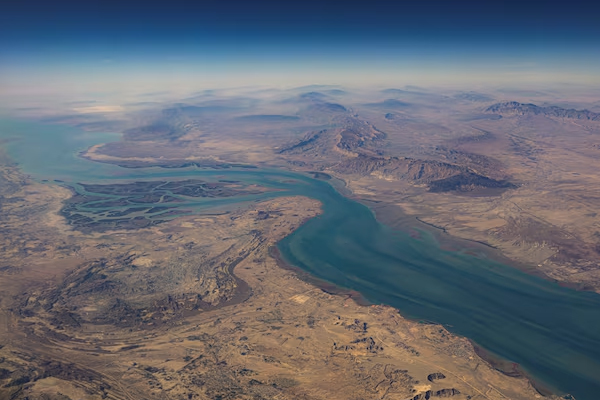
In the interim, Tehran will be granted a window to sell oil internationally and replenish its badly depleted coffers. It will lift its blockade of the Straits of Hormuz, a blockade which has trapped 2000 ships and 20,000 sailors within the Persian Gulf since the start of the war on 28 February.
In return, the US will lift its own naval blockade of Iran, which recently resulted in the deaths of three Indian sailors after the US attacked an Indian-crewed merchant ship. Both sides are desperate for an agreement which can be sold as a victory to domestic audiences. In an age of social media diplomacy, this interim agreement is being called a ‘peace deal’.
Details are still being disputed over, according to media reports. How much control will Iran have over shipping that passes through the Straits of Hormuz? US President Donald Trump has asserted that passage through the Straits will be toll-free, but Iran suggests otherwise.
Washington insists that Tehran will never acquire a nuclear weapon, but Tehran has long claimed that it does not wish to do so anyway. The US interpretation of current events is that sanctions relief for Iran will be conditional on ‘compliance’ but Iran states that some limited sanctions relief will come into effect as soon as the deal is signed.
Both sides are signaling that they are being reasonable while not desperate for an agreement. That in itself, is a statement of the power equation.
That the joint American and Israeli attack on Iran inflicted considerable material damage and high-level personnel losses on the Iranian regime is beyond question. As is the fact that the regime adapted to the disruption caused to its command structure and retained strategic coherence.
There was no transfer of power from the Islamic Revolutionary Guard Corps and the Supreme Leader Mojtaba Khamenei to a pro-Western Iranian politician who might be ready to sign a peace treaty with Israel.
Pretenders to power such as Reza Pahlavi, the exiled son of Iran’s last Shah, faded from international headlines. Instead, the US and Israel might have sought to enable a political comeback by Mahmoud Ahmadinejad, a former president. When in power, Ahmadinejad had baited Israel, earning himself considerable hostility from the US.
Yet, if Washington and Tel Aviv had indeed hoped to unleash him from the state of house arrest which he had been living under, ever since he fell out of favour with the Iranian regime, that would indicate that he had somewhat moderated his opinions since leaving office
It would also suggest that beyond causing political turmoil through leadership decapitation and thereby weakening the integrity of the Iranian state, neither the US nor Israel had a clear plan for achieving regime change.
Which makes the ‘deal’ that has been announced more of an ad hoc measure to open the Straits of Hormuz rather than a comprehensive agreement between Iran and the US. Although not as severely affected by the Iranian closure of the Straits as its Arab and European allies, the US had found itself in a diplomatically exposed position.
It was caught in a narrative-spinning contest with a much weaker adversary that was refusing to play along with the capitulatory role that had been scripted for it. Thus, as one Israeli commentator noted, the US president was reduced to being a performer who was rewriting his own narrative even as reality played out differently from what was expected.
Absence of any ‘unconditional surrender’ from Iran was re-framed as willingness to make a deal, which recast Trump as a master negotiator rather than an overconfident warlord.
Among American critics of the ‘deal’, there is a view that Trump wanted to give himself a birthday present on 14 June 2026, when he turned 80. That might explain why he declared that an agreement would be signed on the Sunday itself, even though Iranian officials disputed this time frame while admitting that a signing would occur soon.
To the Israelis, the US president has been more focused on the optics of winning than actually addressing the issues that might make Iran a threat to Israel. Even more than the nuclear issue, which is of limited worry to Israel, being itself a nuclear weapons state, Tehran’s support for regional militias that project its power is a serious concern.
Yet, in criticizing Israeli strikes on Lebanon, where the pro-Iranian militia Hezbollah is based, Washington is signalling that it considers Israeli interests secondary to its larger goal of ending hostilities. Considering that these hostilities were started by the US itself, it is difficult to fault the Iranian claim that the anticipated MoU would be an Iranian success, even if it does not suggest an outright victory which was always beyond Tehran’s capability to achieve.
Much is yet to be decided, including whether or not a deal will be signed on Friday 19 June. There have been announcements in the past of breakthroughs, although this time, there seems to be some weight to optimistic assessments of a further de-escalation.
In the longer term, Iran and the US will have to overcome decades of accumulated distrust. The Americans feel that they have often been bested by wily Iranian negotiators, while the Iranians feel they have been betrayed by goalpost-moving on the part of the US. According to the Iranian perspective, initial concessions by Tehran lead not to reciprocity from the US side but demands for still more concessions if previously agreed terms are to be fulfilled.
The fact that the war began on 28 February at a time when the two sides were engaged in talks ostensibly aimed at averting conflict means that, no matter how much Europe, the Arab states or the rest of the world might want a return to normalcy in the Persian Gulf, Iran would be prudent to continually assert its ability to block the Straits again if the US does not negotiate in good faith after 19 June.