India is reassessing its role in Iran’s strategic Chabahar Port after the reimposition of US sanctions, even as New Delhi continues discussions with Washington to preserve a narrow window of conditional relief, officials familiar with the matter said.
Addressing questions at the weekly media briefing, Ministry of External Affairs (MEA) spokesperson Randhir Jaiswal said India has not formally exited the project and remains in dialogue with the US administration on the future of its participation.
“As you are aware, on October 28, 2025, the US Department of the Treasury issued guidance outlining a conditional sanctions waiver valid until April 26, 2026,” Jaiswal said. “We remain engaged with the US side to work through this arrangement.”
The reassessment follows the return of US sanctions on Chabahar, which took effect on September 29, 2025. The measures granted Indian entities a limited period to disengage or risk asset freezes and restrictions on access to the US financial system.
Ahead of the deadline, government-nominated directors on the board of India Ports Global Ltd (IPGL) resigned, according to sources with direct knowledge of the decision. IPGL also temporarily took its website offline, a precautionary move aimed at limiting potential sanctions exposure.
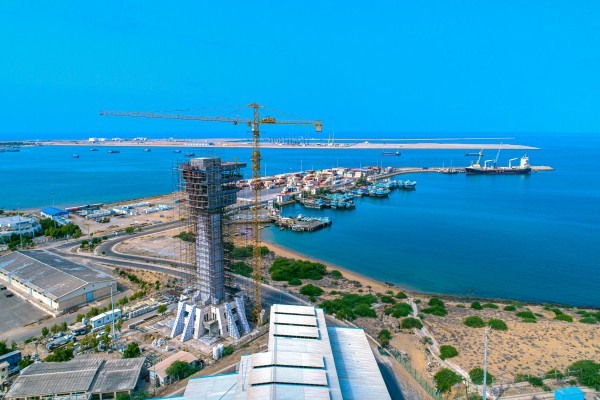
IPGL, the state-owned firm responsible for developing and operating the Shahid Beheshti terminal, has been central to India’s presence at Chabahar. Its Iranian subsidiary continues to handle routine port operations, including the use of six mobile harbour cranes supplied under earlier investment commitments.
Sources said the IPGL board met on September 28, 2025, a day before the sanctions came into force, and unanimously agreed that government-appointed directors should step down to mitigate personal and legal risk.
Investment Commitments
India has already paid out the full $120 million investment committed under a 10-year agreement signed with Iran’s Ports and Maritime Organisation in March 2024. Under this deal, India’s operational scope at Chabahar, covering equipment procurement and terminal management increased.
However, the agreement does not treat international sanctions as a force majeure event. This, then, complicates New Delhi’s ability to suspend or terminate the contract without financial or legal consequences.
According to sources, the Attorney General has advised the government to consult specialised sanctions-law experts to assess whether the agreement can be renegotiated, mutually paused, or formally exited without significant exposure.
Strategic Importance
Situated in Iran’s Sistan-Baluchistan province and outside the Strait of Hormuz, Chabahar has long been viewed by India as a critical access point to Afghanistan and Central Asia, bypassing Pakistan. The port is also a key element of the International North–South Transport Corridor, which aims to link India with Russia, Central Asia and parts of Europe.
In 2018, the United States granted a rare sanctions exemption allowing India to operate Chabahar for humanitarian shipments to Afghanistan. That waiver lapsed following the US withdrawal from the country, reducing Washington’s strategic rationale for continued flexibility.
India’s recalibration comes against a backdrop of rising tensions in West Asia. Unverified intelligence claims circulating in Iran suggest the Islamic Revolutionary Guard Corps has positioned hypersonic missiles aimed at multiple Israeli military targets, including air bases.
Neither Tehran nor Tel Aviv has confirmed the reports. However, defence analysts note that the operational deployment of hypersonic systems, given their speed and manoeuvrability, would sharply increase escalation risks and complicate interception capabilities.
Any deterioration in Iran–Israel relations could further disrupt regional trade routes, energy flows and maritime security, developments closely monitored by New Delhi.
For India, Chabahar now sits at the intersection of competing priorities: preserving long-term connectivity goals while remaining compliant with US sanctions and maintaining critical ties with Washington.