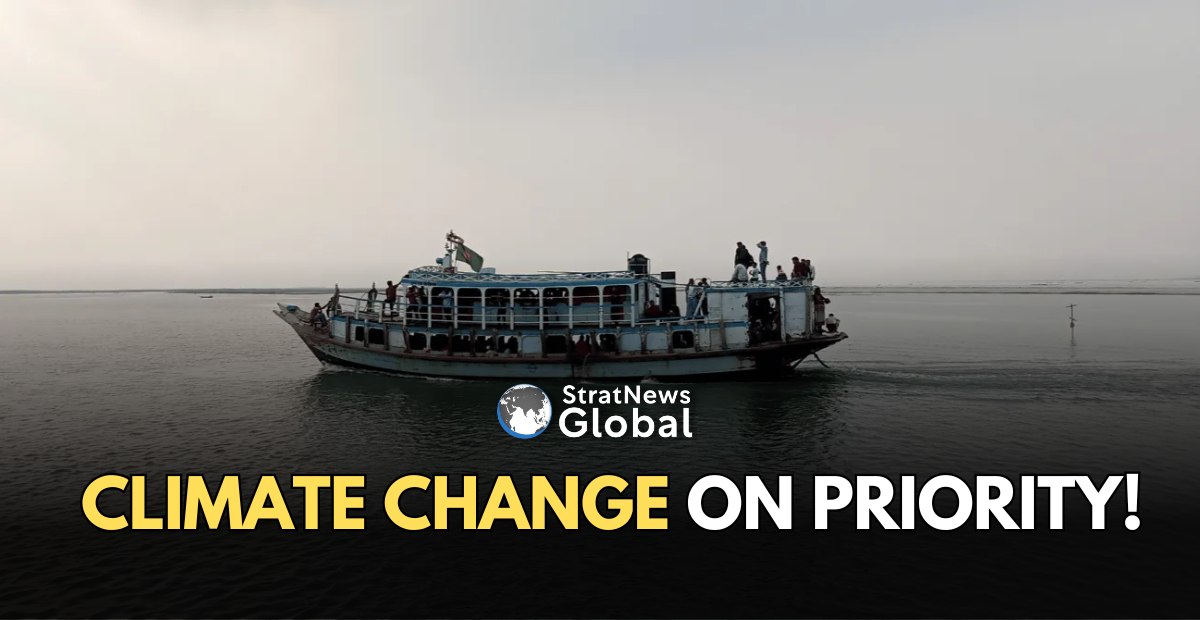
The Ganga is under stress, and the waters treaty needs more than renewal, ran the headline in Down To Earth magazine. Authored by Mahesh Ganguly, a teaching assistant and research fellow at IIT Bombay, it makes the simple argument that as India and Bangladesh prepare to begin negotiations on renewing the treaty, it cannot just be about geopolitics.
The question is whether “the Ganga can remain sustainable at all … given a rapidly shifting hydrological regime driven by climate change … intensified lean-season scarcity in some years and sudden high-flow episodes in others, driven by changing rainfall patterns and accelerating Himalayan glacier retreat … studies warn that by the 2050s the basin could witness substantial changes in river flow patterns.”
Add to that pollutants along the Indian stretch of the Ganga. Rapid industrialisation has increased pollutant load due to the discharge of heavy metals such as cadmium, lead, chromium, nitrates and more, disrupting microbial processes that are essential for river health.
Nearly 0.12 million tons of micropollutants are also being released annually. These weaken the mangrove ecosystem’s ability to sequester CO2 — thereby deepening climate vulnerability in the delta.
Ganguly suggests adopting the principles of the Helsinki Rules on the Uses of the Waters of International Rivers. This approach emphasises not only equitable and reasonable utilisation, but also cooperative governance, information sharing, and integrated river basin management. While India has often been reluctant to commit to broader multilateral water conventions, the author cites this as a position that deserves reconsideration.
He also urges that the existing framework of measuring total water availability and integrated climate projections be included in the renewed agreement. This would include contingency measures such as drought protocols, flood coordination mechanisms, and joint basin-level cooperation on sedimentation and embankment planning.
In order to tackle pollution, the Ganga Waters treaty must incorporate groundwater into joint assessments, coordinated monitoring, enforceable water-quality standards, shared telemetry stations, and investment in river restoration.
Lastly, a mandatory periodic river clause is important to recalibrate allocations and governance mechanisms based on updated field data and statistical analysis on future water flow, along with the river’s ecological stress indicators. Water must be treated as a shared security challenge and not a zero-sum national resource, for the benefit of both nations.