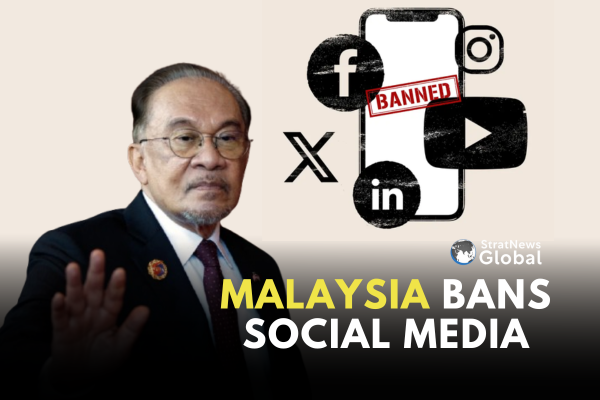
Malaysia’s plan to ban anyone under sixteen from using social-media platforms starting in 2026 has triggered sharp debate at home and across Southeast Asia. Officials say the aim is to protect children from online harms, but reactions remain mixed, especially among young people.
Ong Yue Lin, a member of Malaysia’s National Youth Consultative Council and an Economic Policy and Research Officer at the ASEAN Youth Organisation, told StratNewsGlobal that the move mirrors a wider regional shift. “Malaysia isn’t the only one trying to regulate harmful online content. Others in the region are also taking steps in that direction,” she said.
Ong said officials are especially worried about the rapid spread of sensational videos, misleading clips and behaviour-shaping trends. “Most of it comes from concern over harmful brainrot content, misleading videos and trends that affect young people’s behaviour,” she said. “We’ve seen bullying and even cases like the recent Bandar Utama stabbing being discussed in relation to online influence, so the push is really framed as protecting youth.”
Malaysia’s decision follows rising anxiety over cyber-bullying, scam targeting, and the role of viral content in shaping teenage behaviour. The Bandar Utama stabbing, which was dissected widely on TikTok and Instagram, has been cited by parents and teachers as an example of how quickly online platforms can drive discussion and, in some cases, panic.
The policy places Malaysia among a growing number of governments setting stricter limits on children’s access to social media. Australia already bars under-sixteens from opening accounts. Several European countries are debating tighter rules, the UK is strengthening its Online Safety Act, and US states such as Utah and Arkansas require parental consent for teenagers. Indonesia is drafting its own minimum-age rules.
Public reaction remains divided. ABC News reported that in a survey of more than seventeen thousand young people in Australia, seventy percent opposed the under-sixteen ban, saying it would cut them off from friends and communities. Only nine percent supported the measure.
Supporters of Malaysia’s move say tighter controls are needed to reduce exposure to harmful content, while critics warn it may fuel concerns about government overreach.
Ong acknowledged the tension. “Some may see it as controlling, but I personally support clearer safeguards or age limits for social media because safety matters,” she said. “As part of the National Youth Consultative Board, I also see that many young people don’t agree with stricter bans because they feel it affects children’s rights and their exposure to the digital world. So there’s a balance we need to find.”
Malaysia now joins a fast-growing international debate on how to manage young people’s access to social media, with regulators, parents and teenagers often pulling in different directions.

Research Associate at StratNewsGlobal, A keen observer of #China and Foreign Affairs. Writer, Weibo Trends, Analyst.
Twitter: @resham_sng