By any stretch of imagination, it’s hard to justify China’s latest round of military muscle-flexing around Taiwan as justice of any kind.
But “Justice Mission 2025” is what they have called it, a two-day operation involving, according to Taiwan’s Defense Ministry, 130 sorties by Chinese military aircraft, 14 naval vessels and eight other ships with lots of fireworks.
This is the sixth round of Chinese military exercises around Taiwan ever since they began in 2022 when Nancy Pelosi, then Speaker of the US House of Representatives, visited the island.
The rhetoric from Beijing was tough as usual with the foreign ministry spokesman calling it “A punitive and deterrent action against separatist forces who seek Taiwan independence through military buildup, and a necessary move to safeguard China’s national sovereignty and territorial integrity.”
The words “punitive” and “deterrent” does suggest China was retaliating against the recent US announcement of an $11 bn arms package for the island nation.
Top diplomat Wang Yi said his country would “forcefully counter” US arms sales and any attempt to obstruct unification with the island “will inevitably end in failure”.
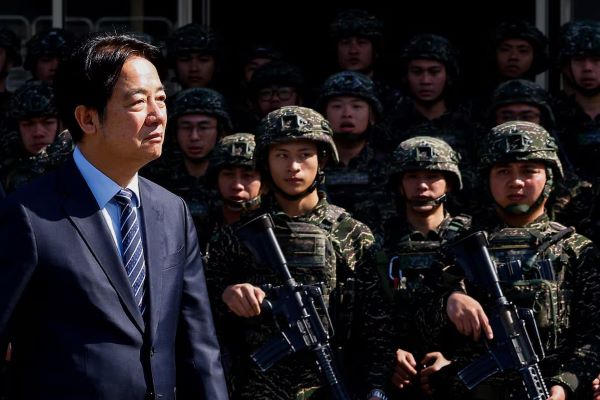
Taiwan’s President Lai-Ching-tei criticised the drills, noting that this is “not something that a responsible power should do. We will act responsibly and not escalate conflict or stir up disputes,” he said adding that the military “will do their best to ensure the safety of the country,”
In India, PLA watchers say the exercises around Taiwan would have been an opportunity for top commanders to hone their “Cold Start” doctrine, which basically involves mobilising and deploying land, naval and air assets at very short notice.
Incidentally, PLA scholar Suyash Desai told StratNewsGlobal that President Xi Jinping recently promoted the Taiwan-focused Eastern Theater Commander to the rank of general, which signals full combat readiness.
Aligned with the Eastern Theater Command is the Southern Theater Command which is responsible for the South China Sea, both would have been tasked with executing the latest round of muscle-flexing in the Taiwan Strait.
It also underscores the other point that Taiwan remains the “primary strategic direction” for the Beijing establishment (even as India has got an “upgrade”, now ranking just below Taiwan).
But do these exercises tell us anything about Chinese military capabilities?
Desai believes “They are reforming the military, like no one else. They are trimming the forces because it was a large military. They are buying newer equipment. There is a lot of argument whether PLA equipment is good or not, we don’t know.”
But the PLA brass is focused on future warfare, whether Cold Start or Multi-Domain Integrated Operations. So those are positives from their point of view. The current round of military drills around Taiwan are also expected to help refine their “grey zone tactics, basically coercive actions just short of war.
There is another point these exercises throw up: Desai believes based on his study of the PLA, that motivation is low because of the purge of top ranking generals carried out by Xi Jinping. How does that impact on wartime readiness?
The PLA will mark its 100th anniversary in April 2027, which is the deadline set by Xi for the force to be fully modernised and strategically capable. That year could also mark the decisive push for “armed unification” with Taiwan, possibly an invasion.
Xi may prefer a negotiated solution perhaps with some Western guarantees but the current geopolitical situation may rule that out. The longer he waits, domestic economic uncertainties may become major hurdles to a military solution. Xi has tough choices ahead and limited time to ensure success.

Thirty eight years in journalism, widely travelled, history buff with a preference for Old Monk Rum. Current interest/focus spans China, Technology and Trade. Recent reads: Steven Colls Directorate S and Alexander Frater's Chasing the Monsoon. Netflix/Prime video junkie. Loves animal videos on Facebook. Reluctant tweeter.