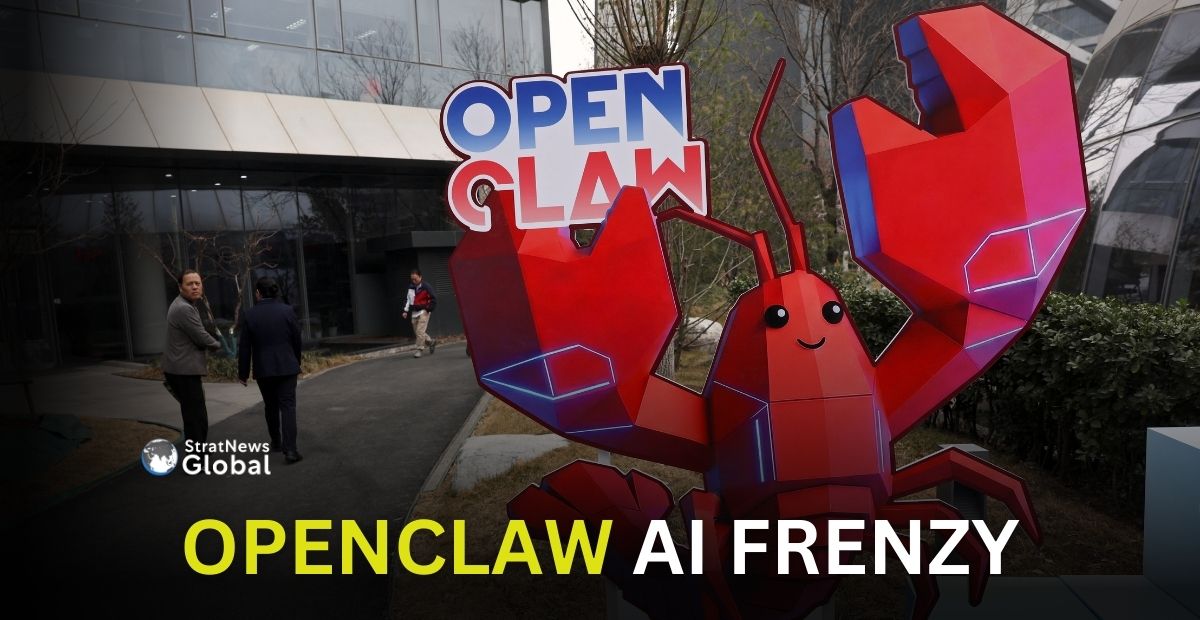
Over the past month, OpenClaw has gone viral in China, its local versions earning the playful nickname “lobster”, capturing the imagination of a wide range of users, from retirees seeking side income to AI firms exploring new revenue streams, thanks to its ability to connect multiple hardware and software tools and learn from data with far less human intervention than a typical chatbot.
After first appearing in November, the tool has become one of the fastest-growing projects in the history of GitHub, the world’s most widely adopted AI-powered developer platform.
The hype over the open-source, agent-controlling bot created by Austrian developer Peter Steinberger is the latest example of how a new technology could overhaul the world’s second-largest economy through unbridled consumer adoption.
“If DeepSeek marked a milestone for open-source large language models, then OpenClaw represents a similar turning point for open-source agents,” said Wei Sun, chief AI analyst at Counterpoint Research.
Nvidia CEO Jensen Huang this week said OpenClaw is “the next ChatGPT” and growing enthusiasm over the technology sent Chinese tech shares up by as much as 22% in recent weeks as companies rolled out a suite of products based on the agent.
Openclaw Draws Children and Retirees
Huang Rongsheng, chief architect at Baidu’s smart device unit Xiaodu, said at an event on Tuesday that parent group chats for his daughter’s primary school class have become overwhelmed by OpenClaw discussions.
Bai Yiyun, another attendee at the Zhipu event, said she hopes to use the agent to start a side hustle during her retirement.
Aside from get-rich-quick schemes, many OpenClaw users hope for dramatic boosts in productivity, with some local governments offering subsidies of up to 20 million yuan ($2.8 million) a year for qualifying “one-person companies.”
“(The OpenClaw frenzy) directly coincides with what the Chinese government wants when it comes to the AI Plus initiative,” said Lian Jye Su, chief analyst at tech research firm Omdia, referring to a national policy aimed at embedding AI across the economy.
Security Risks and Technical Challenges
Initial excitement may fade as token costs rise and regulators warn of security risks. Growing concern has led Chinese institutions, from government agencies to universities, to bar employees from installing the tool.
A commentary last week published by the state-owned People’s Daily, which serves as a mouthpiece for China’s ruling Communist Party, urged the government to “firmly maintain the safety bottom line to ensure that innovation does not deviate or derail” with OpenClaw.
(With inputs from Reuters)