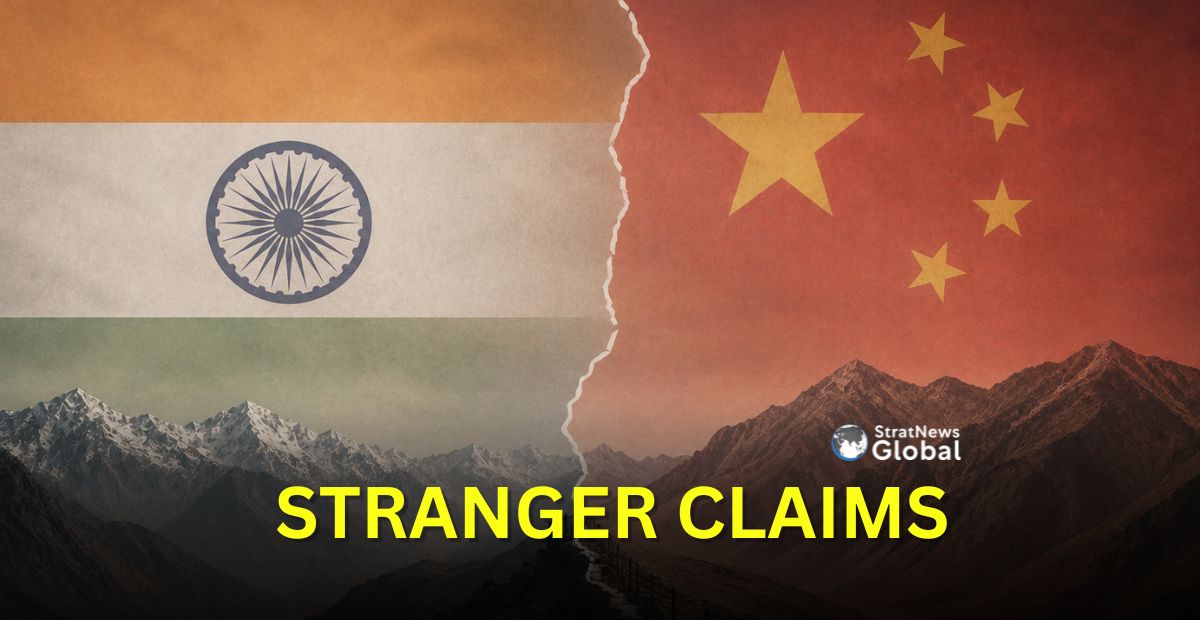
A China scholar says the India-China border should begin at the River Ganges, meaning at Gangotri in Uttarakhand where it rises.
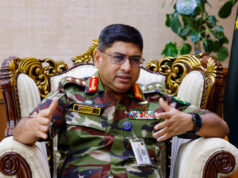
The scholar Victor Gao who is vice-president of the Beijing-based Center for China & Globalization, made those and other remarks during an interview on Tibet, India-China relations and the boundary dispute.
An MSN.com report said he questioned the legality of the McMahon Line, drawn when India was part of the British Empire, which now forms India’s eastern boundary with Tibet.
Gao said that if India insists on recognizing the McMahon Line, “Why couldn’t we use the Victor Gao line along the Ganges as the border between India and China.”
There is of course no such thing as the “Victor Gao line” but he was saying all the territory north of the Ganga belonged to China.
MSN.com also quoted him as saying that India should “surrender South Xizang” meaning Arunachal Pradesh, all 90,000 sq km of it. He described it as “occupied Chinese territory” and that India should negotiate a “mutually acceptable solution”.
This is an old Chinese claim which generally centres around the monastic town of Tawang, birthplace of the sixth Dalai Lama Tsangyang Gyatso. But here’s the thing, Chinese troops briefly occupied Tawang in the 1962 war before withdrawing.
In 2007, the current Dalai Lama accepted that the Tibetan administration and Britain had recognized the McMahon Line in 1914.
India has made it clear that Arunachal is an integral part of this country, and Beijing’s exercise of renaming parts of the state by giving them Chinese names are “inventive attempts” that do not alter the reality on the ground.
The larger question is the timing of Gao’s remarks at a time when the two countries are on the path towards a cautious normalization. Think tanks like the one Gao represents are government entities and he is a government servant. So he clearly had Beijing’s permission.
Does this add to or detract from the current course of India-China relations? The move towards normalization will continue as this is in India’s interest. But Chinese pinpricks will continue and do note it’s coming at the end of a summit where Xi Jinping is seen as having got the better of his US guest President Trump.