Home Premium Content

Premium Content

Support us by contributing to StratNewsGlobal on the following UPI ID

ultramodern@hdfcbank

Strategic affairs is our game, South Asia and beyond our playground. Put together by an experienced team led by Nitin A. Gokhale. Our focus is on strategic affairs, foreign policy and international relations, with higher quality reportage, analysis and commentary with new tie-ups across the South Asian region.

You can support our endeavours. Visit us at www.stratnewsglobal.com and follow us on YouTube, Twitter, Facebook and Instagram.

र 500 per month
र 1000 per month
र 5000 per year
र 10000 per year
Donate an amount of your choice
र 500 per month

Donate र 500 per month


र 1000 per month

Donate र 1000 per month


र 5000 per year

Donate र 5,000 per year


र 10000 per year

Donate र 10,000 per year


Donate an amount of your choice

Donate an amount of your choice


Premium Content

india
India enters 2026 at a pivotal moment. Abject poverty is no longer the defining challenge. Accordingly, India has new problems
Russia
Russia accuses Ukraine of a deadly New Year’s Eve drone strike in Kherson that killed at least 24 people, including
Bangladesh
Bangladesh’s Jamaat-e-Islami, once banned, eyes a major electoral return and says it is open to forming a unity government after
Mamdani
Zohran Mamdani becomes New York City’s first Muslim mayor, pledging a progressive agenda focused on affordability and equality.
Swiss
At least 40 killed and 100 injured after a fire ripped through a bar in Crans-Montana during New Year’s Eve
China
Beijing orders chipmakers to use at least 50% Chinese-made tools, accelerating its push for semiconductor self-sufficiency.
India's outreach to the Jamaat is a good development, hopefully ties with the BNP are on course
If the EU President is confirmed as chief guest on Republic Day, it likely means the FTA is a done
Lai Ching-te: As president, my stance has always been clear: to resolutely defend national sovereignty and strengthen national defence.
The move partially reverses Biden-era sanctions on Intellexa, a spyware group the Treasury previously labeled a "complex international web" of

Home The New India Moment: Jobs, Growth And The Road To 2047

The New India Moment: Jobs, Growth And The Road To 2047

India enters 2026 at a pivotal moment. Abject poverty is no longer the defining challenge. Accordingly, India has new problems to solve: Improving livelihoods, productivity and quality of life for a rapidly aspirational population.

But unlike China’s rise in the early 2000s, India must grow in a fragmenting global order where supply chains are political, technology is balkanising, and globalisation is in retreat.

In Capital Calculus‘ special first episode of 2026, StratNewsGlobal.Tech spoke to Dr. Rajiv Kumar, former Vice-Chairman of NITI Aayog, to unpack:

  • What defines the “New India”
  • How development must evolve beyond poverty reduction
  • The jobs and productivity challenge
  • Social protection for a middle-income society
  • India’s export strategy in a de-globalising world
  • The role of states in the next wave of reforms
  • India’s biggest constraints — and its biggest opportunities
  • The priorities for the upcoming Union Budget.

In several ways, this conversation sets the stage for India’s economic trajectory in 2026 and beyond.

Home Russia Says 24 Killed in New Year’s Eve Drone Strike in Kherson Region

Russia Says 24 Killed in New Year’s Eve Drone Strike in Kherson Region

Russia accused Ukraine on Thursday of killing at least 24 people, including a child, in a drone strike that hit a hotel and café where civilians were celebrating New Year’s Eve in the Russian-controlled part of Ukraine’s southern Kherson region.

Moscow Labels Attack a ‘War Crime’

Vladimir Saldo, the Russian-installed governor of Kherson, said three Ukrainian drones struck a gathering site in the coastal village of Khorly, calling it a “deliberate strike” on civilians. He claimed many victims were burnt alive as fire engulfed the building.

Russia’s Foreign Ministry said preliminary information indicated that 24 people, among them one child, were killed and around 50 others injured, including six minors. The ministry called the incident “a war crime,” asserting that the attack had been “planned in advance” and that drones had “deliberately targeted areas where civilians had gathered to celebrate New Year’s Eve.”

Reuters was unable to verify the Russian claims or photographs released by Saldo’s office showing the alleged aftermath. Images reviewed by Reuters showed a burnt building, apparent blood stains on the ground, and at least one body covered with a white sheet.

Blame and Condemnation

Ukraine’s military, which has repeatedly accused Russia of killing civilians in missile and drone attacks on Ukrainian cities, did not immediately respond to a request for comment.

Russia’s Foreign Ministry spokeswoman Maria Zakharova accused Ukraine’s Western allies of bearing responsibility for the alleged strike. Senior Russian officials, including the speakers of both chambers of parliament, condemned Kyiv and described the incident as an act of terrorism.

“The attack was carried out with Western-supplied equipment and intelligence,” Zakharova said on Telegram, arguing that Ukraine’s backers shared blame for what she called “a barbaric crime.”

Conflict Background

Kherson is one of four regions along with Donetsk, Luhansk and Zaporizhzhia that Russia claimed to have annexed in 2022. Ukraine and most Western nations have rejected those claims as illegal, insisting the territories remain part of sovereign Ukrainian land.

The alleged strike comes amid a period of intensified drone warfare between the two countries. Both sides have targeted infrastructure and settlements far behind the front lines, often trading accusations over attacks that cause civilian casualties.

If confirmed, the incident in Khorly would be one of the deadliest civilian losses reported in Russian-controlled territory in recent months, further fuelling recriminations as the war approaches its third year.


with inputs from Reuters

Home Jamaat-e-Islami Signals Openness to Unity Government in Bangladesh Election

Jamaat-e-Islami Signals Openness to Unity Government in Bangladesh Election

Bangladesh’s once-banned Islamist party, Jamaat-e-Islami, is preparing for its most competitive national election in nearly two decades and is open to joining a unity government after the 12 February parliamentary vote, its leader said on Wednesday.

Party Poised for Major Comeback

Opinion polls suggest Jamaat-e-Islami could emerge as the second-largest party behind the Bangladesh Nationalist Party (BNP) in what will be its first electoral contest in 17 years. The February vote marks Jamaat’s formal return to mainstream politics in the Muslim-majority country of 175 million people.

Jamaat previously shared power with the BNP between 2001 and 2006 and remains open to another partnership. “We want to see a stable nation for at least five years. If the parties come together, we’ll run the government together,” Jamaat Ameer (President) Shafiqur Rahman told Reuters in Dhaka. His remarks came days after Jamaat drew public attention by securing an alliance with a Gen-Z party.

From Ban to Ballot

The party’s resurgence follows the ousting of long-time Prime Minister Sheikh Hasina in a youth-led uprising in August 2024. Hasina, whose Awami League has since been barred from the election, had been a vocal critic of Jamaat. During her tenure, several senior Jamaat leaders were executed for alleged war crimes linked to Bangladesh’s 1971 independence war, which the party had opposed.

Jamaat was banned from elections in 2013 after a court ruled that its charter violated the secular constitution. The interim government led by Nobel laureate Muhammad Yunus lifted those restrictions last August, paving the way for its political re-entry.

Although the party continues to advocate Islamic governance under sharia law, Rahman said Jamaat is broadening its platform to include anti-corruption measures and national stability. “Anti-corruption must be a shared agenda for any unity government,” he said, adding that the next prime minister should come from the party that wins the most seats.

Diplomatic Balancing and Regional Tensions

Rahman also expressed concern over Sheikh Hasina’s continued stay in India after her flight from Dhaka, noting that relations between the two neighbours have deteriorated since her removal. India, which had built close trade and political ties with Hasina’s government, is now seeking to engage with potential new partners.

Rahman confirmed meeting an Indian diplomat earlier this year, saying the official had requested confidentiality about the encounter. “Why? There are so many diplomats who visited me and it was made public. Where is the problem?” he asked. “We must become open to all and open to each other. There is no alternative to develop our relationship.”

India’s foreign ministry did not respond to a Reuters request for comment. However, an Indian government source confirmed contacts with several Bangladeshi political groups. India’s foreign minister visited Dhaka on Wednesday to offer condolences to the family of BNP chief and former Prime Minister Khaleda Zia, who died the previous day.

Addressing Jamaat’s historical ties with Pakistan, Rahman said the party seeks balanced relations with all nations. “We are never interested in leaning toward any one country. Rather, we respect all and want balanced relations among nations,” he stated.

Rahman added that any government involving Jamaat “would not feel comfortable” with President Mohammed Shahabuddin, who was elected unopposed with Awami League support in 2023. Shahabuddin has previously told Reuters he would be willing to step down midway through his term but declined to comment on Rahman’s latest remarks.

with inputs from Reuters

Home Progressive Leader Zohran Mamdani Sworn In as New York City Mayor

Progressive Leader Zohran Mamdani Sworn In as New York City Mayor

Zohran Mamdani was sworn in as New York City’s new mayor in the first minutes of the New Year, marking the start of what his supporters have called a transformative era for America’s most populous city. The ceremony took place in the historic City Hall subway station, with his wife, Rama Duwaji, by his side.

Midnight Oath in a Historic Setting

Standing beneath the vaulted ceiling of the century-old station, Mamdani took the oath of office administered by New York State Attorney General Letitia James. “Happy New Year to New Yorkers, both inside this tunnel and above,” he said. “This is truly an honour and a privilege of a lifetime.”

The 34-year-old former state lawmaker, born in Uganda, becomes New York’s first Muslim mayor. His choice of the long-decommissioned City Hall subway stop accessible only through guided tours symbolised his commitment to “the working people who keep our city running every day,” according to his transition team.

New York law dictates that mayoral terms begin on 1 January following elections, and it has become tradition for incoming mayors to hold a private swearing-in shortly after midnight to ensure an unbroken line of leadership.

A Progressive Platform and Political Allies

Mamdani, a democratic socialist, ran on a platform focused on affordability and public welfare. He pledged to freeze rents and introduce free bus travel and childcare, appealing to New Yorkers struggling with the city’s high cost of living. His campaign drew more than two million voters — a record turnout — and secured him 50% of the vote, comfortably ahead of independent candidate Andrew Cuomo and Republican Curtis Sliwa.

Attorney General Letitia James, an early supporter, played a symbolic role at the inauguration. Analysts say her participation signalled Mamdani’s independence from national political figures, including President Donald Trump, whom both have frequently criticised. Grant Reeher, a political science professor at Syracuse University, said the gesture reinforced that “Mamdani is going to be independent of the president.”

Inauguration of a New Era

Mamdani’s formal inauguration, dubbed the “Inauguration of a New Era,” will feature a public ceremony on the steps of City Hall. Senator Bernie Sanders, whom Mamdani calls his political inspiration, will preside over the event, joined by Representative Alexandria Ocasio-Cortez. Around 4,000 guests will attend in person, with tens of thousands expected to watch from public viewing areas along Broadway or via livestream.

The mayor raised $2.6 million for his transition and celebrations from nearly 30,000 contributors more than any New York mayor this century. His supporters include community figures such as Sami Zaman, owner of Sami’s Kabab House in Astoria, where Mamdani filmed a campaign video with Sanders.

After taking office, Mamdani will move from his rent-stabilised apartment in Astoria to Gracie Mansion on Manhattan’s Upper East Side. While some in New York’s financial sector initially expressed concern about his socialist background, many are now exploring ways to cooperate with his administration.

Mamdani follows in the footsteps of David Dinkins, the city’s last mayor with ties to democratic socialism, who served from 1990 to 1993. Supporters believe Mamdani’s leadership could reshape New York’s political landscape, balancing progressive ideals with pragmatic governance.

with inputs from Reuters

Home Deadly Blast Kills 40 in Crans-Montana New Year’s Eve Tragedy

Deadly Blast Kills 40 in Crans-Montana New Year’s Eve Tragedy

Around 40 people were killed and 100 others injured, many of them seriously, after an explosion tore through a crowded bar during New Year’s Eve celebrations in the Swiss resort town of Crans-Montana, officials confirmed on Thursday. Authorities believe the blast, which triggered a major fire, was accidental.

Fire Engulfs Popular Nightspot

The blaze broke out at around 1.30 a.m. (0030 GMT) inside Le Constellation, a popular bar in the upscale ski resort in southwestern Switzerland. The cause of the explosion remains under investigation, but prosecutors have ruled out foul play.

“At the moment we are considering this a fire and not an attack,” prosecutor Beatrice Pilloud told a press conference. “A full investigation has been opened.”

Police said the fire spread rapidly through the venue, which was packed with holiday revellers. Many suffered severe burns. The entire area was cordoned off, and a no-fly zone was established over Crans-Montana. Emergency teams deployed 10 helicopters and 40 ambulances to transport victims to hospitals in Sion, Lausanne, Geneva and Zurich.

Country in Mourning

Valais canton’s head of security, Stephane Ganzer, confirmed that some of the victims were foreign nationals. Police chief Frederic Gisler said a helpline had been opened for relatives. “I can’t hide from you that we are all shaken by what happened overnight in Crans,” he said. “Our count is about 100 injured, most seriously, and unfortunately tens of people are presumed dead.”

Although Gisler declined to specify the exact death toll, Italy’s foreign ministry reported information from Swiss police indicating that about 40 people had died.

Swiss Federal President Guy Parmelin expressed condolences on social media platform X, writing, “What was meant to be a moment of joy turned, on the first day of the year in Crans-Montana, into mourning that touches the entire country and far beyond.”

Investigators Examine Possible Fireworks Link

Prosecutor Pilloud said forensic teams were working intensively to identify victims and return their remains to families as quickly as possible. “A lot of resources have been put into forensics to identify the victims,” she said.

Italian Foreign Minister Antonio Tajani told Sky TG24 television that the explosion might have been triggered by fireworks. “It seems to have been an accident caused by a fire, by some explosion, by some firecracker thrown during New Year’s celebrations,” he said.

The incident has cast a shadow over the start of the new year in Switzerland, with residents of the usually serene alpine resort reeling from one of the country’s deadliest peacetime disasters.

with inputs from Reuters

Home China Enforces 50% Local Equipment Rule for Chipmakers

China Enforces 50% Local Equipment Rule for Chipmakers

China is tightening its push for technological self-reliance by requiring semiconductor manufacturers to use at least 50% domestically produced equipment when adding new production capacity, according to people familiar with the policy. The directive, not publicly documented, is part of Beijing’s broader effort to build an independent semiconductor supply chain in response to escalating U.S. export restrictions.

A Strategic Shift Toward Domestic Technology

Chipmakers seeking state approval to build or expand fabrication plants must now prove through procurement tenders that at least half of their equipment is sourced from Chinese suppliers, the sources told Reuters. Proposals that fall short of the threshold are often rejected, although regulators allow some flexibility when domestic supply is limited, particularly for advanced chipmaking processes.

Officials reportedly encourage even higher targets. “Authorities prefer if it is much higher than 50%. Eventually, they are aiming for plants to use 100% domestic equipment,” one source said.

The rule marks one of Beijing’s most ambitious steps to reduce reliance on foreign technology. Since Washington’s 2023 ban on exports of advanced AI chips and semiconductor manufacturing tools to China, domestic producers have turned increasingly to local suppliers even in areas where foreign alternatives remain available.

Building a “Whole Nation” Semiconductor Drive

President Xi Jinping has repeatedly called for a “whole nation” effort to achieve self-sufficiency in semiconductors, mobilising thousands of engineers, researchers and manufacturers. Earlier this month, Reuters reported that Chinese scientists are developing a prototype chipmaking machine capable of producing advanced semiconductors a development the United States has long sought to prevent.

Previously, major chipmakers such as Semiconductor Manufacturing International Corporation (SMIC) preferred U.S. equipment, giving limited opportunities to local firms. However, the 2023 export restrictions forced domestic fabs to collaborate with Chinese suppliers like Naura Technology and Advanced Micro-Fabrication Equipment (AMEC).

State-affiliated entities placed a record 421 orders for local lithography equipment and components in 2025, worth about 850 million yuan. Beijing has also expanded financial support through its “Big Fund,” which launched a third phase in 2024 worth 344 billion yuan ($49 billion) to boost local semiconductor capacity.

Local Firms Emerge as Key Beneficiaries

The new rule is already reshaping the industry. Naura, China’s largest chip equipment maker, is testing its etching tools on SMIC’s 7nm production line after successfully deploying them for 14nm chips. The company’s progress highlights how policy pressure is driving rapid innovation.

Foreign suppliers such as Lam Research and Tokyo Electron, once dominant in China’s etching market, are now being replaced by Naura and AMEC. Naura has also begun producing electrostatic chucks to replace worn components in foreign equipment that can no longer be serviced due to export bans.

Naura filed a record 779 patents in 2025 more than double its total in 2020 and 2021 while AMEC filed 259, according to Anaqua’s AcclaimIP database. Naura’s revenue surged 30% in the first half of 2025 to 16 billion yuan, and AMEC’s rose 44% to 5 billion yuan. Analysts now estimate that China has achieved around 50% self-sufficiency in cleaning and photoresist-removal equipment, markets once dominated by Japanese firms.

Industry observers expect a small number of domestic giants to dominate the equipment market. “The domestic equipment market will be led by two to three major manufacturers, and Naura is definitely one of them,” one source said.

with inputs from Reuters

Home Indian Diplomat Had Called On Bangladesh Jamaat Chief Rahman?

Indian Diplomat Had Called On Bangladesh Jamaat Chief Rahman?

“One diplomat visited me while I was sick, Indian diplomat, after my post-operative period, here in my house. But they requested us not to make it public. Why? There are so many diplomats who visited me, and it was made public. Where is the problem? So we must become open to all and open to each other.”

That was the emir of the Bangladesh Jamaat-e-Islami, Shafiqur Rahman, in an interview to Reuters from Dhaka.

Although there is no official word from India on this meeting nor who the Indian diplomat was, according to the English-language Prothom Alo online daily, it happened earlier last year. It was not clear if it happened before or after Hasina’s ouster in August.

Prothom Alo said “An Indian government source confirmed contacts with various parties,” suggesting that India is reaching out to political parties and people it may have preferred to avoid during the years when Sheikh Hasina was in power.

It was also pointed out that India’s foreign minister S Jaishankar had visited Dhaka on Wednesday to offer condolences to the family of BNP chief and former prime minister Khaleda Zia, who died on Tuesday.

The ameer’s remarks also indicated concern over India’s stand on not extraditing Sheikh Hasina to Bangladesh.

“Definitly it’s a matter of worry because India is our friend and we have a duty to mutual exchange of citizens if someone is accused or a victim. But India is not doing it. She (Hasina) has already been convicted by a court,” the ameer said.

Hasina’s party the Awami League has been barred from contesting the elections, a situation which is expected to favour the BNP of Tarique Rahman, who has taken over the party’s reins after his mother Khaleda Zia’s death.

In the past, the BNP and Jamaat worked together in government and outside, but in the current situation, the former is expected to emerge as the single largest party after elections in February. The Jamaat is likely to come a close second.

The ameer has made clear that his party is willing to come together again with the BNP, but has laid down some conditions. No mercy for the corrupt, social justice for all, no political interference in the affairs of government and the new government must push reforms.

The BNP is yet to respond but on his return last week from 17 years in exile, Tarique Rahman compared the movement that ousted Hasina to the 1971 war of liberation “that saw the blood of hundreds of thousands of martyrs.”

He also called for a “safe Bangladesh”, given that Buddhists, Christians and Hindus all live in the country.


Home India-EU Trade & Investment Agreement: Optimism Despite CBAM Concerns

India-EU Trade & Investment Agreement: Optimism Despite CBAM Concerns

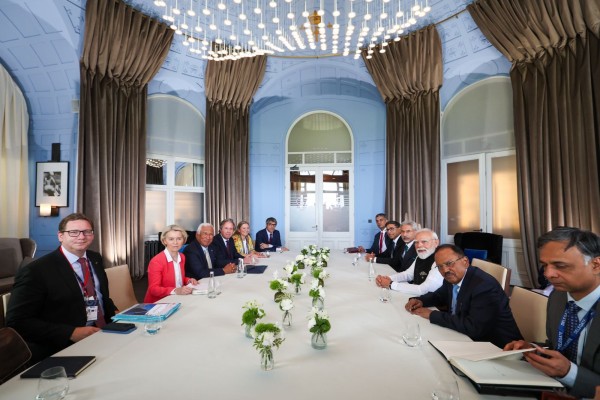
As the clock ticks towards Republic Day, the million dollar question: will the President of the European Union Ursula von der Leyen be the chief guest at the parade?  On the answer to that question rests the answer to the other: that the India-EU FTA is on course to be signed.

Randhir Jaiswal, foreign ministry spokesman was cautious, merely stating that “The teams have remained in touch to discuss outstanding issues, and both sides are engaged in taking these discussions forward.”

Commerce Secretary Rajesh Agrawal was also reported as saying that India and the EU are narrowing differences through sustained engagement, with more physical and virtual meetings planned.

Could negotiations go down to the wire given that the EU is keen on India opening up its agricultural and dairy markets?  What about the Carbon Border Adjustment Mechanism that now comes into force, impacting steel and aluminium?  CBAM risks eroding India’s export competitiveness just as trade diversification becomes most critical.

Or will the pressure to realise an India FTA push EU negotiators to cut Delhi some slack in these areas?  Ajay Srivastav of the Global Trade Research Institute (GTRI) says negotiations are on a fast track, with both sides aiming for an early 2026 conclusion.

“The expected announcement of an India–EU Bilateral Trade & Investment Agreement (its official name) in early 2026 could offer India some relief at a time of rising global trade uncertainty,” he says. “With the U.S. imposing a 50% tariff regime, India’s exports to its largest market have already taken a hit, falling 21% in November 2025 compared with May.”

It would be India’s largest trade deal, covering goods trade of more than $140 billion and spanning over 20 trade and non-trade areas.

Srivastava underlined the importance of the EU as an export destination, noting that in 2024 India exported $91 billion worth of goods to the bloc, led by petroleum products, electronics including smartphones, textiles and garments, iron and steel, machinery, chemicals, pharmaceuticals, gems and jewellery, and auto components.

Many of these sectors, particularly labour-intensive industries such as textiles, garments, leather, and auto parts, face EU tariffs ranging from 6% to 20%.  An FTA could significantly reduce these duties and help restore export competitiveness.

Dr Ajay Sahai, Director General and CEO of the Federation of Indian Export Organisations (FIEO), described the agreement as transformational for Indian exporters.

“The long-awaited India–EU Free Trade Agreement is a landmark step that promises to reshape the global trade landscape for Indian goods and services,” he said.  “A comprehensive FTA will unlock far greater potential by reducing tariff and non-tariff barriers across a wide range of sectors.”

Dr Sahai said Indian goods from textiles and engineering products to pharmaceuticals and specialty chemicals stand to gain from more predictable and preferential access to European markets, while services trade would benefit from clearer, rules-based entry conditions.

“The EU FTA presents an alternative avenue to sustain growth, diversify market dependence, and thereby de-risk India’s export ecosystem,” he said.

Beyond trade economics, the anticipated announcement is also diplomatically significant. Both sides share concerns around supply chain resilience, strategic autonomy, and the need to move beyond rhetorical commitments toward tangible cooperation.

Home Taiwan Remains Resolute As China Ends ‘Justice Mission 2025’ Drills

Taiwan Remains Resolute As China Ends ‘Justice Mission 2025’ Drills

Taiwan’s President Lai Ching-te declared Thursday that the island is resolute in safeguarding its sovereignty and strengthening its defenses amid China’s growing assertiveness, following Beijing’s rocket launches during military drills near Taiwan.

The international community is watching to see whether the Taiwanese people possess the resolve to defend themselves, Lai said in a New Year’s speech broadcast live from the presidential office in Taipei.

“As president, my stance has always been clear: to resolutely defend national sovereignty and strengthen national defence,” Lai said, noting China had targeted Taiwan’s newly added combat capabilities as a “hypothetical adversary” in their drills this week.

“We are willing to engage in exchanges and cooperation with China on an equal and dignified basis, promoting a peaceful and shared environment across the strait,” Lai said. “As long as China acknowledges the existence of the Republic of China, respects the Taiwanese people’s desire for a democratic and free way of life.”

China Fired Dozens Of Rockets As Part Of Drills

After Lai’s address, China said he was trying to deceive Taiwanese and mislead international public opinion.

Lai-Ching-te’s address is riddled with lies and reckless assertions, hostility and malice,” a spokesperson for China’s Taiwan Affairs Office said in comments reported by state broadcaster CCTV.

Lai’s speech came just two days after the Chinese exercises named “Justice Mission 2025”. China fired dozens of rockets towards Taiwan and deployed a large number of warships and aircraft near the island in a show of force that drew concern from Western allies including the European Commission and Britain.

Taipei condemned the drills as a threat to regional security and a blatant provocation. Beijing announced late on Wednesday that it had completed the drills, saying its military would continue to strengthen their combat-readiness.

The Chinese manoeuvres began 11 days after the United States had announced a record $11.1 billion arms package for Taiwan. China’s military said for the first time that the drills were aimed at deterring outside intervention.

(With inputs from Reuters)

Home Trump Administration Lifts Biden Sanctions On Spyware Executives

Trump Administration Lifts Biden Sanctions On Spyware Executives

U.S. President Donald Trump’s administration has lifted sanctions on three executives tied to the spy software consortium Intellexa, according to a notice published to the U.S. Treasury’s website.

Rolling Back Biden’s Crackdown

The move partially reverses Biden-era sanctions on Intellexa, a spyware group the Treasury previously labeled a “complex international web” of invasive surveillance.

A U.S. official, speaking on condition of anonymity, said that the removal “was done as part of the normal administrative process in response to a petition request for reconsideration.” The official added that each of the individuals had “demonstrated measures to separate themselves from the Intellexa Consortium.”

Intellexa representatives did not immediately respond to email messages requesting comment.

The notice said sanctions were lifted on Sara Hamou, whom the U.S. government accused of providing managerial services to Intellexa, Andrea Gambazzi, whose company was alleged by the U.S. government to have held the distribution rights to the Predator spyware, and Merom Harpaz, described by U.S. officials as a top executive in the consortium.

Global Security Concerns

The Intellexa consortium’s flagship “Predator” spyware is at the center of a scandal over the alleged surveillance of a journalist, a prominent opposition figure and dozens of others in Greece, while in 2023 a group of investigative news outlets reported that the Vietnamese government had tried to hack members of the U.S. Congress using Intellexa’s tools.

Dilian has previously denied any involvement or wrongdoing in the Greek case, and has not commented publicly on the attempted hacking of U.S. lawmakers.

In its initial wave of sanctions issued in March of last year, the U.S. government accused Intellexa of enabling “the proliferation of commercial spyware and surveillance technologies” to authoritarian regimes and alleged that its software had been used “in an effort to covertly surveil U.S. government officials, journalists, and policy experts.”

(With inputs from Reuters)