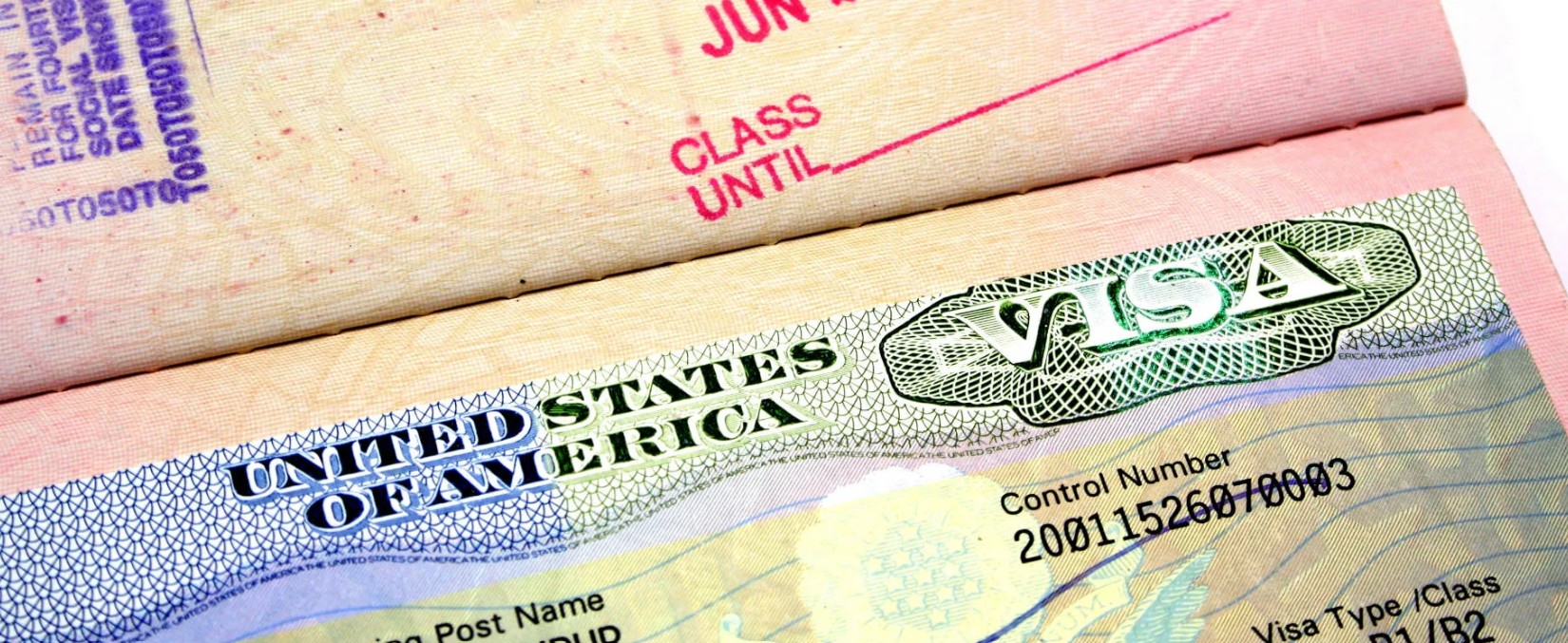
The United States has announced one of its most significant overhauls of non-immigrant visa rules in decades, replacing the long-standing “Duration of Status” framework with fixed periods of admission for international students, exchange visitors and foreign journalists.
The Department of Homeland Security (DHS) said holders of F (student), J (exchange visitor) and I (media) visas will now be admitted for defined periods instead of being allowed to remain in the country as long as they continue to meet the conditions of their academic programme or professional assignment.
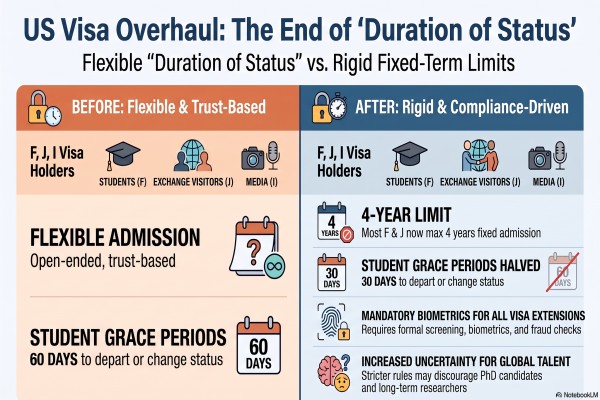
Under the new rules, most F and J visa holders will be granted admission for the duration of their programme, subject to a maximum of four years. Those requiring additional time will need to apply for an Extension of Stay through the U.S. Citizenship and Immigration Services (USCIS), which includes biometric verification, background checks and fraud screening.
The reforms also reduce the post-completion grace period for F-1 students from 60 days to 30 days, while foreign journalists on I visas will be limited to stays of 240 days. Chinese nationals in the same category will be restricted to 90-day admissions before seeking extensions.
The regulations are expected to take effect 60 days after publication in the Federal Register, subject to Congressional review.
The DHS said the changes are intended to strengthen immigration oversight and prevent misuse of the student visa system. Officials argue that replacing open-ended admissions with fixed periods will improve monitoring, regular vetting and national security.
Immigration experts, however, say the reforms will significantly reshape how international students, researchers and media professionals plan their careers in the United States.
Speaking exclusively to StratNewsGlobal, Lovleen Gill, a barrister based in British Columbia, described the move as “one of the most significant changes to the U.S. international mobility system in decades.”
While recognising every country’s right to secure its borders and protect the integrity of its immigration system, Gill said the reforms are likely to introduce greater uncertainty for international students, researchers, exchange visitors and foreign media professionals.
“The United States became a global innovation powerhouse not only because of its institutions but because it consistently attracted exceptional talent from across the world,” he said. “Engineers, scientists, physicians, entrepreneurs and international students have contributed immensely to American universities and technological advancement.”
Gill said that while stronger safeguards against fraud are a legitimate policy objective, immigration systems should distinguish between those who abuse visa programmes and those who contribute to them.
He warned that doctoral candidates and researchers pursuing long-term academic programmes could be particularly affected as repeated extension applications would increase both financial costs and uncertainty.
“These developments may influence whether highly skilled students and researchers choose the United States at all,” Gill said. “Countries such as Canada, the United Kingdom and Australia, which offer greater transparency and more predictable immigration pathways, could become increasingly attractive alternatives. The nations that succeed in the coming decades will be those that balance strong immigration integrity with academic openness and global collaboration.”
Offering a global mobility perspective, Varun Singh, Managing Director of XIPHIAS Immigration, said the reforms represent a fundamental shift from a flexible immigration model to one driven by stricter compliance.
“The proposed changes represent one of the most significant shifts in the U.S. immigration framework for F, J and I visa holders in recent years,” Singh told StratNewsGlobal. “It marks a transition from a flexible, trust-based system to a more structured and compliance-driven model.”
Singh said the earlier Duration of Status framework allowed students, exchange visitors and journalists to remain in the country as long as they complied with the conditions of their approved programmes or assignments. Under the new system, visa holders will have to actively manage extension timelines rather than rely on their continuing academic or professional status.
He said a four-year limit may prove inadequate for PhD candidates, research scholars, medical residents and participants in lengthy academic programmes. The shorter post-study grace period would also leave graduates with less time to transition into employment or another immigration category.
Long-term foreign correspondents are likewise expected to face increased administrative obligations as shorter admission periods require more frequent extension requests from both journalists and their sponsoring organisations.
Despite the tighter regulations, Singh said he does not believe the United States is turning away international talent.
“I do not see this as the U.S. closing its doors to global talent,” he said. “Rather, it reflects a stronger emphasis on immigration compliance and oversight.”
He added that universities, employers, programme sponsors and applicants would now need to adopt a far more proactive approach to maintaining immigration records, monitoring visa validity and planning extensions well in advance.
The changes carry particular significance for India, the largest source of international students in the United States. According to the Open Doors 2025 report, more than 363,000 Indian students were enrolled in U.S. colleges and universities during the 2024-25 academic year, accounting for nearly one-third of all international students in the country.
While the US administration says the reforms are necessary to improve oversight and curb abuse of the visa system, universities and immigration advocates argue that increased compliance requirements, additional costs and greater uncertainty could affect the country’s ability to attract global talent, particularly for long-duration research and graduate programmes.