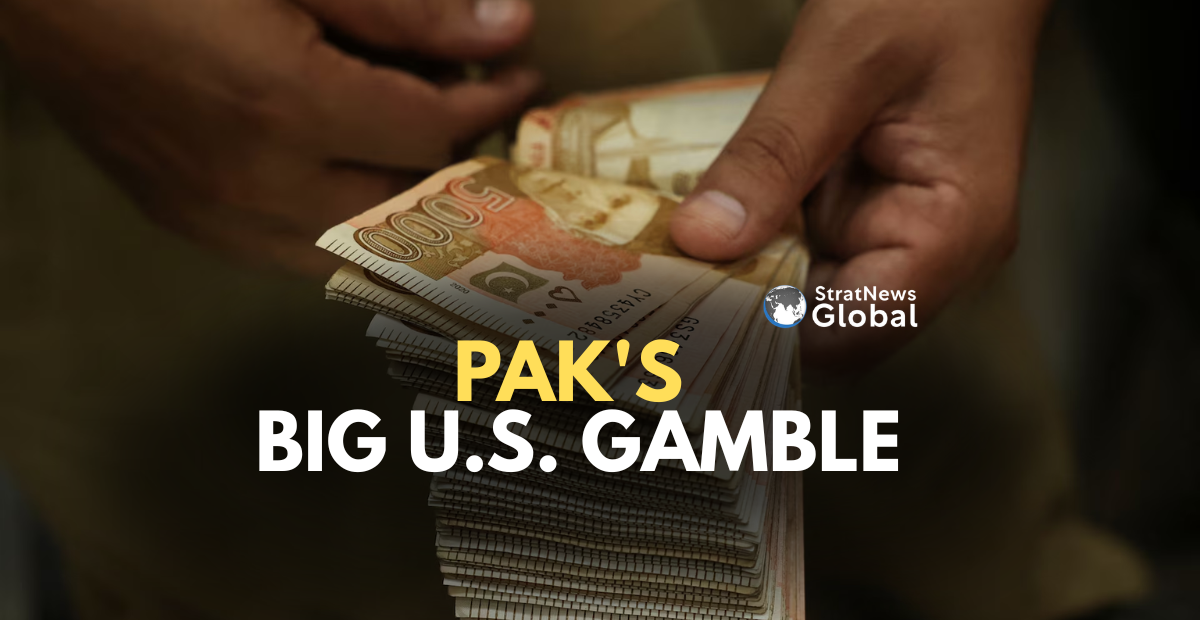
Pakistan has requested a $10 billion exchange stabilisation facility from the United States in a bid to strengthen its fragile economy, according to a source familiar with the matter. If approved, the rare financial arrangement would provide a significant boost to Islamabad’s foreign exchange reserves and ease pressure on the Pakistani rupee.
The request, reported for the first time, comes after Pakistan’s diplomatic role in facilitating talks during the recent Iran conflict, which raised hopes in Islamabad that closer engagement with Washington could translate into greater economic cooperation.
Rare U.S. Financial Backstop
According to the source, Pakistan has asked U.S. Treasury Secretary Scott Bessent to establish a Bilateral Exchange Stabilisation Support Facility worth $10 billion, with a repayment period of up to five years.
Unlike conventional IMF loans, such facilities are uncommon U.S. Treasury arrangements that provide dollar liquidity, guarantees or currency swaps to help countries stabilise their financial markets and foreign exchange reserves.
The U.S. Treasury declined to comment on the reported request, while Pakistan’s finance ministry did not immediately respond to Reuters outside business hours.
Talks in Washington
Pakistan’s Finance Minister Muhammad Aurangzeb met Bessent in Washington on Tuesday, where he highlighted Pakistan’s economic vulnerability amid regional geopolitical tensions.
According to Pakistan’s finance ministry, Aurangzeb sought greater U.S. support to improve Pakistan’s access to international capital markets, strengthen foreign exchange reserves and enhance the country’s sovereign credit rating.
Both sides also reaffirmed their commitment to expanding bilateral economic cooperation, encouraging greater U.S. investment and advancing strategic projects.
Reducing Reliance on the IMF
Pakistan remains under a $7 billion International Monetary Fund (IMF) programme that has required tax increases, tighter fiscal discipline and economic reforms.
A U.S.-backed stabilisation facility would reduce Islamabad’s dependence on periodic IMF disbursements and emergency financial support from friendly countries while strengthening confidence in Pakistan’s currency.
Exchange stabilisation facilities are rare. The last major new arrangement was extended to Argentina in 2025, while Uruguay received similar support in 2002. Mexico maintains a long-standing swap arrangement with the United States dating back to the 1940s.
Economy Still Vulnerable
Pakistan narrowly avoided default in 2023 after securing a $3 billion IMF standby programme before later obtaining a larger $7 billion Extended Fund Facility and an additional $1.3 billion climate resilience loan.
However, the country’s foreign exchange reserves continue to rely heavily on IMF financing and financial support from China, Saudi Arabia and other partners.
That vulnerability was exposed earlier this year when Pakistan repaid around $3.5 billion to the United Arab Emirates, equivalent to nearly one-fifth of its reserves, before receiving fresh financial assistance from Saudi Arabia.
Pakistan’s central bank has projected that reserves could recover to around $20 billion by the end of 2026.
Broader U.S.-Pakistan Engagement
Islamabad has been seeking to deepen economic ties with the Trump administration beyond traditional financial assistance.
Recent initiatives include cooperation in cryptocurrency, mining and infrastructure. Pakistan has signed a stablecoin agreement linked to World Liberty Financial, the crypto venture associated with President Donald Trump’s family, while also pursuing redevelopment of the Roosevelt Hotel in New York and attracting U.S. investment into the Reko Diq mining project.
The U.S. Export-Import Bank has already announced $1.25 billion in financing support for the Reko Diq project.
Despite recent economic stabilisation, analysts say Pakistan continues to face significant challenges, including weak foreign investment, security concerns, policy uncertainty and high borrowing costs, making external financial support crucial for sustaining economic recovery.
(with inputs from Reuters)