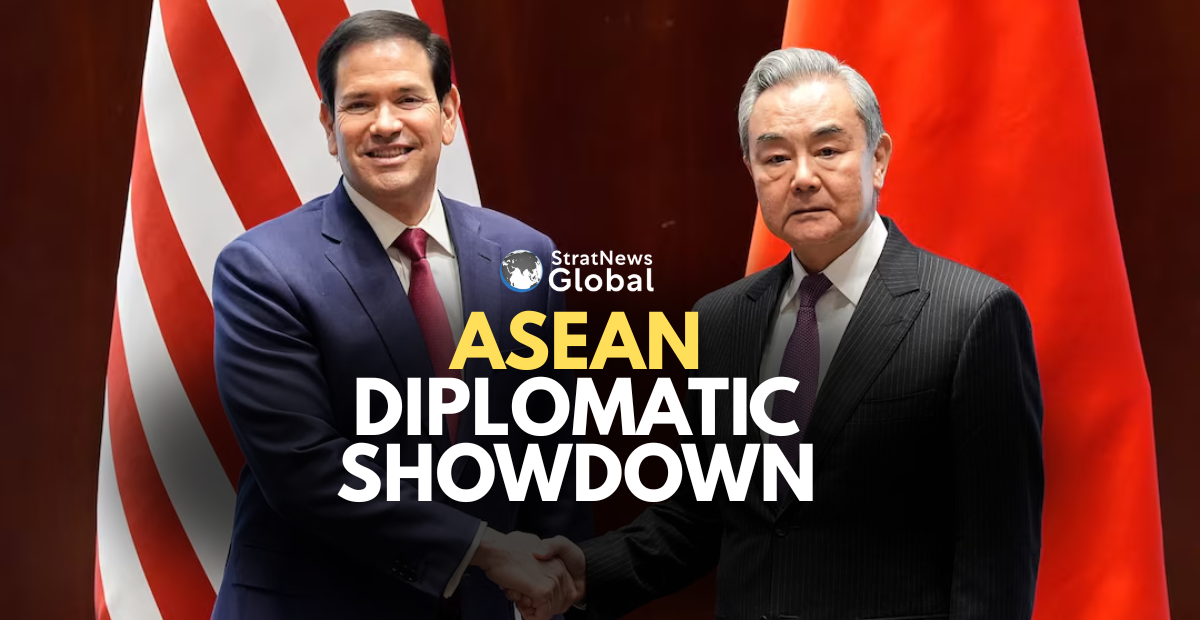
U.S. Secretary of State Marco Rubio is set to meet Chinese Foreign Minister Wang Yi on Wednesday on the sidelines of the ASEAN foreign ministers’ meeting in Manila, with preparations for a possible summit between U.S. President Donald Trump and Chinese President Xi Jinping expected to top the agenda.
The meeting comes as Washington and Beijing attempt to preserve a fragile diplomatic thaw following the Trump-Xi meeting in May, despite renewed tensions after Trump accused China last week of interfering in U.S. elections—an allegation Beijing has firmly denied.
Trump-Xi Summit in Focus
Diplomatic observers expect Rubio and Wang to discuss plans for a second meeting between Trump and Xi, which Trump has said could take place in the United States at the end of September.
Rubio recently said the summit remains on track, making the Manila meeting an important step in preparing for another round of high-level engagement between the world’s two largest economies.
Iran Conflict Overshadows ASEAN
The broader ASEAN gathering is unfolding against the backdrop of renewed fighting between the United States and Iran, raising concerns across Southeast Asia over energy security and global economic stability.
Meeting ASEAN foreign ministers on Wednesday, Rubio said Washington remained open to negotiations but questioned Tehran’s willingness to engage seriously.
“If they’re serious, we’re serious. If they’re not, then we will do what’s necessary to protect our interests, and also the interests of our allies,” Rubio said.
He also warned that Iran must never be allowed to control the Strait of Hormuz, arguing that doing so would create a dangerous precedent that could threaten maritime security elsewhere, including in Southeast Asia.
South China Sea Tensions Escalate
Regional maritime disputes are also expected to feature prominently during the talks after fresh diplomatic friction erupted between China and the Philippines over an incident in the South China Sea that led both countries to summon each other’s ambassadors.
Ahead of the meeting, Rubio reaffirmed Washington’s commitment to freedom of navigation in an opinion article published in Philippine newspapers.
“That freedom is by no means guaranteed. If those waters fall under the control of a power willing to use commerce as a geopolitical weapon, both the United States and the ASEAN states would face dire new threats to their sovereignty, security and economic futures,” Rubio wrote.
China claims sovereignty over most of the South China Sea, overlapping with the exclusive economic zones of the Philippines, Vietnam, Malaysia, Brunei and Indonesia.
Wang Blames ‘External Forces’
On the sidelines of the ASEAN meetings, Wang Yi is also scheduled to meet Philippine Foreign Secretary Maria Theresa Lazaro.
During talks with ASEAN Secretary-General Kao Kim Hourn on Tuesday, Wang accused elements within the Philippine security establishment of deliberately provoking maritime incidents in the South China Sea.
According to China’s account of the meeting, Wang said such actions served the interests of “external forces” and stressed that disputes in the South China Sea should not undermine China’s broader relationship with ASEAN.
He added that Beijing remained willing to work with ASEAN members to remove “interfering factors” affecting regional cooperation.
Major Powers Gather in Manila
Besides the United States and China, senior diplomats from Australia, India, Japan, South Korea, Canada, Russia, Britain and the European Union are attending the ASEAN-led meetings, which have become one of the Indo-Pacific’s most important diplomatic platforms.
With U.S.-China relations, South China Sea disputes and the conflict involving Iran all converging, the Manila meetings are expected to shape the diplomatic agenda ahead of a possible Trump-Xi summit later this year.
(with inputs from Reuters)