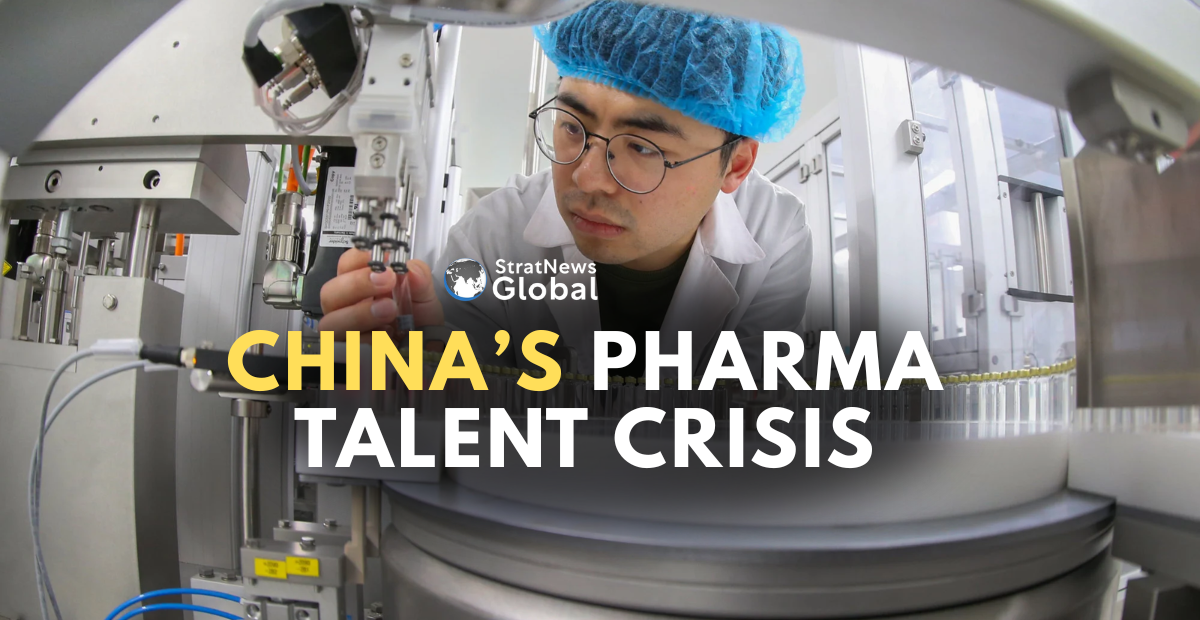
China’s pharmaceutical industry is rapidly emerging as a global innovation hub, but leading drugmakers are struggling to recruit the internationally experienced workforce needed to bring their medicines to overseas markets.
Companies including Jiangsu Hengrui Pharmaceuticals and CanSino Biologics say the shortage of specialists in global clinical development, regulatory affairs and international commercialisation has become one of the biggest obstacles to their global ambitions.
The challenge comes as China has transformed into one of the world’s largest centres for developing next-generation medicines. However, industry executives say talent capable of navigating international drug approvals and overseas product launches has not kept pace with the industry’s rapid expansion.
Domestic Success, Global Challenge
According to healthcare research firm IQVIA, 88% of clinical trials sponsored by Chinese companies in 2025 were conducted exclusively within China, while only 5% were carried out in the United States.
The imbalance highlights the hurdles Chinese drugmakers face as regulators in major markets increasingly demand clinical data from more diverse patient populations.
The U.S. Food and Drug Administration has recently declined approval for some drugs tested only in China, instead encouraging multi-regional clinical trials that better represent American patients and medical practices.
Industry Leaders Warn of Talent Shortage
Sun Piaoyang, chairman of oncology and metabolic disease specialist Hengrui Pharmaceuticals, said expanding overseas requires professionals with expertise in multinational clinical trials, international regulatory approvals and commercialisation.
He said the shortage of people with international development experience and cross-cultural management skills is becoming a common challenge across China’s biopharmaceutical industry.
CanSino Biologics CEO Yu Xuefeng echoed those concerns, saying specialists capable of handling overseas clinical trials, preparing submissions for multiple regulators and managing international marketing remain in short supply.
He noted that China has relatively limited experience in taking innovative medicines to global markets, making the development of such talent particularly difficult.
China’s Biotech Rise Outpaces Workforce
Industry experts say the recruitment challenge is especially severe in China because of the speed of the country’s pharmaceutical expansion.
A recent survey by research organisation ICON found biotech professionals in the Asia-Pacific region were nearly three times more likely than their global counterparts to report talent shortages affecting operations.
China-headquartered companies now account for 32% of global clinical trials, up dramatically from just 2% in 2009, according to IQVIA data.
Meanwhile, licensing deals involving Chinese pharmaceutical companies have surged from $318 million in 2016 to around $138 billion in 2025, according to data from Pharmcube, reflecting growing international demand for Chinese-developed medicines.
Building International Teams
To address the shortage, Chinese drugmakers are expanding recruitment overseas and strengthening internal training programmes.
Sun said Hengrui plans to invest more heavily in developing global talent while continuing international recruitment, although competition for experienced professionals has driven hiring costs significantly higher.
CanSino said it has relied on international advisers to help strengthen its regulatory and clinical development capabilities.
Meanwhile, Shanghai Henlius Biotech has established dedicated clinical and regulatory affairs teams in the United States, Europe, Japan and Australia, enabling it to manage overseas clinical trials more independently.
Regulators Seek More Diverse Clinical Data
Former FDA oncology chief Richard Pazdur said multinational clinical trials allow regulators to compare treatment outcomes across different countries and determine whether variations are caused by ethnic differences, medical practices or data quality.
Japan’s Pharmaceuticals and Medical Devices Agency also requires clinical data from Japanese patients for most new drug approvals rather than relying solely on studies conducted in China.
Experts say these requirements make international expertise increasingly important for Chinese pharmaceutical companies seeking regulatory approval abroad.
Global Expansion Continues Despite Challenges
Recruitment specialists say the talent shortage is unlikely to derail China’s pharmaceutical expansion but could slow overseas execution and increase reliance on foreign partners.
Nihar Parikh of U.S.-based Smith Hanley Associates said Chinese companies are experiencing more operational friction than outright failures in international expansion.
Some senior candidates also remain cautious about joining China-based firms because of uncertainty over long-term overseas strategies, while compensation packages can still lag behind major U.S. and European pharmaceutical companies.
James Nyssen, Global Head of Life Sciences at Hays, said Chinese drugmakers that clearly communicate their long-term international vision remain highly competitive in attracting experienced global professionals.
As Chinese pharmaceutical companies continue to expand their international footprint, industry leaders say building a globally experienced workforce will be just as important as developing breakthrough medicines.
(with inputs from Reuters)