Strange but true: in Jan 2024, Ethiopia on the Horn of Africa, known mostly for cycles of violent regime change and civil war, banned the import of petrol and diesel vehicles, deeming them a drain on the country’s foreign exchange.
Instead, it mandated the use of electric vehicles only and since an estimated 90% of the country’s electricity comes from the Grand Renaissance Dam, it’s green power all the way.
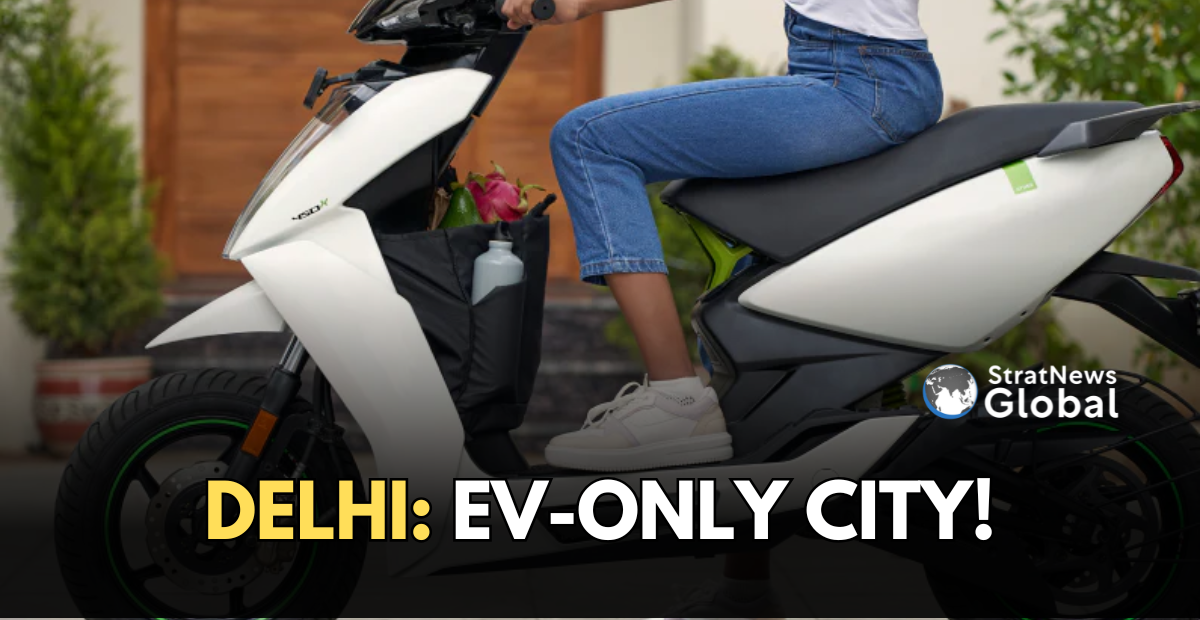
India is attempting something along those lines. The new EV Policy mandates that from 1st January 2027, only electric three-wheelers and light commercial vehicles will be registered to ply in Delhi. And from 1st April 2028, only electric two-wheelers will be registered in the city, new petrol fuelled two-wheelers are out. The goal is to achieve at least 30% electrification of Delhi’s total vehicle fleet by 31st March 2030.
In Europe, there are no moves to ban fossil fuel vehicles but to restrict them. However, by 2035 90% of new cars sold must be zero emission. The balance 10% can run on petrol or diesel.vehicles.
Critics say the move by the Delhi government is not fair to thousands of people whose livelihoods depend on two and three-wheelers that generally run on petrol. Of course some are hybrids, running on CNG and petrol.
But the EV policy reflects the authorities need to show to the people of Delhi that the BJP government is serious about cleaning up the air. Studies have shown that petrol and diesel vehicles are highly polluting, contributing to particulate matter and nitrogen oxides in the atmosphere and causing a rise in respiratory illnesses.
The hitch of course is that while the new EVs will be as green as they come, since Delhi’s power comes from the coal-and-gas based northern and eastern grids, the green acquires a shade of red!
The authorities have assured that Delhi Transco Ltd. will develop charging infrastructure in coordination with the power department and distribution companies.
What about car makers, how are they reacting to this EV only policy in what is one of the biggest car markets in India?
A senior auto industry executive said manufacturing may not be an issue, given that the government has supported large Indian auto firms such as Tata, Mahindra, Bajaj and TVS with nearly Rs. 25,000 crore through a PLI scheme so as to be able to fulfill this mandate. However, he believes that complete adoption cannot be achieved without home-charging being made available.
“We must think of EVs as electrical gadgets which also happen to provide mobility. Currently, the government must encourage more charging infrastructure in the city, but also remember that it is impossible to constantly create a charging infrastructure at a commercial level. In the long run, it must allow people to charge at home.”
Another change he believes can be made is to make the battery’s State of Health (SoH) public. SoH measures a battery’s overall condition and degradation over time, expressed as a percentage compared to a brand-new battery. This could be a score like Cibil, which will allow consumers to better understand their battery’s condition and provide transparency, which we currently lack.
The third aspect the expert touched upon as crucial for launching EVs as a trustworthy alternative, is establishing a successful second-hand market for them. “Without it, your first-hand market will not grow eventually. It will just remain static or slowly start, even collapsing.”
Today, the EV industry runs that risk, where most of the vehicles that consumers bought 5-7 years back are at a stage where they need to be resold. If they don’t get a fair price, they will switch to petrol/diesel vehicles, and the trust in EVs will be lost.
These changes all require deeper initiative or reforms from the government. The big challenge, which is not being talked about now, is when the shift to EVs has to happen nationwide. EV only transport in Delhi alone does not solve the problem of air and noise pollution all over India, especially northern India.
A nation-wide effort is required to clean India’s air. Ethiopia has shown the way.