The U.S. military launched a fresh wave of strikes against Iran on Tuesday and revoked a license that had allowed Tehran to sell oil, after three tankers were struck by projectiles in the Strait of Hormuz, adding strain to an already fragile ceasefire.
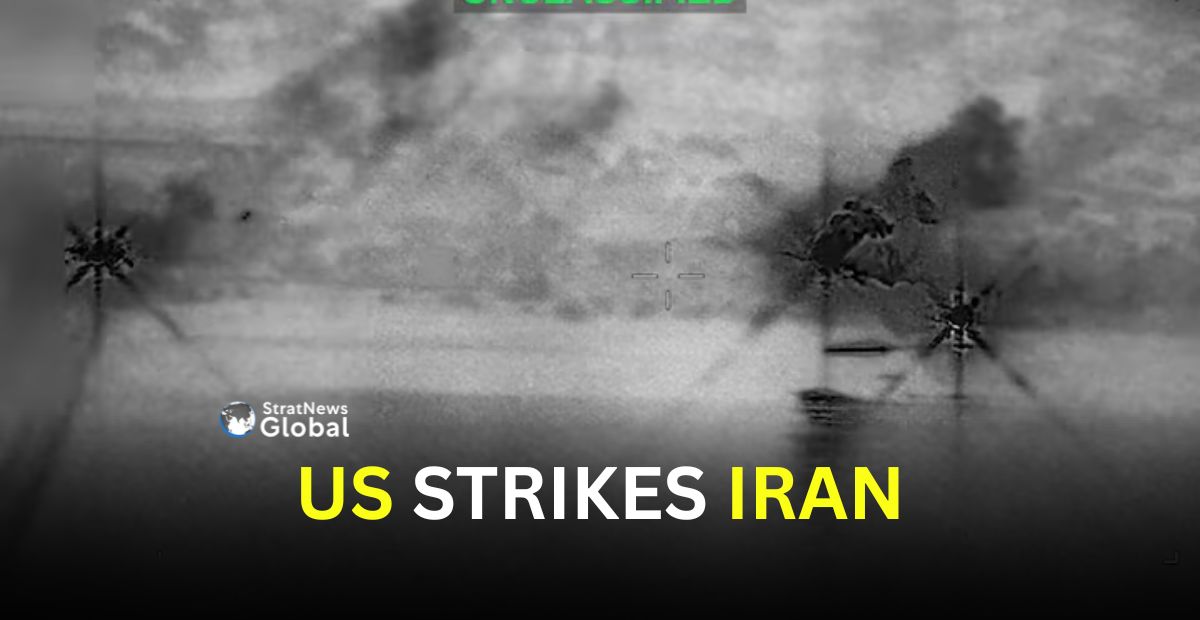
The attacks came after massive crowds gathered in the holy city of Qom to mourn Iran’s slain Supreme Leader, Ayatollah Ali Khamenei. The U.S. Central Command said it had carried out strikes on more than 80 targets to impose what it described as significant costs on Iran. It added that over 60 small boats belonging to the Islamic Revolutionary Guard Corps were destroyed to weaken Tehran’s ability to target commercial shipping.
“The unwarranted aggression by Iranian forces is a clear and dangerous violation of the ceasefire and undermines freedom of navigation,” CENTCOM said in a statement.
Iran’s top joint military command, Khatam al-Anbiya Central Headquarters, denounced the U.S. strikes as a “blatant act of aggression,” threatened a “crushing response,” and warned that Tehran would not allow U.S. interference in the management of the strait.
Explosions Reported as Oil Sanctions Return
Iranian media reported explosions early Wednesday on Kharg Island, Qeshm Island, and the southern port cities of Sirik and Bandar Abbas. While no civilian deaths were reported, several people were injured after an “enemy projectile” struck a commercial pier in Sirik. Fishing piers in Sirik and Bandar Abbas were also hit, setting several boats on fire.
A U.S. official said the strikes targeted Iranian air defense systems, coastal surveillance sites, surface-to-air missiles, anti-ship cruise missiles, and drone launch locations. The attacks further strained the fragile ceasefire reached last month after the U.S. and Israel launched strikes on Iran.
In a major escalation, Washington also revoked a license that had allowed Iran to sell oil internationally, giving Tehran until July 17 to wind down transactions. The move sent oil prices up more than 3%.
Any Measure Necessary
Iran’s foreign ministry condemned the move as a breach of the framework agreement to end the war and said Washington would bear responsibility for the consequences.
The ministry said early on Wednesday that Iran would take any measure it deemed necessary to safeguard its interests and national security.
Qatar blamed Iran for attacking the vessels, including the huge Qatari liquefied natural gas tanker, the Al Rekayyat, which reported being struck overnight by a drone that caused a fire in its engine room. The crew were safe and being evacuated.
A Saudi-flagged oil tanker was also damaged off the coast of Oman, though the cause remains unclear. Qatar lodged a formal protest with Iran, while Tehran denied responsibility and said commercial vessels faced risks if they used routes not coordinated with Iranian authorities.
The incidents further undermined the fragile ceasefire, with U.S. officials saying Iran may have fired at three commercial ships. Meanwhile, indirect U.S.-Iran talks in Qatar ended without progress, and President Donald Trump warned of renewed military action if no permanent deal is reached. Iran responded that negotiations cannot move forward while military threats persist.
(With inputs from Reuters)