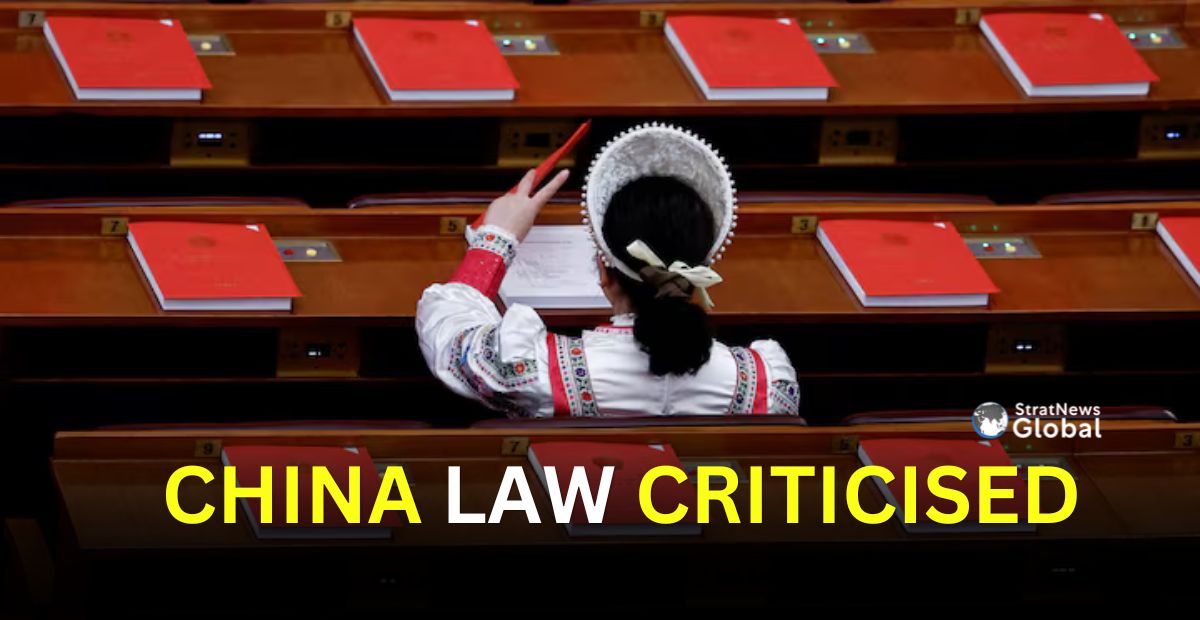
The European Union on Thursday voiced concern over China’s new ethnic unity law, which came into effect this week and provides Beijing with a legal framework to take action against individuals beyond its borders.
Passed in March, the law aims to promote a “shared” national identity among China’s 55 officially recognised ethnic minority groups, including Tibetans and Uyghurs. Some members of these communities have long opposed Chinese rule and, over the years, have staged protests, some of which turned violent.
The new law, which went into effect on Wednesday, includes a clause saying people and groups beyond the borders of the People’s Republic of China can be held legally accountable for undermining “ethnic unity and progress or inciting ethnic separatism”.
Concerns over the New Ethnic Unity Law
In a statement, an EU spokesperson said the new law may further restrict the cultural, linguistic and religious rights of ethnic minorities.
Such rights should be upheld in line with international human rights standards and China’s commitments within the U.N. framework, the spokesperson added.
“We are concerned about the extraterritorial application of the law. The EU opposes the extraterritorial application of third-country legislation in breach of international law,” the spokesperson said.
“We call on any third country to refrain from attempts to conduct transnational repression within the European Union or elsewhere.”
A senior Chinese official said last week that the government has a right to hold accountable people outside of its borders who contravene the law, adding that this was in line with international practice, and was legal and necessary.
Taiwan, Rights Groups Alarmed
Rights groups have previously complained that China has tried to use Interpol “red notices” to try and get foreign governments to arrest people abroad it wants for political offences at home.
The law has also sparked alarm in Chinese-claimed Taiwan in particular that it could give Beijing another legal basis to go after Taiwanese it views as separatists.
In a separate statement on Thursday, Taiwan’s China-policy making Mainland Affairs Council said the government will work with like-minded countries “to resist the Chinese communists’ threats”.
China’s legal system has no jurisdiction or authority in Taiwan, whose government rejects China’s sovereignty claims.
(With inputs from Reuters)