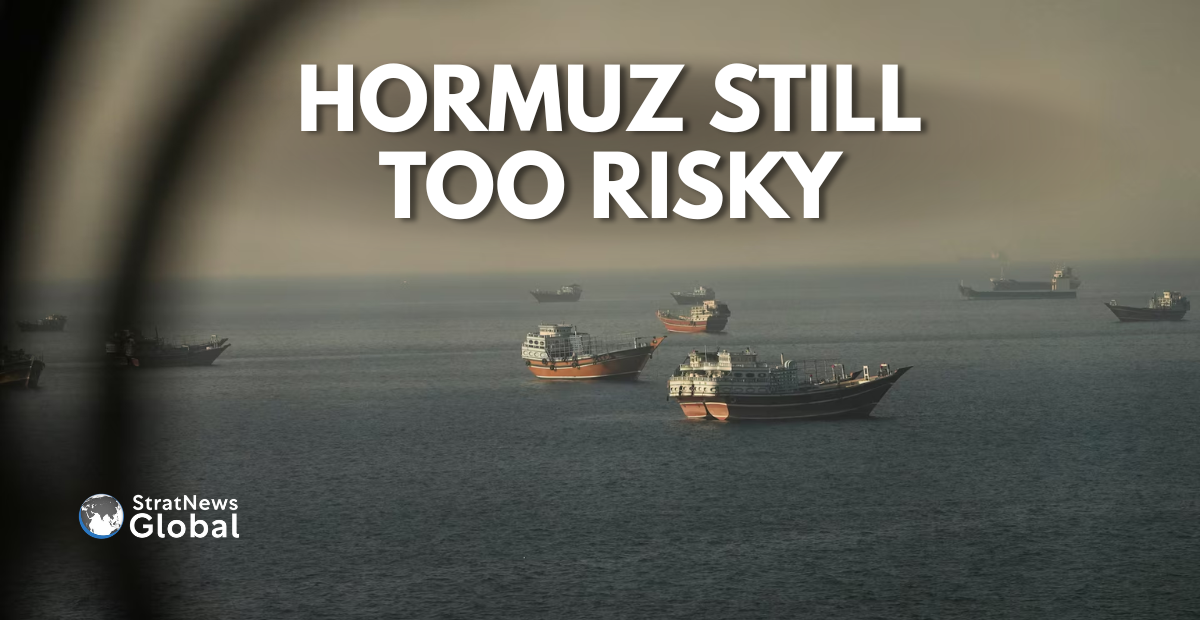
Major shipping companies are unlikely to resume regular transit through the Strait of Hormuz anytime soon, even after the United States and Iran announced a framework peace agreement aimed at ending months of conflict.
Speaking to the Financial Times, Jotaro Tamura, CEO of Japanese shipping giant Mitsui O.S.K. Lines, said shipowners would wait until they were convinced that the agreement was both credible and durable before sending vessels back through the strategically vital waterway.
The Strait of Hormuz normally handles around one-fifth of global oil and liquefied natural gas shipments. However, the conflict that erupted in late February has severely disrupted maritime traffic, affecting energy supplies as well as the transport of commodities such as aluminium and urea.
Weeks of Delay Expected
Tamura told the newspaper that, based on recent experiences, shipping firms would likely need “at least a couple of weeks or if not a month” before considering a return to normal operations.
According to the report, the subsequent announcement of a US-Iran peace deal has not materially altered that assessment.
In a statement provided to Reuters, Mitsui O.S.K. reiterated that operations would not resume until safety conditions had been thoroughly verified.
“We recognise that there are signs of movement toward a ceasefire. However, operations will not be resumed until safety has been sufficiently confirmed,” the company said.
The firm added that any decision to restart voyages through the strait would require close coordination with governments, insurers and other industry stakeholders.
Strategic Route Remains Critical
Mitsui O.S.K., one of Japan’s three largest shipping companies, operates a fleet of more than 900 vessels, including oil tankers, bulk carriers and ferries.
While US President Donald Trump claimed on Monday that oil tankers had begun moving through the waterway via what he described as a safe southern route, shipping executives remain unconvinced that the risks have fully subsided.
For now, industry leaders appear to be prioritising caution over speed, suggesting that the recovery of commercial shipping through one of the world’s most important maritime chokepoints could take considerably longer than political announcements alone might indicate.
(with inputs from Reuters)