Governments and international organisations across the world welcomed a framework agreement announced by the United States and Iran aimed at ending months of conflict, reopening the Strait of Hormuz and creating a pathway for broader negotiations.
The deal, unveiled on Sunday, includes an immediate ceasefire, the lifting of restrictions affecting maritime traffic through the strategic waterway and a commitment to continue diplomatic talks on outstanding issues.
UN Calls Agreement a Critical Step
The United Nations described the breakthrough as an important move towards ending the conflict.
A spokesperson for UN Secretary-General António Guterres said the agreement represented a significant opportunity for a peaceful resolution and praised both sides for committing to further negotiations.
European Leaders Focus on Security and Navigation
Britain, France, Germany and Italy issued a joint statement supporting the framework while reiterating their long-standing position that Iran must not acquire nuclear weapons.
European leaders also stressed the importance of restoring unrestricted navigation through the Strait of Hormuz, a route that carries a substantial share of global energy exports.
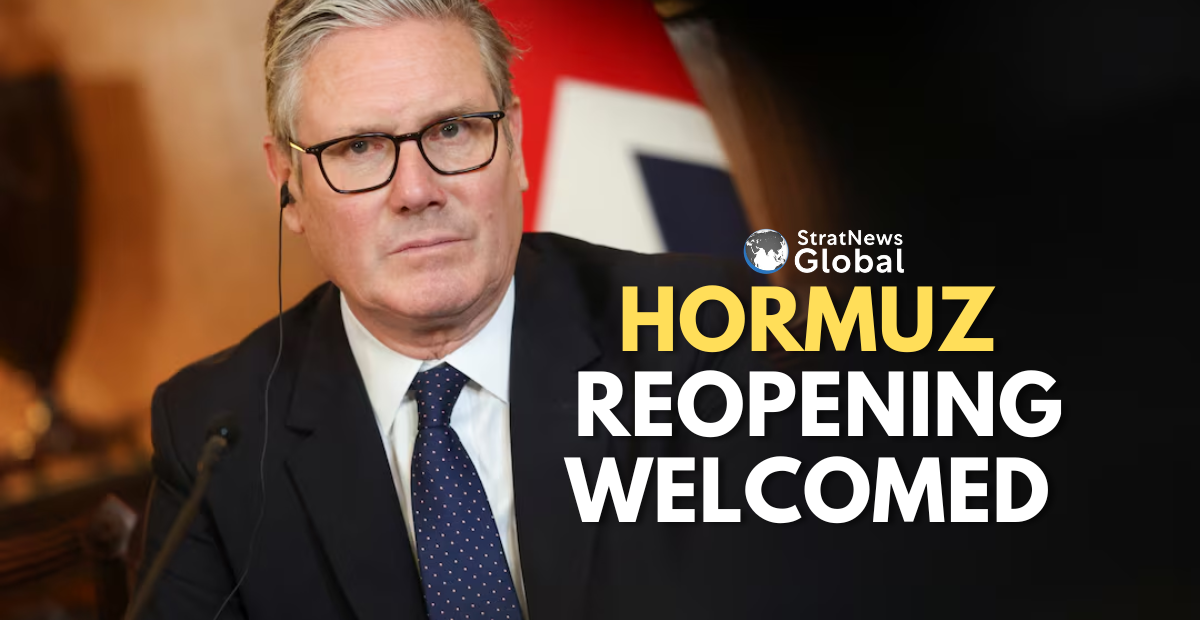
British Prime Minister Keir Starmer, French President Emmanuel Macron, German Chancellor Friedrich Merz and European Commission President Ursula von der Leyen all called for the agreement to be implemented quickly and fully.
Macron said the accord should lead to the immediate reopening of the strait, while von der Leyen described freedom of navigation as essential for both regional stability and the global economy.
Regional Stability Remains a Priority
Italian Prime Minister Giorgia Meloni welcomed the diplomatic breakthrough and thanked mediators, particularly Qatar and Pakistan, for helping facilitate the talks.
She said Italy was prepared to support future diplomatic efforts and contribute to international maritime initiatives designed to ensure safe passage through the Strait of Hormuz.
Meloni also emphasised the need for an end to hostilities in Lebanon, describing broader regional stability as a key objective.
Turkish President Recep Tayyip Erdoğan similarly welcomed the agreement, calling it an important step towards peace in the Middle East. He urged all parties to avoid actions or rhetoric that could undermine the fragile progress achieved through negotiations.
Asia-Pacific Leaders Voice Support
Leaders across the Asia-Pacific region also endorsed the framework.
Australian Prime Minister Anthony Albanese said Canberra had consistently supported de-escalation and viewed the agreement as an opportunity to reduce tensions across the region.
Japanese Prime Minister Sanae Takaichi expressed hope that maritime traffic through the Strait of Hormuz would resume safely and that a final settlement on Iran’s nuclear programme could be achieved.
New Zealand Foreign Minister Winston Peters described the agreement as a constructive development that could help improve stability in a region vital to global economic security.
Focus Turns to Implementation
While reactions were overwhelmingly positive, many leaders stressed that the success of the framework would depend on its implementation.
Several governments highlighted the importance of reopening the Strait of Hormuz, preventing further military escalation and advancing negotiations on Iran’s nuclear activities.
The agreement is widely being viewed as a major diplomatic breakthrough after months of conflict that disrupted energy markets, threatened international shipping and heightened tensions across the Middle East.
Attention will now shift to whether both Washington and Tehran can translate the framework into a lasting and comprehensive peace settlement.
(with inputs from Reuters)