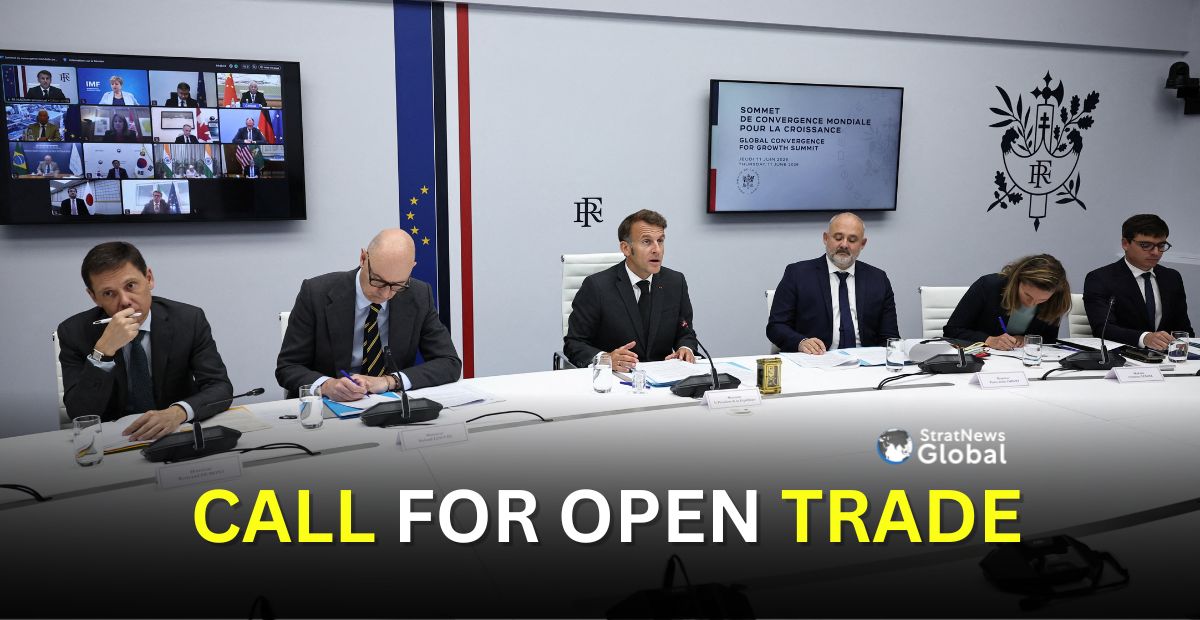
China’s vice premier called for greater economic cooperation and inclusive growth during a video conference hosted by French President Emmanuel Macron on global economic imbalances, just days before G7 leaders are set to discuss concerns over a surge of low-cost Chinese exports entering their markets.
During the meeting on Thursday, Chinese Vice Premier Zhang Guoqing advocated for a free and open trading environment and stressed the importance of objectively recognizing the comparative advantages of different countries, according to China’s state news agency Xinhua.
Macron, who is hosting the G7 summit in Evian-les-Bains, France, next week, has sought to engage with Beijing in a last-ditch attempt at a cooperative approach before the European Union decides whether to toughen its trade policy towards China, French officials say.
EU leaders will meet immediately after the June 15 to 17 G7 gathering, with China set to feature prominently on the agenda.
‘Global Convergence for Growth’
Zhang’s inclusion in the so-called “Global Convergence for Growth” video conference, which was announced by a Chinese foreign ministry spokesperson, is an unusual instance of China engaging with the G7, which comprises France, Britain, Canada, Germany, Italy, Japan and the United States, alongside the EU.
China has long argued that the G7 lacks legitimacy and does not adequately represent the global order.
Meanwhile, concerns are growing in Europe over China’s record trade surplus and rising exports of electric vehicles, batteries, and other high-tech goods, which many fear could undercut European industries.
Beijing rejects claims that its exporters benefit unfairly from state subsidies and accuses other countries of violating trade rules through unilateral tariffs.
Despite ongoing high-level talks between China and several G7 members, European countries remain divided on how to respond. While France has urged China to help rebalance trade ties, Germany has traditionally resisted tariffs, though increasing competition from Chinese automakers is prompting calls for a tougher approach.
(With inputs from Reuters)