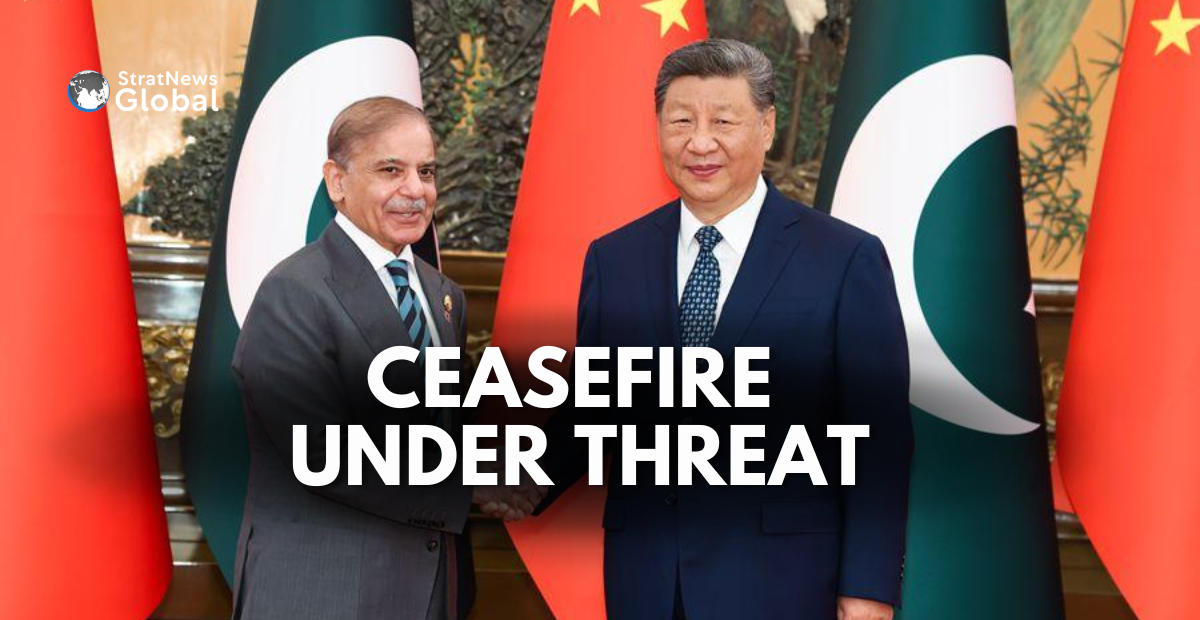
Pakistan stepped up diplomatic efforts on Thursday to hasten US-Iran peace talks, with Army Chief General Asim Munir travelling to Tehran and Prime Minister Shehbaz Sharif set to visit China from May 23 to 26, as President Donald Trump warned he could resume attacks on Iran if he did not receive the right answers “in a few days.”
Six weeks since a fragile ceasefire took effect, talks to end the war have made little progress.
Soaring oil prices have raised serious concern over global inflation, and Trump faces domestic pressure ahead of November’s midterm elections, with his approval rating dropping close to its lowest since he returned to the White House.
“Either have a deal or we’re going to do some things that are a little bit nasty, but hopefully that won’t happen,” Trump told reporters.
Racing Against Trump’s Patience
Three sources familiar with the negotiations told reporters that Pakistan’s interior minister was already in Tehran on Wednesday, with Munir following on Thursday.
“We’re speaking to all the various groups in Iran to streamline communication and so things pick up pace,” one source said, adding, “Trump’s patience running thin is a concern, but we’re working on the pace at which messages are relayed from each side.”
Iran submitted its latest offer to Washington this week, though Tehran’s terms are said to largely repeat conditions Trump has previously rejected, including demands for control of the Strait of Hormuz, compensation for war damage, lifting of sanctions, release of frozen assets and withdrawal of US troops.
Iran’s Revolutionary Guards meanwhile warned that if aggression against Iran is repeated, “the promised regional war will extend beyond the region this time.”
The Hormuz Factor And Beijing’s Role
The Strait of Hormuz, which carried a fifth of global oil and gas shipments before the war, has been all but closed since hostilities began, causing the most serious disruption to global energy supplies in history.
Iran this week released a map showing a “controlled maritime zone” at the strait, saying transit would require authorisation and potentially fees, which Washington has called unacceptable.
Two Chinese supertankers carrying roughly four million barrels of oil transited the strait on Wednesday.
China’s foreign ministry confirmed Prime Minister Sharif’s four-day Beijing visit, following Pakistan’s Foreign Minister’s trip there in late March.
China, which brokered the 2023 Saudi-Iran rapprochement, has deep energy interests in keeping the strait open, and Islamabad and Beijing appear to be closely coordinating their approach to the crisis.
A Narrow Window
Pakistan’s push for diplomatic relevance comes as its own import-dependent economy bleeds from surging oil prices.
Whether Islamabad’s mediation yields results remains uncertain, but with Trump’s patience visibly thinning and Iran yet to offer terms Washington will accept, the window for a negotiated outcome is narrowing fast.
(with input from Reuters)