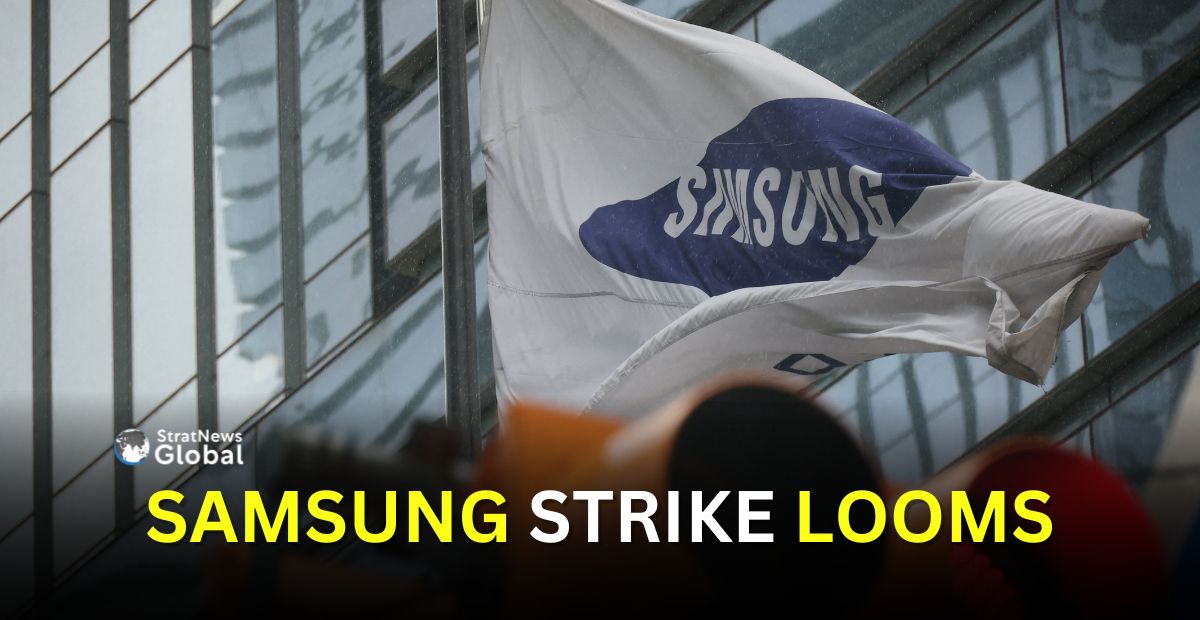
Around 48,000 workers at Samsung Electronics are set to go on strike Thursday after talks over bonus payments collapsed, a move that could disrupt South Korea’s economy and global chip supplies.
However, hopes for a breakthrough remain after negotiations resumed Wednesday afternoon under the mediation of Labour Minister Kim Young-hoon.
Earlier in the day, union leader Choi Seung-ho told reporters that the union had accepted a final proposal presented by the head of the National Labor Relations Commission, but the 18-day strike would go ahead as management had not come round on one remaining sticking point.
Samsung Says Demands Are Unacceptable
Samsung said in a statement that the union had insisted on “unacceptable demands” that included the size of bonuses for loss-making units.
Samsung shares ended up 0.2% and have lost 2.8% for the week to date. Some investors have said they are more concerned about the prospects of a permanent spike in labour costs than they are about the one-off costs of the strike.
Emergency Arbitration Or Not?
Much attention will now turn to whether the government will step in and order emergency arbitration as it warned it might do at the weekend, citing the potential damage the strike could inflict on the economy.
Samsung accounts for almost a quarter of South Korea’s exports and is also the world’s largest memory chip maker so production disruptions are likely to further fuel price rises at a time when the AI boom has caused shortages.
An emergency arbitration order, which has been rarely employed, would put the strike on hold for 30 days while the government mediates talks.
But a South Korean government official said on Wednesday that talk of emergency arbitration is premature and that there was still time for dialogue.
Criticism From President Lee
The exact sticking point remains unclear. The union is demanding that Samsung Electronics remove its 50% cap on bonuses, allocate 15% of annual operating profit to bonuses, and make the changes permanent rather than temporary.
Both sides have also disagreed over how to split performance bonuses between Samsung’s profitable memory division and its loss-making logic chip business.
South Korean President Lee Jae Myung said a union was “crossing the line” by demanding a share of operating profit even before taxes are paid.
Frustrated By Pay Gap With SK Hynix
Samsung remains a highly sought-after employer in South Korea, but workers are angered by a widening pay gap with rival SK Hynix, where bonuses are reportedly more than three times higher, driving employee exits and rising unionisation.
The planned strike by 48,000 workers—about 38% of Samsung’s domestic workforce—could, in a worst case, slightly affect South Korea’s economic growth, though analysts say supply chain impact may stay limited unless it drags on.
(With inputs from Reuters)