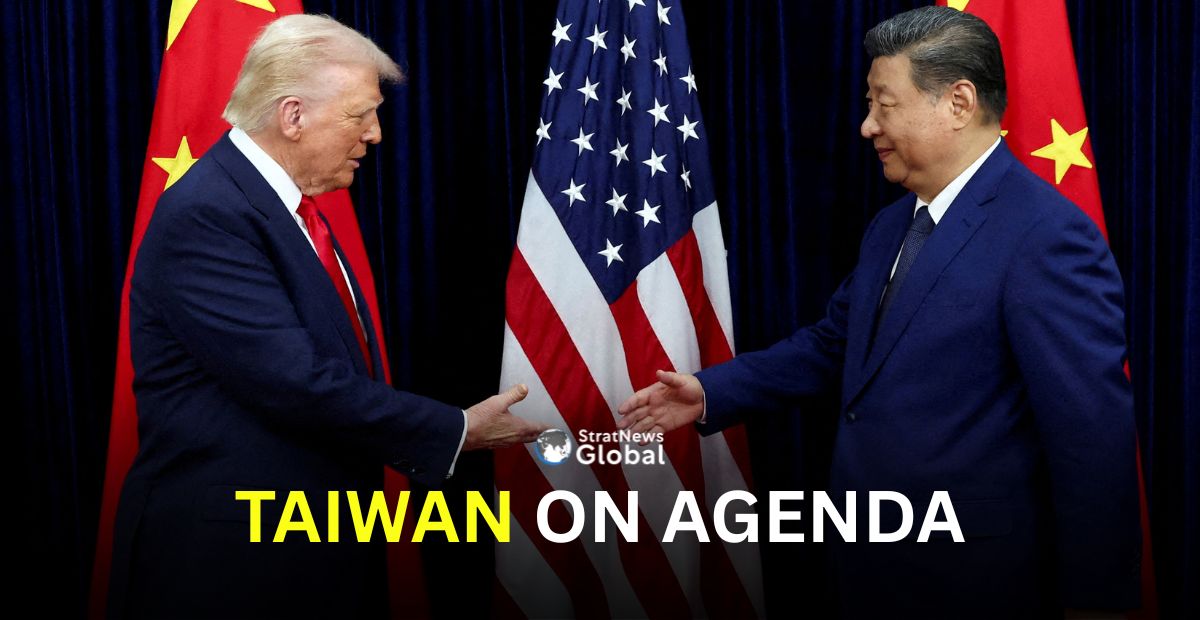
U.S. President Donald Trump said on Monday that he plans to raise the issues of U.S. arms sales to Taiwan and the imprisonment of media tycoon Jimmy Lai during talks with Chinese President Xi Jinping in Beijing later this week.
China claims the democratically governed island as its own, a contention Taiwan rejects. Washington follows a “one-China policy,” acknowledging China’s position but taking no view on Taiwan’s sovereignty.
The United States is Taiwan’s most important international backer and is bound by law to help with its defense.
The arms transfers have long been a source of friction in U.S.-China relations. In December, Trump announced the largest-ever U.S. weapons package for the island, more than $11 billion.
In recent days, the Republican president’s aides have urged Taiwan to commit even more money to its defense, and a U.S. official said the Trump-Xi summit signaled no change in policy toward Taiwan.
Speaking to reporters, Trump repeated his doubt that tension over the island would erupt during his presidency.
In Taipei, Taiwan Foreign Ministry spokesperson Hsiao Kuang-wei said the Trump administration has continued to reaffirm its support, including December’s $11-billion arms package.
Lai’s Imprisonment To Be Raised
Trump said he would bring up with his Chinese counterpart the case of Lai, a veteran pro-democracy advocate and Hong Kong’s most vocal China critic.
Lai was sentenced to 20 years in jail in February on two counts of conspiracy to collude with foreign forces and one count of publishing seditious materials.
Lai’s case had sparked global concerns over the national security clampdown in Hong Kong, in part reflecting his prominence as founder of the now-shuttered Apple Daily newspaper. Some foreign governments and international rights groups had criticized the impact of the security law in Hong Kong.
Trump also said he would bring up the case of Zion Church founder, Pastor Jin Mingri, who was arrested late last year.
The crackdown on Zion Church came after new rules from China’s top religion regulator banned unauthorized online preaching or religious training by clergy, as well as “foreign collusion.”
(With inputs from Reuters)