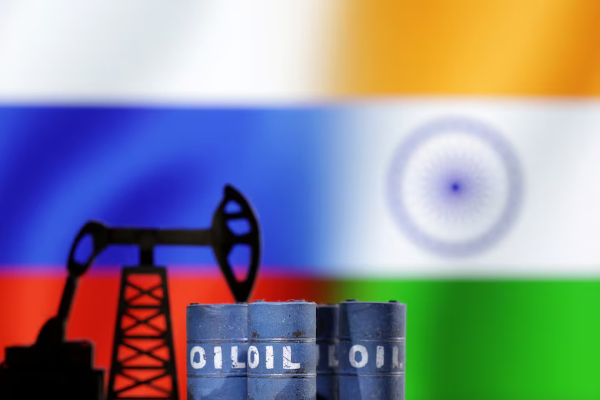
A short-term waiver issued by the United States allowing certain Russian oil shipments to reach India has reopened a larger debate about sovereignty in global energy trade and the vulnerability of India’s oil supply chain.
The US Treasury has issued General License No. 133 permitting the delivery and sale in India of Russian-origin crude and petroleum products that had already been loaded onto vessels before that date. The authorisation provides a limited window for such cargoes to be discharged in India.
US Treasury Secretary Scott Bessent said the measure was designed to prevent disruption in global energy flows. In a statement posted on social media, he said the waiver applies only to shipments already at sea and would not generate significant revenue for Russia.
The announcement offers temporary operational flexibility for Indian refiners. Yet the scope of the waiver is narrow. Since it covers only cargoes loaded before March 5, the volume involved is expected to be limited.
Beyond the immediate relief, the move has also raised questions in policy circles in India about the broader implications of relying on external approvals for energy trade.
Ajay Srivastava of the Global Trade Research Initiative said India’s purchase of crude from Russia is a bilateral commercial transaction between two sovereign states. Allowing a third country to determine whether such trade can proceed, he argued, effectively extends unilateral control over commerce between independent nations.
India’s dependence on imported oil makes the issue more pressing. Presently, India imports around 90 per cent of its crude requirements. According to reports, last year, 49 per cent of supplies came from West Asia, and Russia accounted for roughly 31.5 per cent.
Currently both Russia and West Asia are facing geopolitical strain, thus, increasing the risk of supply disruptions.
Major matter of concern is the Strait of Hormuz, that carries a large share of global oil exports. And, any prolonged disruption there could quickly tighten supplies and push up prices.
India’s strategic reserves offer limited protection against such shocks. Existing stockpiles are estimated to cover roughly a month of consumption.
Energy analysts say the latest waiver illustrates the fragility of the current arrangement. A country that relies on imports for most of its oil needs, they argue, cannot build long-term energy security around short-term permissions issued by foreign governments.
Global markets are already under pressure. The growing tensions in West Asia have disrupted production and threatened key infrastructure. Among the facilities recently affected are Saudi Aramco’s Ras Tanura Refinery and Iraq’s Rumaila Oil Field.
Oil prices have responded to the uncertainty, with Brent Crude trading above $80 a barrel. Despite the increase, government sources in New Delhi said there are no immediate plans to raise retail prices of petrol or diesel.
For India, the debate triggered by the waiver goes beyond a single shipment of oil. It highlights a strategic question: how a major energy importer can protect its supply lines in an increasingly fragmented geopolitical environment.