Events in Minnesota have now escalated beyond law and order, becoming a confrontation between a president prepared to deploy the U.S. Army and a governor asserting authority through the National Guard. The central issue is control over force within the United States, its constitutional basis, and the political objectives it may serve.
President Donald Trump has threatened to invoke the Insurrection Act and placed active duty soldiers on standby for possible domestic deployment. In response, Minnesota’s governor mobilised the National Guard, a state force under his command. Such parallel mobilisation of federal and state armed authority is rare, reflecting institutional mistrust and a deeper struggle over constitutional limits.
Events in Minneapolis provide the context for this confrontation, raising broader questions about executive power and the domestic use of military force.
The immediate trigger was the fatal shooting of Renee Nicole Good, a U.S. citizen, during an Immigration and Customs Enforcement operation in Minneapolis. Federal authorities initially described the incident as a response to a threat, but video evidence soon challenged this account. Protests followed, fuelled by anger over the death and broader resentment of federal immigration enforcement.
Federal authorities responded by deploying additional ICE and Border Patrol personnel to the Twin Cities. Local demonstrations expanded into opposition to the visible and aggressive federal presence in civilian neighbourhoods. Confrontations increased, escalating the situation into a political standoff.
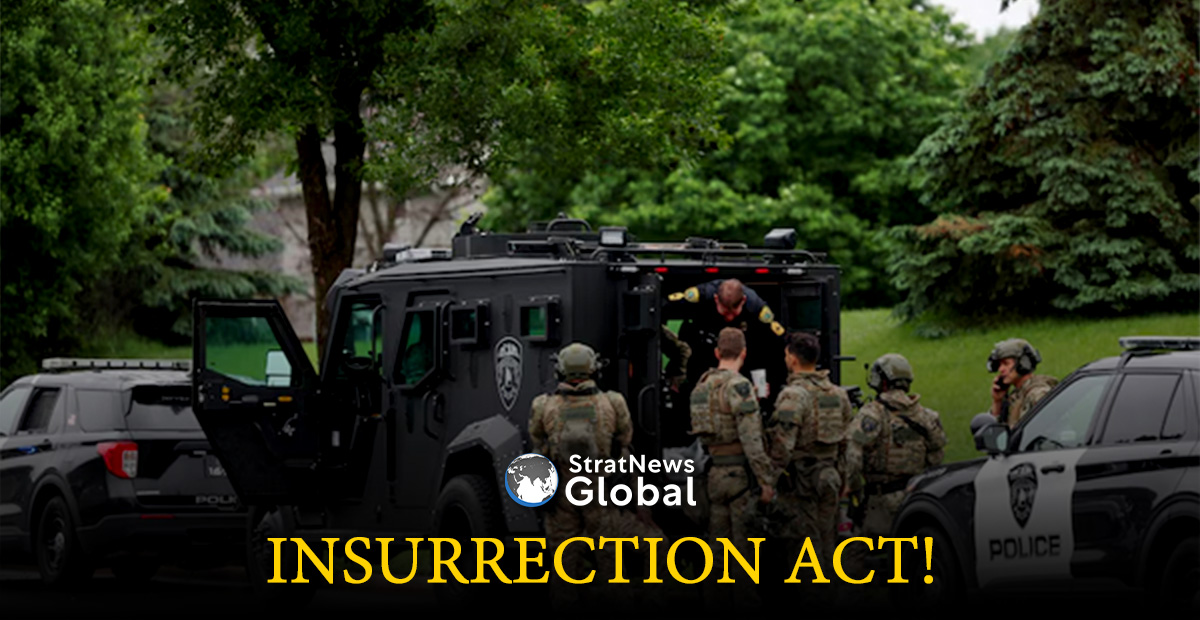
Amid this unrest, the president threatened to invoke the Insurrection Act. The Pentagon soon placed about 1,500 soldiers from the 11th Airborne Division on prepare-to-deploy orders for a possible mission in Minnesota. Defence officials stressed uncertainty about actual deployment. However, preparation itself has political significance. In civil–military relations, signalling influences behaviour as much as action.
The governor placed the National Guard on standby, asserting state authority over domestic security and resisting further federal escalation. This has resulted in a public display of competing chains of command, with state and federal leaders activating different armed forces in response to the same unrest.
The governor’s actions are within established practice. Governors regularly deploy National Guard units during emergencies or civil disturbances. The Guard operates under state authority unless federalised, and its domestic role is clearly defined.
Preparing active duty soldiers for possible domestic deployment occupies a different constitutional space. The U.S. military has long been separated from routine law and order. This separation is based on law, history, and institutional design. The Posse Comitatus Act reflects a sustained effort to prevent the armed forces from being used in civilian policing. The Insurrection Act is a narrow exception intended for circumstances in which civil authority has collapsed.
Repeated public threats to invoke this exception change long-standing expectations. They lower the political cost of military involvement in domestic affairs and broaden the circumstances in which such involvement seems acceptable. Protest, disorder, or resistance to federal policy increasingly appears enough to justify mobilising troops in readiness for deployment.
Minneapolis is significant because it shows how disorder can justify the expansion of executive authority. Federal actions that intensify unrest become grounds for further escalation. Military mobilisation is increasingly used as a political instrument rather than a last resort.
A question increasingly raised by political commentators follows logically from this pattern. Is the administration moving toward a condition of sustained internal disorder that could be framed as a national emergency?
Commentators note that prolonged unrest, combined with repeated threats to invoke extraordinary powers, creates space for arguments that normal democratic processes may not be feasible. The National Constitution Centre has noted that the U.S. Constitution does not grant the president the authority to unilaterally delay federal elections, which are established by statute rather than at the discretion of the executive.
Legal analysts writing on emergency powers and the Insurrection Act have warned that its broad language, weak oversight, and reliance on presidential judgment make it vulnerable to misuse during periods of domestic unrest. The fact that these questions are now being discussed seriously signals a significant shift in the boundaries of emergency politics.
This concern is not just theoretical. The Insurrection Act grants the president broad discretion with limited immediate oversight. Congress acts slowly, and courts often defer to executive claims of necessity. Once federal troops are prepared for domestic missions, political incentives often favour escalation.
The administration presents Minnesota as a failure of state and local governance, while state leaders argue that aggressive federal enforcement is causing instability. This confrontation has blurred the line between law enforcement and political coercion.
The cumulative effect is most important. Each threat, standby order, and escalation shifts expectations. Actions that once prompted widespread alarm now appear as legitimate policy options.
Civil–military relations rely on restraint as much as law. When the military is used to manage domestic political conflict, the professional distance between armed forces and civilian society narrows.
The most troubling aspect of the current situation is how normal this trajectory is starting to seem. That is how power consolidates quietly.