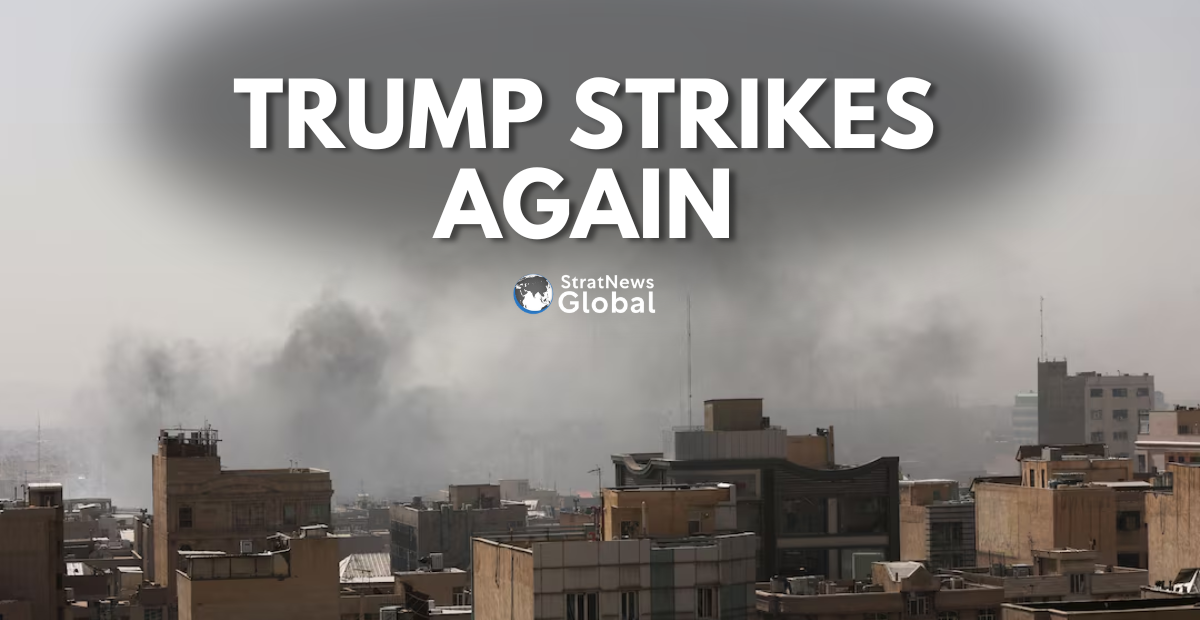
The United States carried out a new round of military strikes against targets across Iran overnight, intensifying pressure on Tehran as President Donald Trump warned that even more attacks could follow if a peace agreement is not reached.
The strikes mark the latest escalation in a conflict that has repeatedly threatened to unravel a fragile ceasefire agreed in April after months of fighting.
US Targets Military Infrastructure
The U.S. military’s Central Command said the operation targeted military surveillance systems, communications infrastructure and air defence sites across Iran.
In a statement posted on X, Central Command said the attacks were launched in response to what it described as Iran’s continued aggression.
The operation lasted around four hours and concluded shortly before dawn in Tehran.
U.S. Defense Secretary Pete Hegseth said the strikes were intended to strengthen Washington’s position in ongoing negotiations with Tehran.
“We will strike them hard tonight, and hopefully Iran makes a good decision,” Hegseth told reporters. “If we need to negotiate with bombs, we’ll negotiate with bombs.”
Iran Retaliates
Iran responded within hours.
The Islamic Revolutionary Guard Corps (IRGC) said it launched attacks on 18 U.S. military targets at bases in Kuwait and Bahrain. Authorities in Bahrain confirmed that air-raid sirens were activated during the incident.
Iran’s military leadership also warned that any vessel attempting to transit the Strait of Hormuz could come under attack. Iranian media reported that two ships had been fired upon, although U.S. Central Command denied that the strategic waterway had been closed.
The Strait of Hormuz remains one of the world’s most critical energy chokepoints, carrying a significant share of global oil exports.
Trump Escalates Pressure
Trump struck a defiant tone following the attacks.
According to Fox News reporter Trey Yingst, Trump said the strikes would eventually stop but warned that he would launch even more severe attacks if Iran refused to sign a deal with Washington.
The president also claimed commercial vessels were continuing to pass through the Strait of Hormuz under the protection of a secret U.S. military operation.
“We’re very close to a deal,” Trump has repeatedly said in recent weeks, while simultaneously threatening renewed military action.
Diplomacy Continues Despite Fighting
Despite the exchange of strikes, diplomatic efforts remain underway.
A delegation from Qatar, which has served as a mediator between Washington and Tehran, arrived in Iran on Wednesday for discussions on the latest developments.
Negotiators have been trying to secure a broader agreement to end the conflict, now entering its fourth month, but no breakthrough has been announced.
Oil Markets React
The latest escalation immediately rattled energy markets.
Oil prices surged nearly $3 per barrel following Trump’s comments and extended gains in Asian trading as concerns grew over disruptions to global energy supplies.
The conflict has already affected roughly one-fifth of global oil and gas trade due to tensions around the Strait of Hormuz.
Lebanon Front Remains Active
The regional conflict continues to spread beyond Iran.
Israeli airstrikes in southern Lebanon reportedly killed at least 13 people on Wednesday, while Hezbollah claimed fresh attacks against Israeli positions.
Iran has repeatedly said that any lasting agreement with the United States must also address Israeli military operations in Lebanon.
Nuclear Dispute Adds Pressure
Meanwhile, the international dispute over Iran’s nuclear programme remains unresolved.
The International Atomic Energy Agency’s Board of Governors approved a U.S.-backed resolution calling on Iran to declare its remaining enriched uranium stockpiles and allow inspectors to verify them.
Tehran dismissed the move as politically motivated and reiterated that its nuclear programme is peaceful.
(with inputs from Reuters)