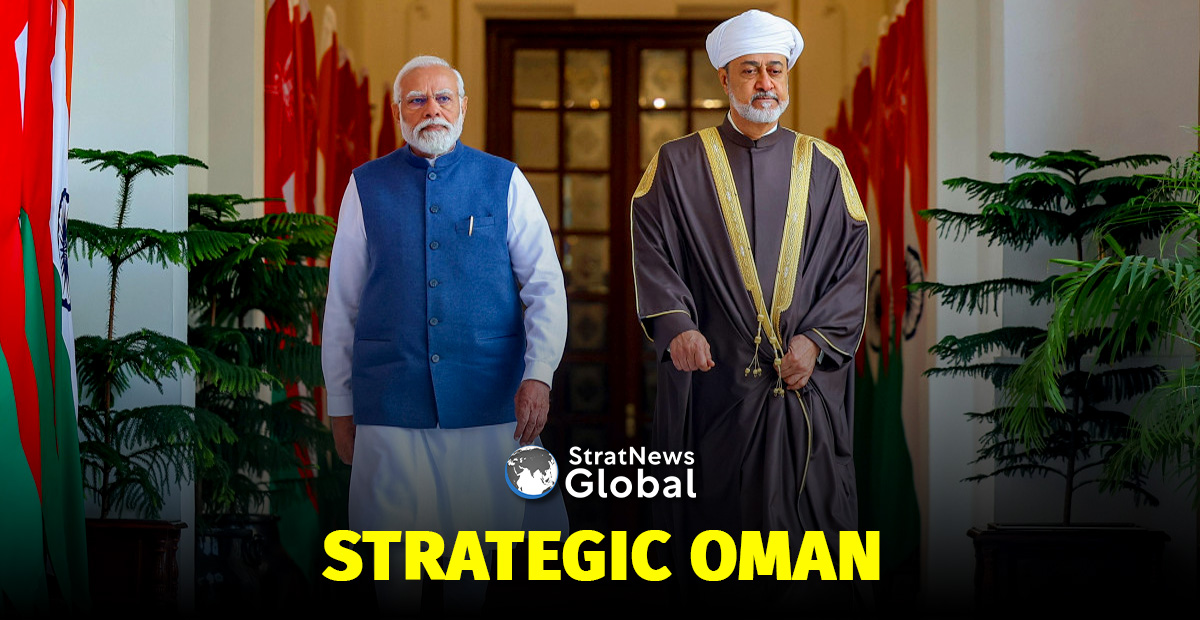
At a little over three hours by air, Delhi to Muscat roughly parallels the time taken from Delhi to domestic locations in southern or eastern India. One expects that the Delhi-Muscat route could become more crowded once the two countries put their seal on the Comprehensive Economic Cooperation Agreement (CEPA).
In an analysis, Anil Wadhwa, former ambassador to oil-rich Oman (2007-11), wrote “Multiple reports suggest that negotiators have narrowed differences on market access and rules of origin. The Omani cabinet and the Shura Council have reviewed the agreement … it would mark a calibrated move from ad hoc commercial links to deeper rules-based economic integration with a strategically located partner.”
The CEPA has been under negotiation since Nov 2023 and all indications are the honours will be done on Thursday. Commerce Minister Piyush Goyal and key officials of his ministry have already reached Muscat.
“Beyond trade the strategic focus is the Port of Duqm,” argues Ausaf Sayeed, former Indian ambassador to Saudi Arabia (2019-22), writing in West Asia Review.
“With IMEC facing delays due to regional instability and Gulf states pushing ahead with an ‘Arab-European’ rail link via the new Doha-Riyadh line, India risks being bypassed. Deepening naval access to Duqm gives India a logistical hub outside the Strait of Hormuz chokepoint, ensuring an independent maritime flank in the Western Indian Ocean.”
Sayeed believes India is working on an “Indo-Littoral Strategy” that has been framed to ensure its interests remain secure after recent developments in the Persian Gulf: Saudi Arabia and the US have come closer with Riyadh being desgnated a Non-Nato Ally.
Add to that, the Saudis and Pakistan signed a Strategic Mutual Defense Agreement in September this year. While the two have long had a defence understanding, including the stationing of Pakistani troops on Saudi soil, the new agreement brings with it a nuclear element.
Is Pakistan extending a nuclear umbrella over Saudi Arabia? Does that mean it could get involved in conflicts in the region, or against Israel? What about the Saudis supplying the Pakistanis with some of the high tech stuff they are getting from Uncle Sam? There’s been no clarity on how things could go.
Sayeed believes Modi’s swing through Jordan, Ethiopia and now Oman is driven by the above concerns and by the need to shore up India’s position in a volatile but crucial region.
The two day visit to Jordan (Mon-Tue), Ethiopia (Wednesday) and Oman (Thursday) is to fortify an “outer ring of partnerships”. Jordan is the “continental buffer, Ethiopia is the “African anchor” while Oman is the “maritime fortress”.
India is acting not as a passive balancer, writes Sayeed, “but as a prudent, interest-driven architect engaging diverse power centres while preserving strategic flexibility. The durability of this approach amid West Asia’s ongoing turbulence will be tested in the coming years.”