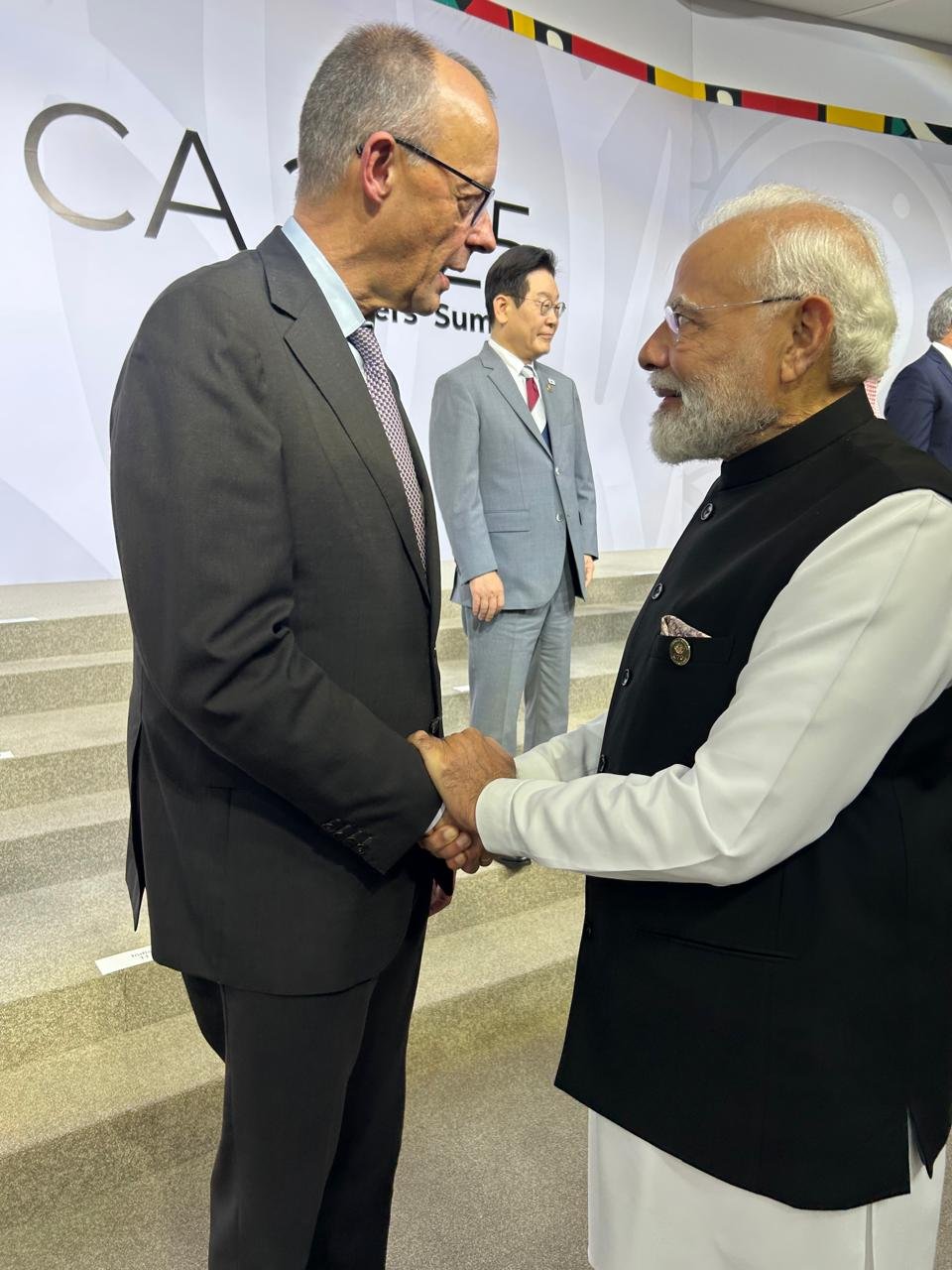
It’s now official: January 2026 is going to be crowded with the big guns of Europe in Delhi. First off the mark will be Germany’s Chancellor Friedrich Merz sometime in the third week of the month followed by the EU’s Ursula von der Leyen along with others.
The Merz visit could see forward movement on India’s plans to buy and build the German Type 214 conventional submarine with air-independent propulsion. Plans involve ThyssenKrupp Marine Systems tying up with Mazgaon Dock to build six vessels at a cost of around $8 billion.
The submarine project is the biggest defence deal between the two countries and it is expected to be a Government to Government (G2G) one, a first for Germany.
Berlin is also looking at sourcing from India and there were discussions on common projects in the military domain during the visit of Defence Minister Boris Pistorius recently. The Merz visit could see some daylight on these plans.
There are 2000 German companies doing business in India and many are talking to Indian SMEs about collaborations in various fields. But the complaint is that rules do not allow a foreign firm to set up a wholly-owned unit in India.
A case in point is Rheinmetall, Europe’s fifth-largest arms maker, which is reportedly interested in setting up shop in India. Current rules allow joint ventures but German companies prefer complete control over their operations in third countries. This is a matter of discussion.
Indian industry sources confirmed that “The movement of skilled Indian labour has been helped by Germany’s requirement of skilled labour and not only in IT. Germany is working on training Indians in being able to speak and understand German. Working with the states on this issue.”
Indian graduates of German universities have 18 months to find a job, an indication that the immigration laws are liberal for skilled persons. The entry of Indians into Germany, currently estimated at 300,000, is surprisingly not an issue with Germany’s far right parties. It suggests a consensus on the entry of skilled labour.
But industry sources flagged a point of concern: the movement of labour from states like Punjab to Germany, ostensibly to study but actually to work. The food delivery business in Berlin, for instance, is dominated by Punjabis.
It is a job that requires no skills and while there are no complaints from Berliners now, that could change if large groups of such workers are seen in public, hanging out at intersections, doing nothing or getting into trouble with the police.
A word on Ukraine: Merz is expected to lay out the standard European line on the war in Ukraine even though at the highest levels in Brussels, there is a sense that Kyiv will have to cede territory if it wants fighting to end. President Zelenskyy is standing firm for now but with Trump keen to end the war on terms he has set (that seem to favour Russia), the die is cast.