Trump Sings Different Tune
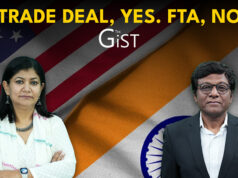
“India and the U.S. have a special relationship. There’s nothing to worry about.” That was U.S. President Trump when asked who he blamed for losing India to China. Sounds jarring? Hours ago, Trump had put up a social media post saying “looks like we’ve lost India and Russia to darkest China”. Modi appreciated Trump’s latest remarks on the “positive assessment of ties”. So after India-U.S. ties soured in the wake of 50% tariffs, how long will it take for a repair?
Former Foreign Secretary Vijay Gokhale does not think anytime soon. “I am not wildly enthusiastic at this stage that the strategic partnership could be restored in a matter of months,” he told StratNews Global before Trump’s “nothing to worry about” remarks.
Trump’s India Strategy
Gokhale isn’t sure if President Trump has an India strategy. He’s equally unsure whether India is just one of the pawns on a chessboard to be sacrificed when the U.S. has a larger game to play.
He cites two examples from the past when India-U.S. ties were ruptured. One took long to mend, almost 20 years. That was the rift in 1971, courtesy the India-Pakistan war and the run-up to the U.S. cosying up to China. The second rupture in ties came in 1998 after the Pokharan nuclear tests. The Americans piled on the sanctions but in two years the strain eased.
The difference in the two cases was the attitude of the United States towards India. Gokhale explains why the damage was repaired quickly after 1998. “The U.S. accepted that India was never going to be an ally in the classic sense but understood that India was important enough to invest in so that it was aligned with them.”
In the Cold War era, that was not possible as the U.S. needed allies against the Soviet Union. After the Cold War, the U.S. did not need an ally but understood India’s worth as a nuclear power and aligned with us, says Gokhale.
So which of these two instances correspond to the current state of India-U.S. ties? Given Trump’s mercurial style and transactional approach rather than treading the traditional diplomatic path, it’s tough to say.
“I cannot say with certainty whether President Trump views India as a subordinate nation to be brought into an alliance with the United States or as an equal nation with which it is to be aligned,” says Gokhale.
The former foreign secretary also shares his thoughts on the current state of India-China relations and more.