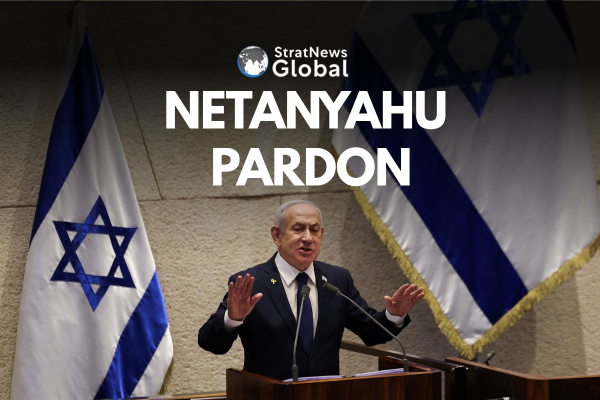
Israeli Prime Minister Benjamin Netanyahu appeared in court on Monday for the first time since formally requesting a presidential pardon in his ongoing corruption trial a move publicly supported by former US President Donald Trump. The hearing in Tel Aviv reignited debate over whether Netanyahu should remain in office while his legal battles continue.
Opposition figures have criticised the request, arguing that any pardon should depend on Netanyahu retiring from politics and acknowledging guilt. Others said he should first call national elections, which are due by October 2026, before seeking clemency.
Former Prime Minister Naftali Bennett said he would back ending the trial only if Netanyahu agreed to step away from political life “to pull Israel out of this chaos.” Bennett, who briefly led a coalition government in 2021 before Netanyahu’s return to power the following year, is now seen as a potential successor should Netanyahu depart.
Indicted on Bribery and Fraud Charges
Netanyahu, Israel’s longest-serving leader, was indicted in 2019 on charges of bribery, fraud and breach of trust after lengthy investigations. His trial began in 2020 and has continued through his return to office. He has consistently denied all accusations, insisting that the case against him is politically driven.
In his letter to President Isaac Herzog, Netanyahu said the trial was obstructing his ability to govern effectively. His lawyers argued that a pardon would serve the national interest, though Netanyahu has not admitted guilt. Pardons in Israel are typically granted only after conviction, and legal experts note that there is no precedent for granting one mid-trial.
Outside the Tel Aviv courthouse, a small group of protesters gathered, some wearing orange prison-style jumpsuits and chanting for Netanyahu to be jailed. “It’s unacceptable that he seeks a pardon without taking responsibility,” said demonstrator Ilana Barzilay.
Trump Calls Prosecution ‘Political’
Netanyahu’s pardon request follows a letter from Trump to President Herzog urging him to consider clemency, describing the prosecution as “political and unjustified.” The appeal has energised Netanyahu’s supporters while deepening divisions within Israel’s already polarised political landscape.
Polls suggest Netanyahu’s coalition regarded as the most right-wing in Israel’s history may struggle to secure a majority in future elections. His legal troubles have become a central issue in recent campaigns, shaping the country’s political discourse and testing public trust in its leadership.
(with inputs from Reuters)