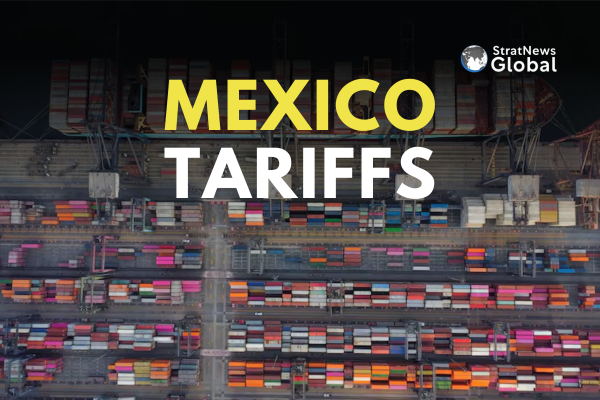
Mexico’s Senate has approved significant tariff increases of up to 50% on imports from China and several other Asian nations, aiming to strengthen domestic industries despite pushback from business groups and foreign governments.
Tariffs to Target Key Industrial Goods
The legislation, already passed by the lower house, will introduce new or higher tariffs of up to 50% on selected imports from 2026. These include automobiles, auto parts, textiles, clothing, plastics and steel from countries without trade agreements with Mexico notably China, India, South Korea, Thailand and Indonesia. Most affected goods will face duties capped at 35%.
The bill passed with 76 votes in favour, 5 against, and 35 abstentions. It represents a softer version of an earlier proposal that had stalled in the lower chamber. The final measure covers around 1,400 product lines, mainly in textiles, apparel, steel, plastics, auto parts and footwear, with reduced duties on about two-thirds compared with the original draft.
China Condemns Move as Protectionist
China’s Ministry of Commerce said on Thursday it would monitor the impact of Mexico’s new tariff policy, warning that the decision could “substantially undermine” trade interests. The ministry urged Mexico to abandon what it described as “unilateralist and protectionist practices.”
“China has always opposed all forms of unilateral tariff increases and hopes Mexico will correct such practices as soon as possible,” the statement read. China’s Ministry of Foreign Affairs has yet to comment on the issue.
Political and Economic Motivations
Analysts suggest the tariff hikes are partly intended to align Mexico more closely with the United States ahead of the upcoming review of the United States-Mexico-Canada Agreement (USMCA). The measures are also expected to raise approximately $3.76 billion in additional revenue next year, helping to address Mexico’s fiscal deficit.
Mario Vázquez, a senator from the opposition National Action Party (PAN), said the decision aims to protect vulnerable domestic sectors and safeguard employment. “It protects certain local industries that are at a disadvantage compared with Chinese products. But tariffs are also taxes citizens pay. We must ensure these funds strengthen national production chains,” he noted.
Emmanuel Reyes, a senator from the ruling Morena party and chair of the Senate Economy Committee, defended the move as a strategic tool for guiding trade policy. “These adjustments will boost Mexican products in global supply chains and protect jobs in key sectors,” he said. “This is not merely a revenue-raising tool, but a measure for promoting general welfare.”
Mexico first signalled plans to raise tariffs in September, amid growing U.S. pressure on Latin American countries to curb economic reliance on China, a major competitor for regional influence.
(with inputs from Reuters)