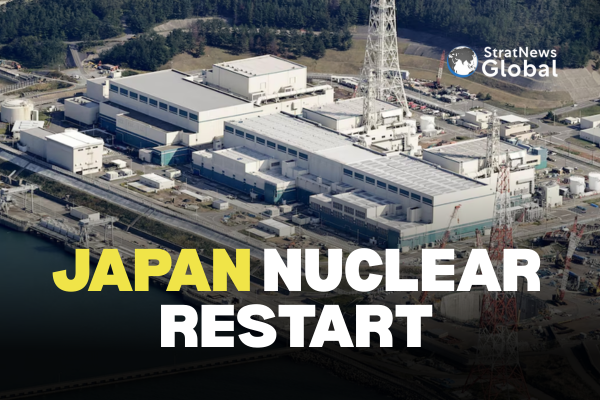
A regional assembly in Japan began discussions on Tuesday over whether to partially restart the Kashiwazaki-Kariwa Nuclear Power Plant, the largest in the world, as the country seeks to boost domestic energy production. The plant, located about 300 kilometres northeast of Tokyo along the Sea of Japan, has been shut since the 2011 Fukushima Daiichi disaster. Both facilities are operated by Tokyo Electric Power Co (TEPCO).
If approved, the restart of the plant’s Unit No. 6 would mark TEPCO’s first nuclear reactivation since Fukushima. The peaceful coastal region, encompassing Kashiwazaki city and Kariwa village home to around 80,000 residents has drawn renewed national attention as Japan moves to balance safety concerns with growing energy demands.
TEPCO Says Nuclear Power Essential for Energy Security
TEPCO President Tomiaki Kobayakawa said nuclear energy remains crucial for Japan, a country with limited natural resources. “The use of nuclear energy is essential in Japan, which has few resources,” he told business delegates during a tour of the plant on Monday.
Following the Fukushima disaster, all 54 of Japan’s reactors were shut down, leaving the country dependent on fossil fuel imports. Prime Minister Sanae Takaichi has voiced support for restarting more reactors to enhance energy security and reduce costs, as imported fuels still generate around 60% to 70% of Japan’s electricity.
Kobayakawa said safety improvements have been extensive, with about 20 workers in protective blue hazmat suits conducting safety drills at the site.
Local Concerns Over Safety and Evacuation
Despite reassurances from TEPCO, local officials and residents remain uneasy. Kashiwazaki city assembly member Yukihiko Hoshino said residents still fear another nuclear accident. “The biggest worry is whether they will be able to evacuate,” he said, noting that some people displaced by the Fukushima disaster have yet to return home.
The Niigata assembly’s final session for 2025 will run until 22 December, during which deliberations on the restart will continue. TEPCO aims to resume operations at the 1,356-megawatt Unit No. 6 in January, pending approval, with plans to restart Unit No. 7 later and potentially decommission the remaining five reactors.
Growing Power Demand in a Digital Era
Japan has restarted 14 of the 33 reactors still operable since the 2011 disaster. According to the industry ministry, restarting Unit No. 6 alone could boost electricity supply for the Tokyo region by 2%.
After years of declining demand, Japan’s power needs are expected to rise again due to the rapid growth of data centres and AI-related industries. TEPCO, meanwhile, continues to pay compensation for the Fukushima Daiichi disaster as it works to restore public trust in nuclear energy.
(with inputs from Reuters)