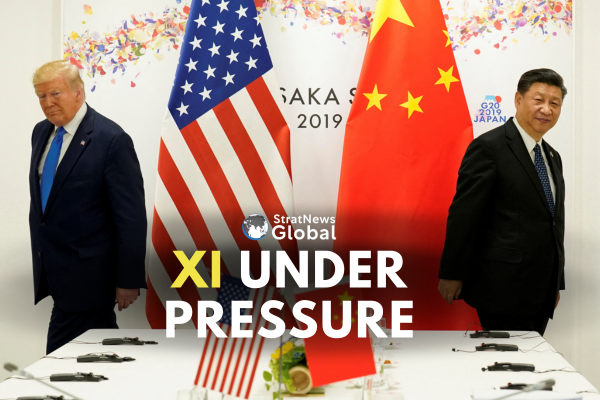
The United States military campaign against Iran has placed Chinese President Xi Jinping in a difficult position ahead of a proposed summit with US President Donald Trump, as Washington targets countries seen as close partners of Beijing.
The strikes on Iran follow the earlier capture of Venezuelan President Nicolas Maduro, marking the second instance in recent months where the United States has acted against a major oil supplier aligned with China. The latest operation, carried out with Israel, reportedly killed Iran’s Supreme Leader Ayatollah Ali Khamenei, further intensifying geopolitical tensions.
Trump is expected to travel to Beijing at the end of March, although it remains unclear whether the meeting will proceed as planned or what shape the discussions will take.
Summit uncertainty amid shifting leverage
Just days ago, Trump appeared to be entering talks from a weaker position after a US Supreme Court ruling struck down several tariffs. However, the Iran operation has altered the balance, with Xi now facing the challenge of responding to a major US military action while preparing to host the American president.
Beijing has condemned the strikes as “unacceptable” and called for restraint, but its response has been measured. Analysts say this reflects both China’s limited ability to influence US military decisions and the pragmatic nature of its international partnerships.
Xi now faces a difficult choice: proceed with the summit and engage diplomatically, or delay the meeting at the risk of signalling weakness on the global stage.
Energy risks expose China’s vulnerabilities
China’s economic exposure to Iran adds another layer of concern. As the world’s largest buyer of Iranian oil, it sourced over 13% of its seaborne crude imports from Iran last year.
Any disruption, particularly if the Strait of Hormuz is affected, could tighten global supply and drive up prices. This would place additional strain on China’s manufacturing sector, which remains central to its economic growth.
While China could seek alternative suppliers, analysts say the immediate impact of reduced Iranian supply would be significant.
Strategic message from Washington
Beyond economic risks, the strikes carry a broader strategic signal. They underline the United States’ ability to project military power globally, including against states aligned with China.
Experts say Beijing is closely assessing whether Washington is using such operations to increase pressure on China, including through control of global energy dynamics.
At the same time, US officials do not expect China to respond militarily or provide direct support to Iran, suggesting Washington believes the risks of escalation remain limited.
China likely to avoid direct involvement
Analysts say China is unlikely to intervene directly in the conflict, instead allowing the United States to bear the consequences of any prolonged instability in the Middle East.
This approach would align with Beijing’s broader narrative that Washington’s actions are destabilising, while avoiding direct confrontation.
For now, China appears to be balancing its strategic interests, economic exposure and diplomatic positioning as it navigates one of the most complex geopolitical moments in recent years.
(With inputs from Reuters)