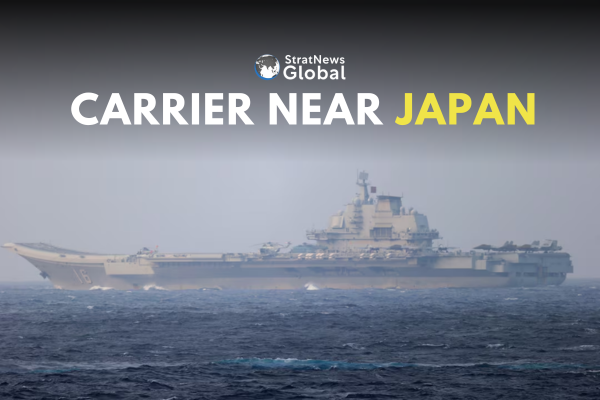
China’s Liaoning aircraft carrier strike group carried out intense air operations near Japan over the weekend, escalating tensions between the two Asian neighbours as diplomatic exchanges grew increasingly sharp. The activity, which included nearly 100 aircraft take-offs and landings, further strained already fraught relations between Tokyo and Beijing.
Rising Tensions Over Taiwan and Security
The encounters took place in waters near Japan’s southwest island chain as ties soured over Taiwan and regional security. Japanese Prime Minister Sanae Takaichi recently warned that Tokyo could respond to any Chinese military action against Taiwan that also endangered Japan’s security. Her comments drew a swift rebuke from Beijing, which views Taiwan as its own territory and has intensified both military and political pressure on the self-ruled island.
Japan, home to the largest overseas contingent of U.S. military forces including thousands of Marines stationed in Okinawa has expressed growing concern over China’s expanding naval presence in the western Pacific. Taiwan, a former Japanese colony, lies just 110 kilometres from Japan’s westernmost island in the Okinawa chain.
Diplomatic Protests and Radar Incident
According to Japan’s Self-Defense Forces, China’s Liaoning carrier, accompanied by three missile destroyers, sailed east into the Pacific Ocean past the Okinawa Islands over the weekend. During the operations, Tokyo claimed that Chinese fighter jets locked their radar onto Japanese aircraft monitoring the group’s movements.
Japan’s Foreign Ministry summoned Chinese Ambassador Wu Jianghao on Sunday to lodge a formal protest, calling Beijing’s actions “dangerous and regrettable.” Tokyo warned that illuminating aircraft with radar signals could be interpreted as preparation for an attack, potentially forcing Japanese pilots to take evasive measures.
In response, the Chinese embassy in Tokyo dismissed Japan’s accusations, alleging instead that Japanese aircraft had endangered flight safety by flying too close to the Chinese vessels. “China solemnly demands that Japan stop smearing and slandering, strictly restrain its frontline actions, and prevent similar incidents from happening again,” the embassy said in a statement.
Chief Cabinet Secretary Minoru Kihara rejected Beijing’s claim, insisting Japan’s monitoring activities had been appropriate and lawful. “Japan will respond calmly but firmly and continue to monitor the movements of Chinese forces in the waters around our country,” he told reporters.
Diplomatic Fallout and U.S. Silence
Following Takaichi’s earlier remarks, China warned its citizens against travelling to Japan and halted plans to resume seafood imports suspended after Tokyo released treated wastewater from the Fukushima nuclear plant. The escalating rhetoric reflects the broader deterioration in China-Japan relations, already strained by territorial disputes and historical grievances.
The U.S. State Department and the American embassy in Tokyo declined to comment on Japan’s claims regarding the radar incident. However, U.S. Ambassador to Japan George Glass expressed support for Tokyo, reaffirming Washington’s commitment to Japan’s security. President Donald Trump, preparing for trade talks in Beijing next year, has yet to issue a statement on the matter.
As China continues to expand its military reach across the Pacific, analysts warn that such confrontations risk sparking miscalculations between Asia’s two largest economies, both key players in an increasingly tense Indo-Pacific security landscape.
(with inputs from Reuters)