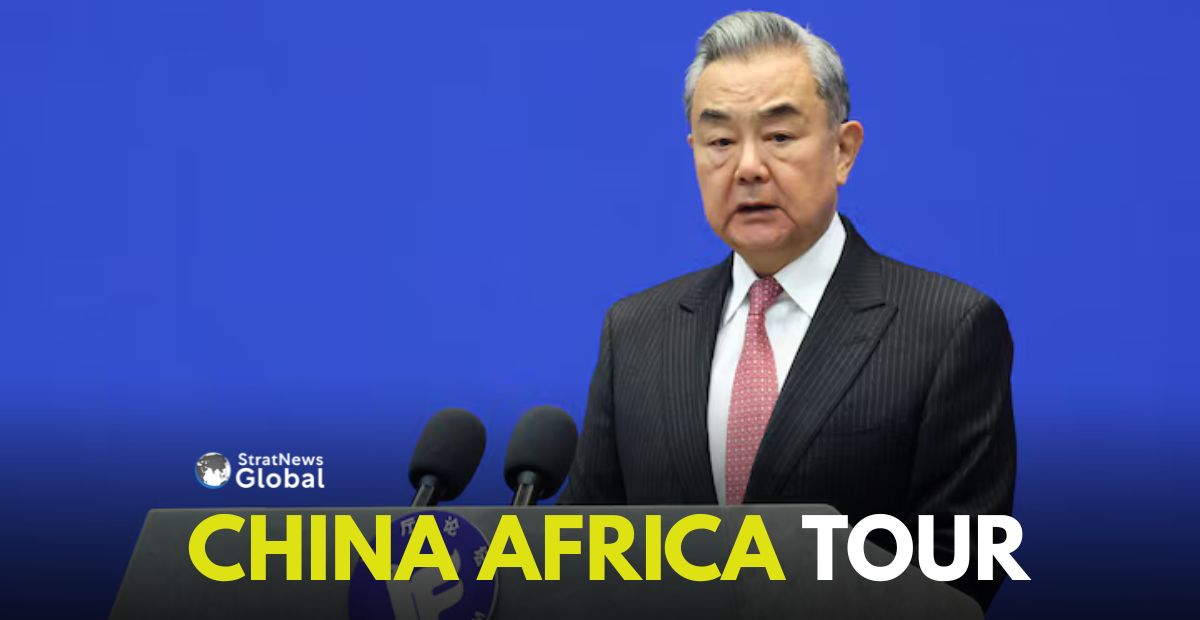
On Wednesday, China’s top diplomat launched his traditional New Year visit to Africa, concentrating on the strategically vital eastern region as the world’s second-largest economy works to strengthen its foothold on the continent.
Foreign Minister Wang Yi will travel to Ethiopia, Somalia, Tanzania and Lesotho on this year’s trip.
Strategic Stops
Wang’s visit to Somalia – the first by a Chinese foreign minister since the 1980s – is likely to provide Mogadishu with a diplomatic boost after Israel last month became the first country to formally recognise the breakaway Republic of Somaliland, a northern region that declared itself independent in 1991.
Beijing, which reiterated its support for Somalia after the Israeli announcement, is keen to buttress its influence around the Gulf of Aden, the entry to the Red Sea and a crucial corridor for Chinese trade heading through the Suez Canal to European markets.
Further south, Tanzania is central to Beijing’s push to secure access to Africa’s vast copper deposits. Chinese firms are refurbishing the Tazara Railway that runs through the country into Zambia. Li Qiang made a landmark trip to Zambia in November, the first visit by a Chinese premier in 28 years.
The railway is widely seen as a counterweight to the U.S. and European Union-backed Lobito Corridor, which connects Zambia to Atlantic ports via Angola and the Democratic Republic of the Congo.
Free Trade Push
By visiting the southern African kingdom of Lesotho, Wang aims to highlight Beijing’s push to position itself as a champion of free trade. Last year, China offered tariff-free market access to its $19 trillion economy for the world’s poorest nations, fulfilling a pledge by Chinese President Xi Jinping at the 2024 China-Africa Cooperation summit in Beijing.
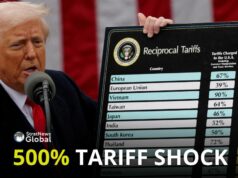
Lesotho, one of the world’s poorest nations with a gross domestic product of just over $2 billion, was among the countries hardest hit by U.S. President Donald Trump’s sweeping tariffs last year, facing duties of up to 50% on its exports to the United States.
(With inputs from Reuters)