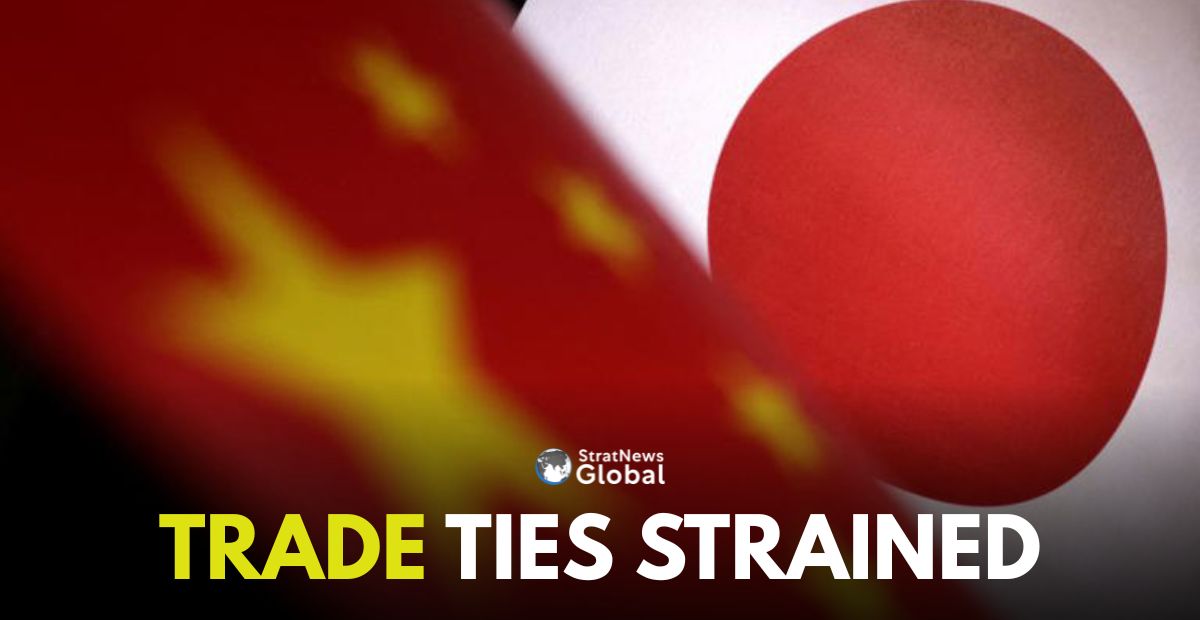
Beijing announced Tuesday it will halt exports of dual-use goods to Japan that could serve military purposes, a move seen as retaliation for recent remarks by the Japanese prime minister regarding Taiwan, according to China’s commerce ministry.
Dual-use items are goods, software or technologies that have both civilian and military applications, including certain rare earth elements that are essential for making drones and chips.
Exports of such items to military users or for any purposes that contribute to Japan’s military strength are banned, the statement said, adding that organisations or individuals from any country or region that violated the ban would be held legally liable.
Rising Tensions Over Taiwan
Since Prime Minister Sanae Takaichi said a Chinese attack on the democratically governed island of Taiwan could be deemed an existential threat to Japan, ties between Beijing and Tokyo have deteriorated. Beijing said the remarks were “provocative.” China regards Taiwan as part of its territory, a claim that Taipei rejects.
The Chinese foreign ministry later questioned Japan’s motives around Taiwan, saying its “provocations” could be a pretext for building up its military forces and overseas missions.
In late December, the Japanese cabinet approved a record spending package for the fiscal year starting in April, including a 3.8% increase in the annual military budget to 9 trillion yen ($57.7 billion).
Rare Earths and Trade History
In a commentary in December, China’s state-run Xinhua news agency said it had been “alarming” in recent years that Japan had “drastically” readjusted its security policy, increased its defence spending year after year, relaxed restrictions on arms exports, sought to develop offensive weapons and planned to abandon its three non-nuclear principles.
China throttled exports of rare earths to Japan during a previous diplomatic dispute more than a decade ago. So far, China customs data have shown no sign of a decline in rare earth exports to Japan, though the data is released with some delay. In November, the latest month for which there was data, exports grew 35% to 305 metric tons, the highest tally last year.
(With inputs from Reuters)