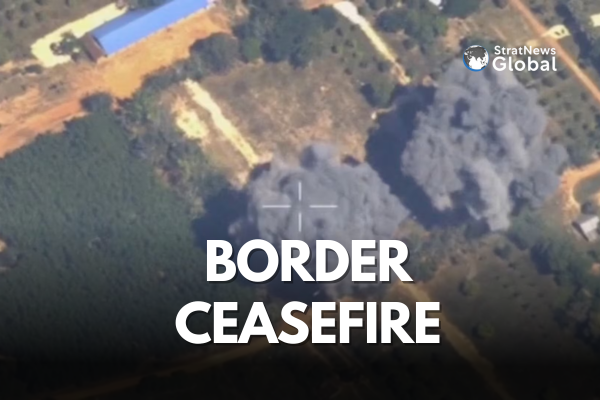
China and the United States have launched renewed diplomatic efforts to end the escalating border conflict between Thailand and Cambodia, days before a special Association of Southeast Asian Nations (ASEAN) meeting aimed at restoring peace. The clashes, described as the worst between the two neighbours in recent history, have already claimed around 60 lives and displaced more than half a million people.
Hostilities resumed last week, shattering the fragile truce that former U.S. President Donald Trump helped broker in late July. The renewed fighting, stretching from inland forested regions near Laos to coastal provinces, has deepened regional concern over stability in mainland Southeast Asia.
Parallel Peace Efforts by Washington and Beijing
U.S. Secretary of State Marco Rubio held talks with Thai Foreign Minister Sihasak Phuangketkeow on Friday, urging Thailand to de-escalate and recommit to the ceasefire agreement. The U.S. State Department said Rubio reiterated Washington’s support for a peaceful resolution and warned that further violence could undermine ASEAN unity.
China has also intensified its mediation. Foreign Minister Wang Yi spoke separately with his Thai and Cambodian counterparts on Thursday. According to Beijing’s Foreign Ministry, both sides “expressed their desire to ease tensions and achieve a ceasefire.” The ministry added that a Chinese special envoy had already visited both countries to press for calm, warning that “if the clashes continue, they will benefit neither side.”
The Thai Foreign Ministry confirmed Sihasak’s conversations with both Rubio and Wang, noting that Bangkok was committed to joining Monday’s ASEAN ministerial meeting in Kuala Lumpur. Cambodia has not yet commented publicly on the diplomatic outreach.
ASEAN Meeting Offers a Fragile Hope
The upcoming Kuala Lumpur meeting will bring together Thai and Cambodian foreign ministers for their first direct talks since hostilities resumed on 8 December. Malaysian Prime Minister Anwar Ibrahim, who chairs ASEAN and helped broker the earlier ceasefire, said he was “cautiously optimistic” that the talks could pave the way for a lasting settlement.
“The commitment shown by both prime ministers gives us hope that this meeting will produce tangible progress,” Anwar said earlier this week.
The July ceasefire, later expanded in October into a broader peace framework, has repeatedly faltered amid border skirmishes and mutual accusations of violations. The two neighbours continue to contest several sections of their 817-kilometre (508-mile) frontier.
Continuing Clashes and Deepening Distrust
Despite diplomatic overtures, fighting continued on Friday. The Thai Defence Ministry reported that Cambodian forces fired heavy weapons across the border, prompting retaliatory strikes. Bangkok accuses Phnom Penh of reigniting hostilities by laying new landmines, one of which maimed a Thai soldier last month. Cambodia has denied the allegation, insisting its actions are defensive.
Thailand argues that any peace process must begin with an immediate halt to Cambodian offensives and a clear framework for a verifiable ceasefire. Phnom Penh maintains that it is merely responding to Thai military aggression.
As both sides trade blame, the human toll continues to rise, and regional mediators face mounting pressure to prevent the conflict from spiralling further. The ASEAN meeting on Monday is now seen as a critical test of the bloc’s ability to manage its own security crises and preserve regional stability.
(with inputs from Reuters)