Three demands by members of the Standing Committee of the Tibetan Parliament in Exile, who called on MPs attending the winter session of parliament in Delhi on Monday: Tibet should be recognised as an occupied nation with a historically sovereign past, China should open a dialogue with the Dalai Lama’s representatives or the democratically elected Tibetan leadership and the UN should study the impact of China’s activities on Tibet’s environment.
Nobody is under any illusion that the above could happen but it is important to ensure that the cause of Tibet remains on the public radar, more so now when China is forcefully asserting that it alone has the right to decide on the next or 15th Dalai Lama.
Gyaltsen Norbu, the Beijing-appointed Panchen Lama, at an event in Shigatse earlier this month, said that the reincarnation of “living Buddhas” must be identified within China and approved by the central government, adding that the process should take place “without any interference or control from organisations or individuals outside the country.”
Noted Journalist and Tibetologist Vijay Kranti called the claim ironic. “A Communist Party that does not believe in religion, that has worked for 70 years to destroy Tibet’s religious identity, and that has used abusive language against the current Dalai Lama, now suddenly claims the right to appoint the next one. Anyone who understands Tibet finds this absurd.”
Tibetologist Claude Arpi pointed out that the 14th or current Dalai Lama has already asserted that his office, the Gaden Phodrang Trust, will decide on the reincarnation.
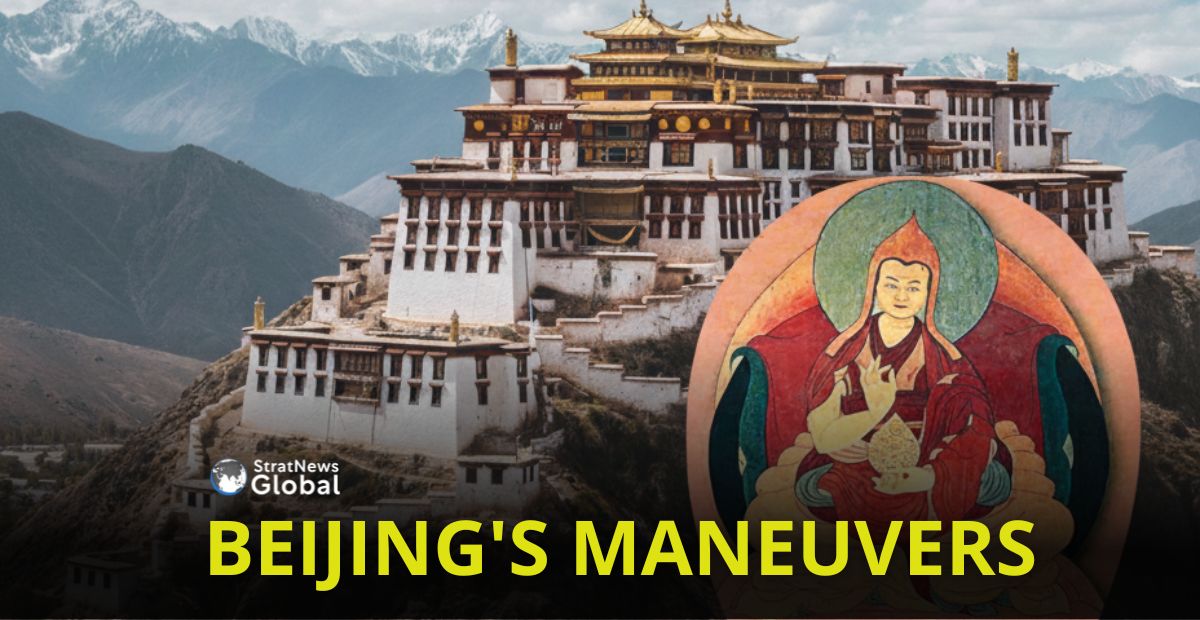
He also underscored the “historically sovereign past” of Tibet. An international conference in Tawang that concluded recently, came out with papers and studies on the 6th Dalai Lama, Tsangyang Gyatso.
“It is uncontested history that the Sixth Dalai Lama was born in Mon Tawang, identified here as a reincarnation of the Fifth Dalai Lama, taken to Lhasa and enthroned,” said Moji Riba from the Center for Cultural Research and Documentation, who was one of the key organisers behind the conference.
“The conference held in Tawang shows that the Dalai Lama can be born outside Tibet, Claude Arpi said.
China responded quickly. A Chinese state-linked media called it a “farce” and accused India of using religion for political ends. “Anything in Tawang automatically triggers the question—does it belong to India or China?” said Moji Riba. “But we fly the tricolour here. Who can take that right away from us?”
In fact the conference was intended to reclaim Tsangyang Gyatso’s legacy before China appropriated it. He rejected strict monastic rules, gave up novice vows and chose poetry over ritual. His verses spoke of love, freedom and longing, making him unusually close to ordinary people.
“He was anti-dogma and open to the public,” said International Buddhist Confederation (IBC) spokesperson, comparing his approach to India’s Bhakti saints such as Kabir and Nanak.
The China angle to Gyatso only comes with a sinister edge to it. Official history records his death in 1706 while being taken to China. But another version suggests he escaped and travelled to Mongolia. There are monasteries and strong oral traditions in Mongolia that attribute teachings and poetry to him. He is described as a mystic figure.
The pity is China is playing politics with some of the most revered figures of Tibetan Buddhism.