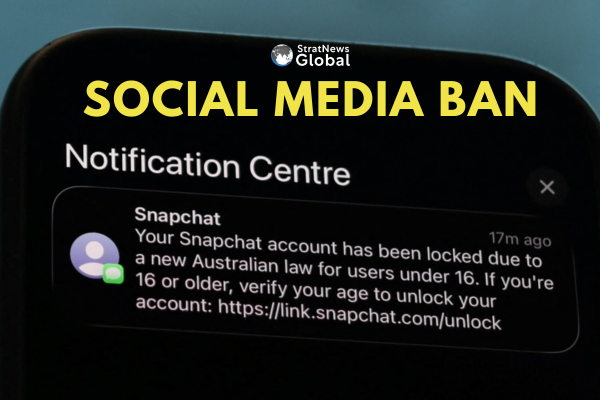
Australian Prime Minister Anthony Albanese has defended the nation’s new social media ban for under-16s, calling it a necessary measure to protect young people, even as the rollout encountered early turbulence. Speaking on Sky News on Thursday, he said the law, which took effect a day earlier, would “ultimately save lives” despite initial confusion and resistance.
Strong Public and Political Support
The ban, which enjoys bipartisan support and approval from around three-quarters of Australian parents, requires ten of the world’s largest social media platforms including TikTok, Instagram, YouTube, and Snapchat to block underage users or face fines of up to A$49.5 million (US$33 million). The government has acknowledged that it may take time for companies to establish effective verification systems.
Albanese criticised young users flaunting their continued presence online, saying, “This is the law, this isn’t something that can be flouted. Some young people are bragging about being online, but that only helps the platforms identify and remove them.”
Communications Minister Anika Wells said the eSafety Commissioner had instructed platforms to report the number of under-16 accounts both before and after the ban took effect, ensuring transparency in enforcement.
Global Reaction and Industry Pushback
Governments worldwide are watching Australia’s approach closely. U.S. Senator Josh Hawley praised the move, while France, Denmark, and Malaysia have expressed interest in adopting similar measures. Psychologist Jonathan Haidt, author of The Anxious Generation, hailed the decision, writing “Bravo Australia” on X.
However, not all responses have been positive. UNICEF warned that restricting access might push children toward less regulated corners of the internet, urging tech companies to improve content moderation and platform design instead. Meta echoed similar concerns, arguing the law could lead to “inconsistent application” and “little interest in compliance,” ultimately failing to enhance safety.
TikTok and Snap declined to comment, while YouTube, X, Twitch, Reddit, and Australian-owned Kick did not respond immediately.
Rising VPN Use and Market Shifts
In the days surrounding the rollout, Australian searches for virtual private networks (VPNs) surged to their highest levels in a decade. Free VPN providers reported dramatic increases in usage Windscribe saw a 400% spike in installations within 24 hours of the ban, while hide.me recorded a 65% rise in Australian visits before implementation.
As the law took effect, platforms not covered by the restrictions climbed app download charts. The government noted that the list of regulated platforms remains “dynamic,” allowing for adjustments as new services emerge. ByteDance-owned Lemon8 quickly adopted a 16-plus policy, while photo-sharing app Yope said it had grown rapidly to around 100,000 Australian users, half of whom were over 16.
Albanese, visiting a Canberra school, said he expects the ban to improve behaviour and learning outcomes, noting that “students interact better when they’re not constantly looking at their devices.”
(with inputs from Reuters)