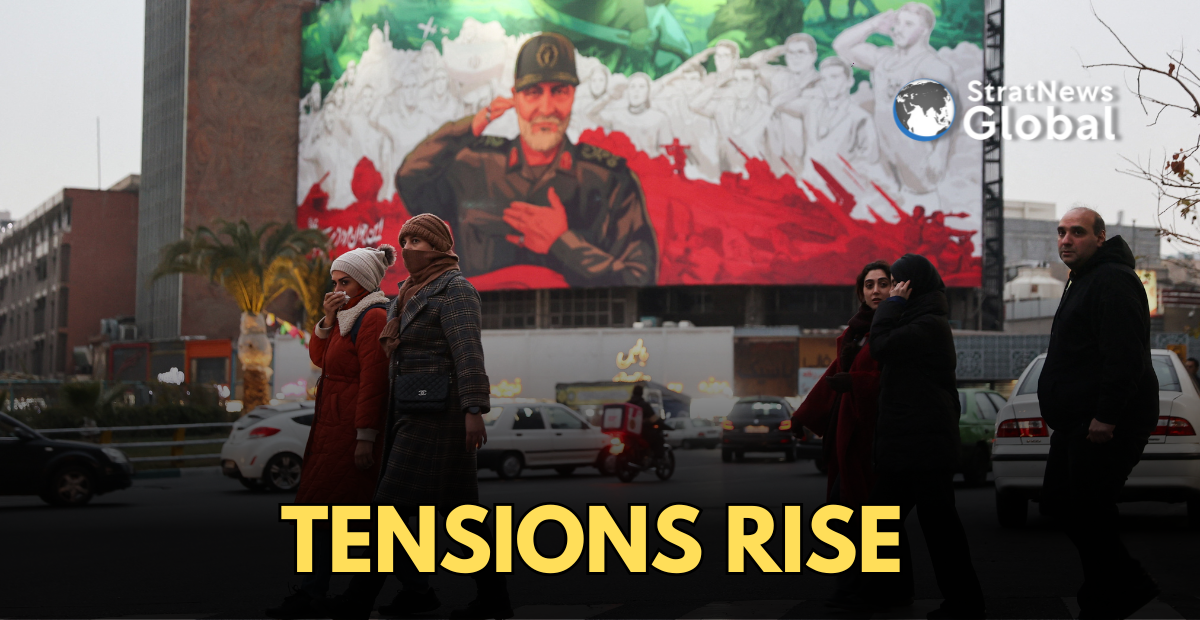
Are the mass protests in Iran coming to a head? India’s former ambassador to Iran, Gaddam Dharmendra, believes that these protests are different from the mass anti-government demonstrations of 2022 and earlier. If not dealt with urgently, these have the potential to pose a more serious systemic challenge.
“For the 1st time, the bazaaris, an influential merchant class, have shut their shops and come out in protest. This is due to the crash of the Iranian currency, the Rial, which in turn is due to a combination of US economic sanctions and long-standing economic mismanagement. The current protests have brought together whole segments of society, including students, seniors, pensioners, etc, onto the streets,” he told StratNewsGlobal.
A Newsweek report quoting senior academic Alex Vatanka of the Middle East Institute echoes a similar line.
“The point is this regime has mishandled the economy, the society, and he foreign policy. It’s mishandled so badly for so long that you have created this desperation among people for change, particularly younger people who don’t see any hope.”
But Dharmendra does not believe the Pezeshkian Government is in imminent danger of falling.
“It has been 40 years since the Islamic Revolution. The system is deeply embedded, and Iran’s institutional frameworks are strong. The people do receive health, educational and social welfare facilities, whatever their shortcomings. I don’t think the system is going to collapse as it has in Syria or Iraq. It’s much more durable.”
Yet the sabre-rattling is getting louder and worse. In the last 24 hours, Iran’s ambassador to the UN shot off an angry letter to Secretary-General Guterres, urging him to condemn “unlawful threats” directed at his country by President Trump.
Recall that the latter had warned Tehran against cracking down on the demonstrations, saying he was “locked and loaded”, meaning ready to strike Iran. The US is not short of military assets in the region.
Its Fifth Fleet comprising aircraft carriers is headquartered in Bahrain, in Qatar is the Al Udeid Airbase, the biggest in the region with every kind of combat aircraft and bombers, two bases in Iraq house more than 2000 US troops, several bases in Kuwait including one that handles logistics delivery and the Al Dhafra Airbase in the UAE where F-22 jets and MQ-9 drones are stationed.
But Indian diplomats who monitor the region and the protests closely warn that while Iran has been debilitated by sanctions, it still retains the ability to hit back. It can mine the Strait of Hormuz through which 20% of the world’s supply of oil transits. Those mines can also bottle up the US Navy and limit its movement.
The larger danger, diplomats say, is that any blockade in the supply of oil could see prices shoot up. If the blockade escalates into war, it could engulf the entire region as Iran is certain to encourage its proxies, Hamas and Hezbollah, to strike at US interests.
Any war will threaten the livelihoods of the estimated 15 to 20 million-strong Indian diaspora, besides disrupting the flow of energy. Remember, India imports 35% of its energy from the Persian Gulf region.
For now, Iran’s moderate President Masood Pezeshkian has chosen a conciliatory line, admitted faults and promised to make things right. But sanctions have severely weakened the regime’s ability to help its own people. The currency has fallen steeply in value, and prices of everyday items are going beyond the common man’s reach.
Pezeshkian is doing the best he can, but he cannot take on the clerical establishment and its militant backers, the Revolutionary Guards and the Quds Force. Forty-seven years since the founding of the Islamic Republic, the regime remains well entrenched and is going nowhere.