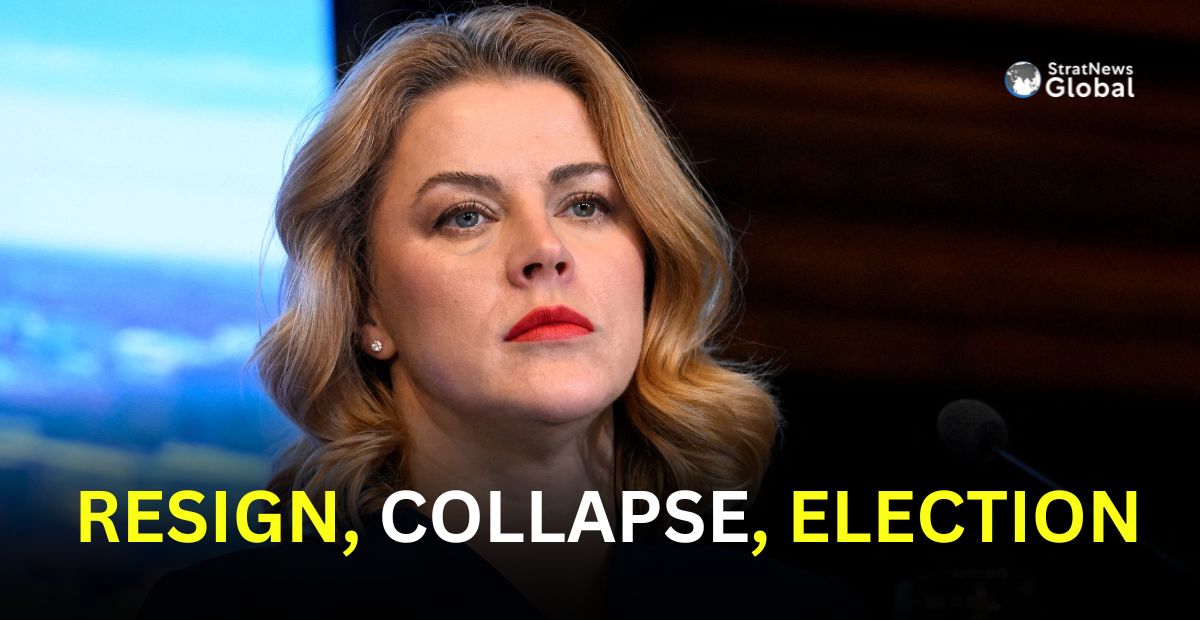
Latvia’s centre-right Prime Minister Evika Silina announced her resignation on Thursday, triggering the collapse of her coalition government just months before a general election scheduled for October.
“I am resigning, but I am not giving up,” Silina said in a televised statement, signalling her intention to remain an active force in Latvian politics despite the sudden unravelling of her administration.
A Coalition Undone
The crisis was set in motion on Wednesday when the left-wing Progressives party withdrew its support from the ruling coalition, stripping Silina and her centre-right New Unity party of their parliamentary majority.
Without the numbers to govern, her position became untenable almost overnight.
The Progressives’ decision followed a flashpoint at the weekend – the firing of their cabinet representative, Defence Minister Andris Spruds, over his handling of incidents involving stray Ukrainian drones flying into Latvian territory from Russia. The dismissal was seen by the Progressives as politically motivated, and their withdrawal was swift and decisive.
What Comes Next
Latvian President Edgars Rinkevics, constitutionally empowered to select a new government leader, is scheduled to meet with all parliamentary parties on Friday. The consultations will determine whether a new coalition can be formed or whether Latvia heads toward early elections ahead of the October vote already on the calendar.
Timing and Political Stakes
The collapse comes at a particularly sensitive moment for Latvia. With the October election already looming, the resignation leaves the country in a period of political uncertainty that could affect key decisions on defence spending and NATO commitments, priorities that have taken on heightened urgency given the ongoing war in neighbouring Ukraine.
Analysts say the drone incidents, though limited in scope, exposed deep fault lines within the coalition over security policy and ministerial accountability.
For Silina, the resignation marks a significant setback, though her parting words suggest she is positioning herself for a comeback when Latvians head to the polls later this year.
(with inputs from Reuters)